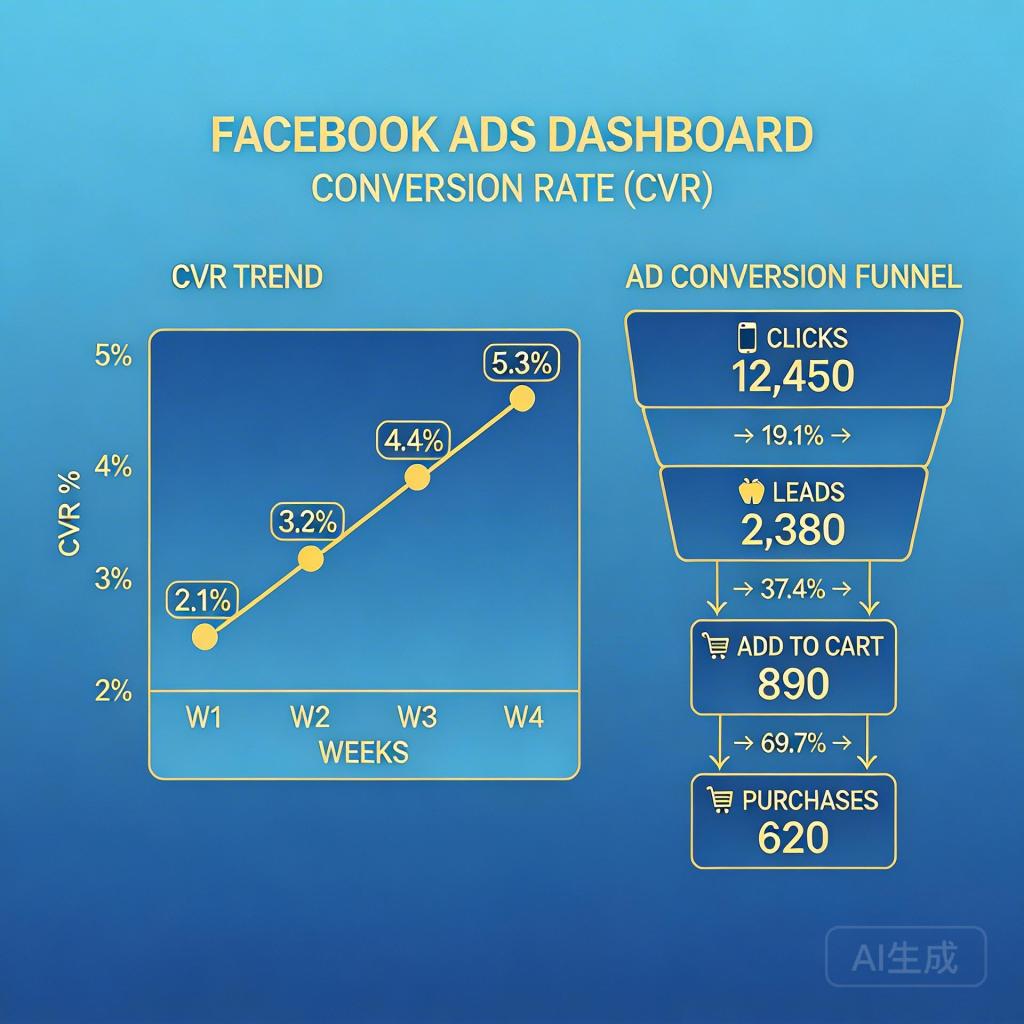
You’re getting clicks on your Facebook ads — but conversions aren’t following. That gap between click and conversion is costing you budget every single day, and in 2026, with Meta’s AI-driven ad ecosystem evolving faster than ever, closing that gap has become both more urgent and more achievable. This guide breaks down exactly how to optimize your Facebook ads conversion rate, with specific tactics for AI social apps, mobile games, and anyone running performance campaigns on Meta.
→ If you’re already looking for a fix, Book a Free Demo and our team will audit your post-click funnel for free.
Why Facebook Ads CVR Optimization Matters More Than Ever in 2026
Facebook ads conversion rate optimization (CVR optimization) has always been important — but 2026 marks a turning point. Meta has fundamentally restructured how its advertising ecosystem works, and advertisers who focus only on the pre-click side of the funnel are leaving serious money on the table.
Here’s what’s changed:
- Meta launched AI Agents in Ads Manager in March 2026. These agents can autonomously suggest creative variations, budget adjustments, and audience shifts — making it easier to optimize ad delivery. But they don’t fix what happens after the click.
- Meta’s incremental attribution now shows 24% more incremental conversions than last-click models. This means many advertisers are undervaluing their campaigns — but also that post-click optimization has a measurable, trackable impact.
- Predictive Budget Allocation delivers 8–15% ROAS improvement when paired with strong post-click performance. Your landing pages and post-click flows directly affect how Meta’s algorithm allocates your budget.
- Advantage+ Shopping now requires only 25 conversions per week to exit the learning phase, lowering the bar for automated optimization — but only if your post-click conversion rate is healthy enough to hit that threshold.
In short: Meta’s automation is only as good as the conversion signals it receives. If your post-click funnel is leaking, you’re training Meta’s algorithm on bad data, and your CPMs, CPAs, and overall ROAS will suffer.
The average industry CVR for Facebook ads ranges from 1% to 5% depending on vertical. AI social apps and mobile games often sit at the lower end — not because the ads are bad, but because the post-click experience isn’t optimized. The opportunity to move from 1% to 2% CVR is the same as doubling your revenue without increasing spend.
The Post-Click Funnel: Understanding Where Conversions Break
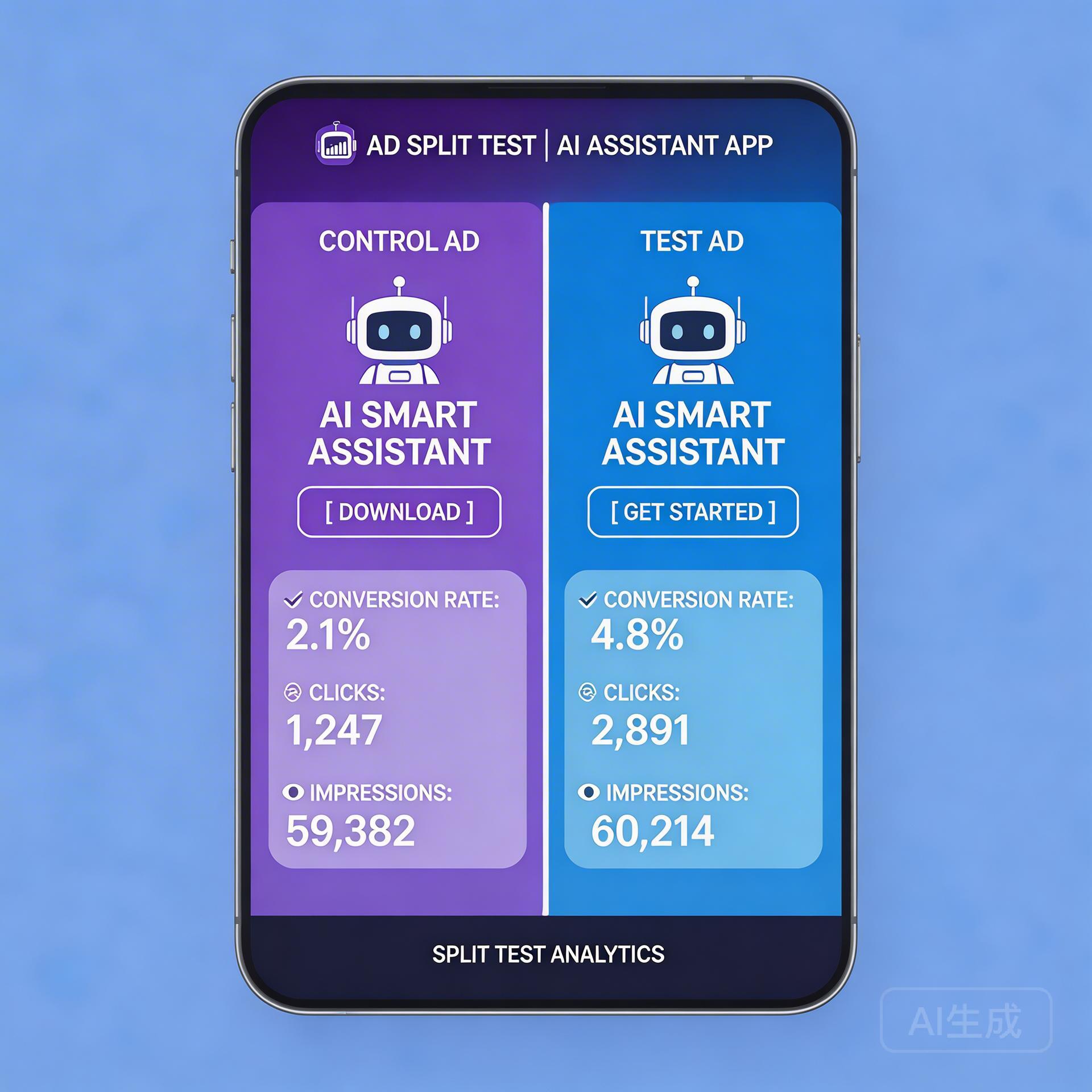
Most advertisers obsess over CTR, CPM, and ROAS — but CVR problems almost always live in the post-click funnel. Let’s map out where conversions typically break:
Stage 1: Click to Landing Page Load
Facebook’s in-app browser and mobile traffic create significant friction at this stage. Page load time above 3 seconds can kill up to 53% of mobile users before they even see your offer. If you’re running app install campaigns, the App Store / Google Play redirect adds another layer of drop-off.
Stage 2: Landing Page to Intent Signal
This is where most CVR optimization happens — or should. Users who land on your page need an immediate match between the ad creative they clicked and the page they see. Creative-to-page message match is one of the highest-leverage optimizations you can make. Mismatched messaging (e.g., an ad promising “free trial” but a landing page leading with pricing) causes immediate bounce.
Stage 3: Intent Signal to Conversion Action
For app installs: the App Store listing, screenshots, ratings, and the first 10 seconds of the app experience all affect conversion. For direct purchases or sign-ups: form complexity, trust signals, and payment friction are the primary drop-off causes.
Stage 4: Post-Conversion Re-engagement
This stage is often invisible to advertisers focused on first-touch CVR. But for subscription apps and games with in-app purchases, the real revenue comes from users who convert, churn, and are re-engaged through paid or organic channels. CVR optimization in 2026 must include this loop.
Understanding which stage is leaking — and by how much — is the foundation of any CVR optimization program. Tools like heatmaps, session recordings, and post-click attribution platforms can make this visible.
6 Core CVR Optimization Strategies for Facebook Ads
1. Message Match: Align Ad Creative with Landing Page
The single highest-impact change most advertisers can make is tightening the match between their ad creative and landing page. If your ad shows a before/after transformation, your landing page should lead with that same transformation. If your ad promises a specific benefit (“Get 100 free coins”), the landing page should confirm that promise above the fold.
Test headline continuity, image continuity, and offer continuity as separate variables. Run A/B tests with dedicated landing pages per ad creative rather than sending all traffic to a single generic page.
2. Mobile-First Landing Page Optimization
Over 90% of Facebook ad traffic comes from mobile. Yet many advertisers still build landing pages on desktop-first templates. Critical mobile optimizations include:
- Single-column layouts with tap-friendly CTAs (minimum 44px height)
- Page load time under 2 seconds (use lazy loading for images)
- Thumb-zone placement for primary CTA buttons
- Minimal form fields — every additional field reduces conversion by an estimated 10–20%
- Trust signals visible without scrolling: ratings, reviews, badges
3. Creative Fatigue Management
When your CVR suddenly drops without a clear funnel change, creative fatigue is often the culprit. Frequency above 3–4 in a short window (especially in retargeting audiences) leads to banner blindness and active ad avoidance. Signs of fatigue: rising CPM, falling CTR, falling CVR simultaneously.
Maintain a creative refresh cadence — for performance campaigns, plan new creative variants every 2–3 weeks. Use dynamic creative to automatically serve the highest-converting combinations.
4. Audience-to-Offer Alignment
CVR problems often trace back to audience mismatch: showing a high-intent offer to a cold audience, or vice versa. Structure your funnel with intention:
- Cold audiences (Lookalikes, interest targeting): Low-friction offers — free trials, content, app installs with no upfront payment
- Warm audiences (website visitors, engaged users): Direct purchase offers, subscription upsells, limited-time promotions
- Hot audiences (cart abandoners, trial users): High-urgency, high-specificity CTAs with personalized messaging
5. Post-Click Re-engagement Automation
Most users who click your Facebook ad don’t convert on the first visit. Industry data suggests 70–90% of first-time visitors leave without converting. Post-click re-engagement — automated sequences that follow up with non-converters through retargeting, email, push, or in-app messaging — can recover a significant portion of that lost traffic.
Post-click optimization tools like DeepClick can improve CVR by 30%+ by automating re-engagement flows that bring users back to the point of drop-off, rather than making them start the funnel from scratch.
6. Conversion Event Optimization
What Meta’s algorithm optimizes for matters enormously. Optimizing for “Purchase” when your daily conversion volume is low (under 50/week) will starve the learning phase. Instead, optimize for higher-volume micro-conversions like “Add to Cart,” “Initiate Checkout,” or “App Install” — then shift to value optimization once you have enough data.
With Advantage+ Shopping’s updated 25-conversion threshold, more campaigns can now access full automation — but you need those conversions flowing cleanly through your pixel first.
CVR Optimization for AI Social Apps (Dating, Companion, Social Networking)
AI social apps — including dating apps, AI companion apps, and social networking platforms — face a unique CVR challenge. Audience sensitivity is high: Meta’s ad policies restrict certain creative approaches, and users in this category are more likely to churn quickly if the post-install experience doesn’t immediately deliver on the ad’s promise.
The CAC Problem in AI Social Apps
Customer acquisition cost (CAC) for AI social apps is inherently higher than for most other app categories. The combination of audience sensitivity (Meta flags relationship-adjacent content), audience specificity (you need very particular user profiles), and competitive bidding environments drives CPMs up. This makes CVR optimization not just a revenue lever but a survival requirement: you cannot afford to waste clicks.
Optimizing the Install-to-Registration Funnel
For most AI social apps, the primary conversion event is registration/profile completion, not the initial install. Optimizations that matter here:
- Reduce registration friction: Social sign-in (Apple, Google) dramatically improves registration CVR. Every field you add to a manual signup form increases abandonment.
- Immediate value delivery: Show the user what they came for within 30 seconds of registration. For a companion app, that means getting to the first conversation. For a dating app, that means showing matches immediately.
- Onboarding personalization: Use the user’s ad-click context (what creative they clicked, what audience they were in) to personalize their onboarding experience. A user who clicked an ad about “finding real connections” should see different onboarding messaging than one who clicked “meet new people.”
Subscription CVR for AI Social Apps
The click-to-subscription funnel in AI social apps typically runs: Ad click → App Store → Install → Registration → Engagement → Paywall. Each step has drop-off, and the paywall is where most revenue is made or lost.
Best practices for paywall CVR optimization:
- Present the paywall at a moment of high perceived value (just after the user experiences something they want more of)
- Offer a free trial — trial-to-paid conversion rates consistently outperform direct subscription offers in this category
- Use social proof at the paywall: ratings, user counts, testimonials
- A/B test annual vs. monthly pricing prominence — annual plans shown first often increase LTV without reducing conversion
CVR Optimization for Mobile Games on Facebook Ads
Mobile game advertising has its own CVR dynamics. The primary funnel is click-to-install (measured as IPM — installs per thousand impressions), but the revenue funnel extends to install-to-purchase and install-to-retention. Both legs of this funnel must be optimized.
Click-to-Install (IPM) Optimization
For mobile games, the “landing page” is often the App Store listing — which means your CVR optimization must extend to App Store Optimization (ASO). Key levers:
- Screenshot creative: First 2–3 screenshots are the highest-impact ASO element. They should match the creative tone of your Facebook ads.
- App preview video: Autoplay preview videos that show actual gameplay (not cinematic trailers) consistently outperform for casual and hyper-casual games.
- Ratings and reviews: Below 4.0 average rating significantly drops install CVR. Prompt satisfied users at the right moment.
- Icon: Your app icon appears in Facebook ad placements as well as the App Store. Test icon variants as part of your overall creative strategy.
Install-to-Purchase (Day 0 / Day 1 CVR)
The first session of a mobile game determines whether a user stays long enough to become a payer. Monetization CVR is highest in the first 24–48 hours. Strategies:
- Deliver a strong core gameplay loop within the first 3–5 minutes
- Introduce the first purchase opportunity at a moment of failure or desire, not during a forced tutorial
- Offer a “starter pack” at a low price point ($0.99–$2.99) to establish purchasing behavior before higher-value offers
- Use personalized re-engagement (push notifications, in-app messages) to bring Day 0 non-payers back on Day 1 and Day 3
Retargeting Non-Payers
For BC (battle pass / in-app purchase) model games, the cohort of users who installed but didn’t purchase in the first week represents a high-value retargeting audience on Facebook. These users already have the game — the conversion barrier is purely motivational. Ads targeting this audience should:
- Reference specific in-game content or events they may have missed
- Create urgency with limited-time offers or battle pass expiration
- Show social proof (how far other players have progressed)
Advanced Tactics: Re-engagement, Retargeting, and Automation
Building a Re-engagement Infrastructure
Post-click re-engagement is one of the most underutilized CVR levers in Facebook advertising. The typical flow: user clicks ad → visits landing page or app store → doesn’t convert → is never contacted again. This is a massive missed opportunity.
A proper re-engagement infrastructure includes:
- Pixel-based retargeting: Retarget all page visitors who didn’t convert, segmented by depth of engagement (e.g., visited pricing page vs. bounced on homepage)
- Custom Audience re-engagement: Upload CRM data of trial users, lapsed subscribers, or churned players for highly personalized win-back campaigns
- Automated email/push sequences: For app products, post-click automation that sends users back to their drop-off point (rather than the top of funnel) dramatically improves re-engagement CVR
Meta Advantage+ Automation
Meta’s Advantage+ suite (Advantage+ Creative, Advantage+ Placements, Advantage+ Audiences) is now a core part of most performance campaigns. Using it effectively for CVR:
- Advantage+ Creative automates minor creative variations — but give it strong base materials. Weak creative amplified by automation still underperforms.
- Advantage+ Audiences expands your targeting but requires clean conversion signals. A leaky post-click funnel will cause Advantage+ to optimize toward non-converters.
- Combine Advantage+ with Predictive Budget Allocation to achieve the 8–15% ROAS uplift Meta’s own data shows is achievable.
DeepLink Optimization
For app campaigns, deep links that take users directly to a specific screen within the app (rather than the home screen) consistently improve post-install CVR. A user who clicked an ad about a specific game character, taken directly to that character’s page in-app, will convert to a purchase at a significantly higher rate than one dropped at the main screen.
Measuring and Benchmarking Your CVR
Key CVR Metrics to Track
Depending on your product type, track the following conversion rates:
- Click-to-Landing Page CVR: (Landing Page Sessions / Ad Clicks) — should be 70–85%; lower indicates redirect friction or page errors
- Landing Page-to-Lead CVR: (Form Submissions / Landing Page Sessions) — industry average 2–5%; top performers 10–15%
- Click-to-Install CVR (IPM basis): Varies by game genre — hyper-casual targets 60–80 IPM; mid-core 20–40 IPM
- Install-to-Registration CVR: Target 60–70% for social apps; below 40% indicates onboarding friction
- Trial-to-Paid CVR: 15–25% is a healthy range for subscription apps; below 10% indicates paywall or product issues
Setting Up Accurate Measurement
CVR measurement accuracy depends on a clean pixel/SDK implementation. Common measurement issues that distort CVR data:
- Duplicate pixel fires (inflating conversion counts)
- Pixel not firing on all landing page variants
- Attribution window mismatch (comparing 7-day click to 1-day view)
- iOS 14.5+ SKAdNetwork limitations understating true app install CVR
Use Meta’s Events Manager diagnostic tools to verify event quality scores. A score below 6.0/10 indicates measurement issues that will compromise your CVR optimization efforts.
CVR Benchmarking by Vertical
Here are approximate 2026 CVR benchmarks for key verticals using Facebook ads:
- E-commerce (purchase): 1–3%
- SaaS / B2B lead gen: 3–8%
- Mobile games (install): 20–60+ IPM depending on genre
- AI social / dating apps (install): 15–35 IPM
- Subscription apps (trial start): 5–15%
If you’re significantly below these benchmarks, post-click funnel issues are almost certainly the cause. If you’re at or above them, there’s still room to grow — the top 10% of advertisers in each category are typically 3–5x above these averages.
Action Plan: Start Improving CVR This Week
Here’s a concrete, prioritized action plan for Facebook ads CVR optimization, ordered by impact and speed of implementation:
Day 1–2: Audit Your Current Funnel
- Install heatmap and session recording on all landing pages (Hotjar, Microsoft Clarity)
- Check pixel event quality scores in Meta Events Manager
- Pull a report of ad-level CTR vs. landing page CVR to identify which creatives are generating clicks but not conversions
- Identify your single biggest drop-off stage (click → land, land → intent, intent → convert)
Day 3–5: Quick Wins
- Add or strengthen message match between your top 3 ads and their landing pages
- Set up a basic pixel-based retargeting campaign for landing page visitors who didn’t convert (even a simple 1-ad retargeting campaign will improve overall CVR)
- Test one landing page change: reduce form fields, move CTA above the fold, or add a trust badge
Week 2: Systematic A/B Testing
- Run structured A/B tests on landing page headlines (aim for 2 variants per test)
- Test different conversion events in Ads Manager to find the highest-volume event that correlates with revenue
- If running app campaigns, verify deep link setup and test direct deep links vs. App Store redirect
Week 3–4: Automation and Scale
- Implement post-click re-engagement automation (email/push/retargeting sequences)
- Activate Advantage+ Creative with your top-performing creative assets
- Set up a regular creative refresh schedule to combat fatigue
- Consider a dedicated post-click optimization platform to automate re-engagement and funnel tracking at scale
Facebook ads CVR optimization is not a one-time project — it’s an ongoing discipline. The advertisers who win in 2026 are those who treat the post-click funnel with the same rigor they apply to creative, targeting, and bidding. Every percentage point of CVR improvement compounds: better signals to Meta’s algorithm, lower CPAs, higher ROAS, and more budget available to scale.
Stop losing conversions after the click.
DeepClick helps Meta advertisers fix post-click drop-offs and improve CVR by 30%+ through automated re-engagement and post-click link optimization.
 DeepAds
留下评论