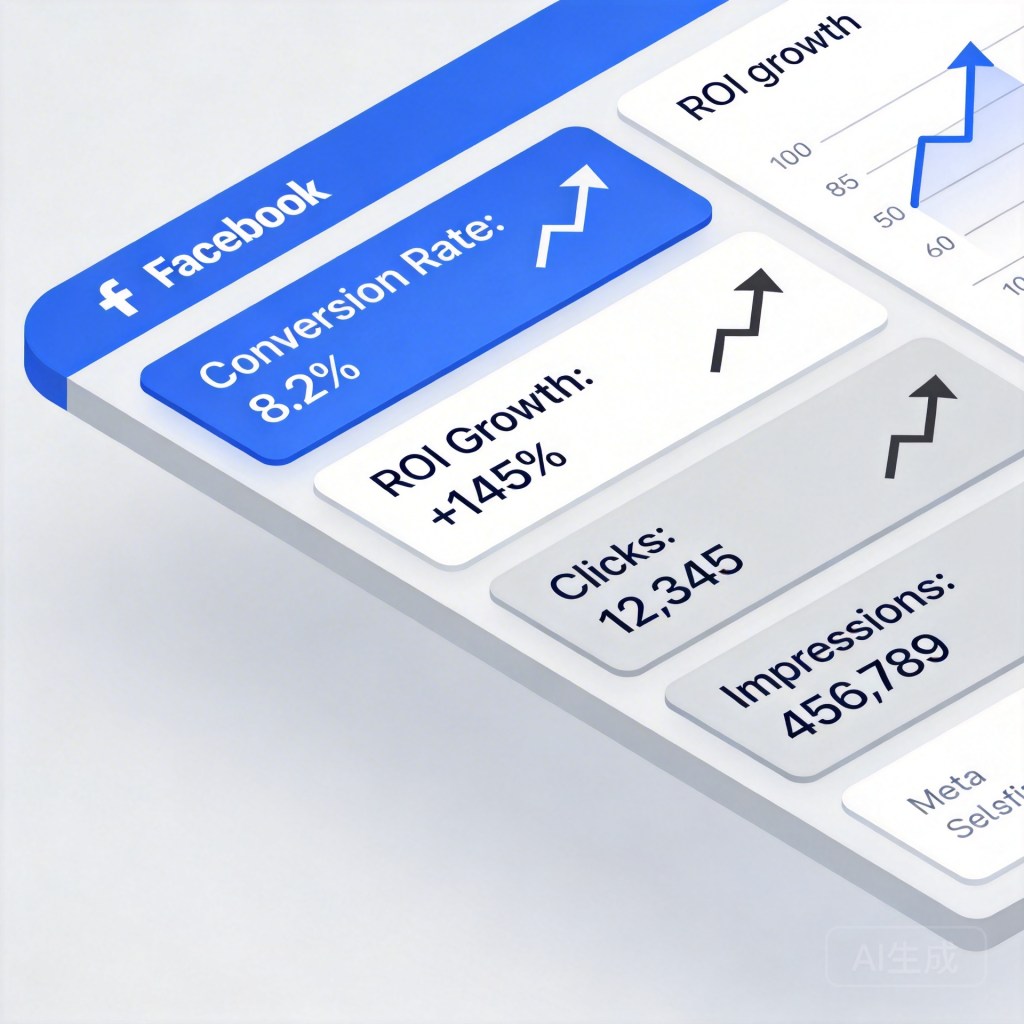
You’ve written compelling ad copy. Your targeting is dialed in. Your creative stops the scroll. But when users land on your page — they leave. The Facebook ads post-click experience is where most ad budgets quietly hemorrhage, and in 2026 it’s more consequential than ever.
This guide breaks down exactly what the Facebook ads post-click experience consists of, why it determines your true campaign ROI, and five concrete steps to dramatically improve it.
→ If you’re already looking for a fix, Book a Free Demo and our team will audit your post-click funnel for free.
What Is the Facebook Ads Post-Click Experience?
The post-click experience refers to everything that happens after a user taps or clicks your Facebook or Instagram ad — from the milliseconds before your landing page renders, to the re-engagement touchpoints that bring bounced visitors back.
It encompasses:
- Technical performance: Page load speed, mobile responsiveness, Core Web Vitals scores
- Message continuity: Whether the landing page delivers on the promise made in the ad
- UX and friction: How easy it is to take the intended action
- Trust signals: Reviews, security badges, social proof
- Re-engagement: What happens to users who don’t convert on the first visit
Facebook’s algorithm actively measures and scores this experience. Advertisers with poor post-click experiences receive lower quality rankings, higher CPCs, and reduced delivery — essentially paying a penalty for bad UX.
Why the Post-Click Experience Directly Impacts Your Ad Costs
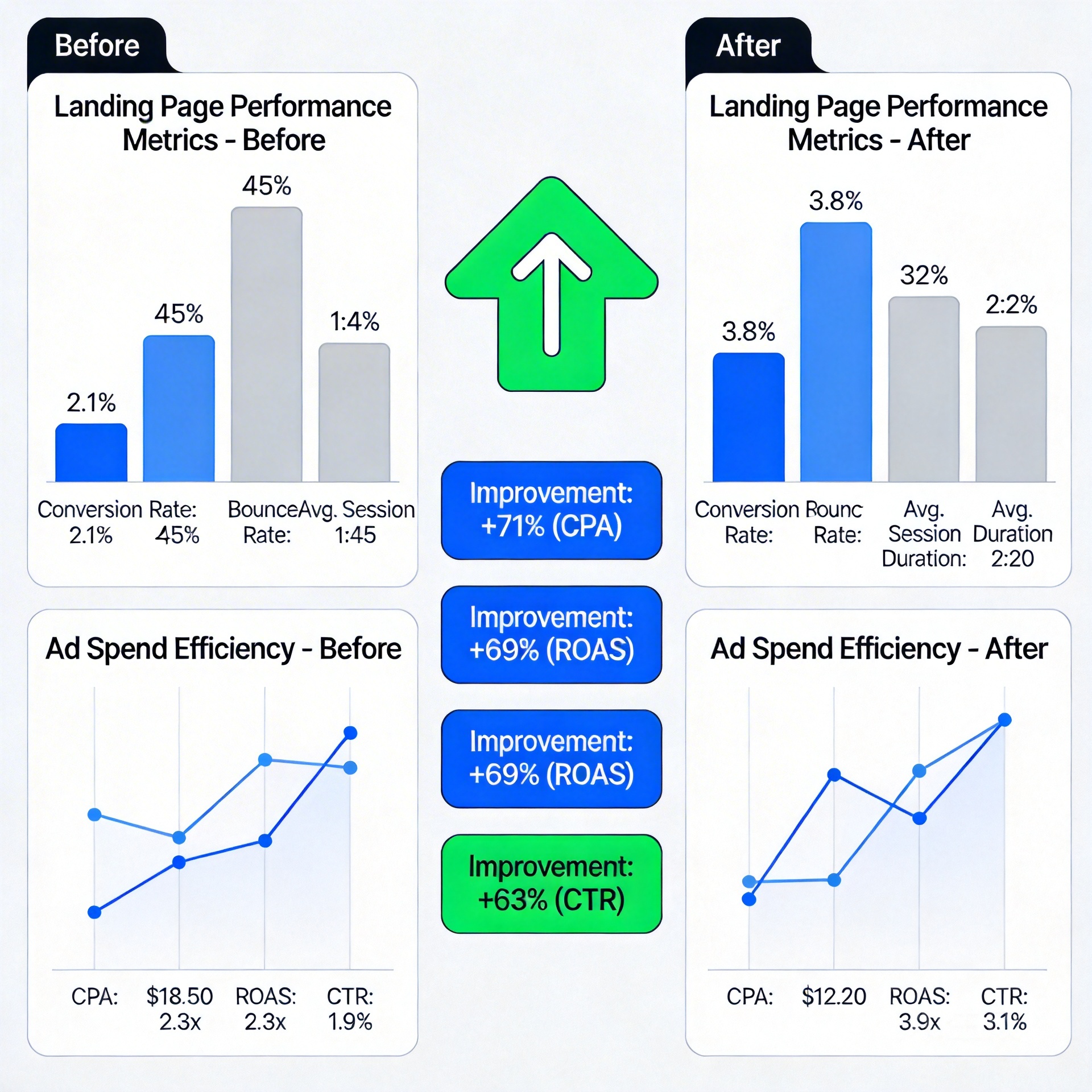
Many advertisers don’t realize that Facebook’s ad auction considers your landing page quality as part of its bidding calculation. Here’s the data that makes the case:
- Advertisers with high landing page quality scores pay up to 40% less per click than those with low scores (WordStream, 2025)
- A 1-second delay in mobile page load time reduces conversions by 7% (Portent, 2023)
- Message-mismatched landing pages have an average bounce rate of 78% vs. 42% for matched pages (Unbounce, 2024)
- Advertisers who implement re-engagement sequences recover 25–45% of initially lost conversions (DeepClick data, 2025)
The implication: improving your post-click experience is not just a conversion optimization play — it’s a CPM and CPC reduction strategy.
5 Steps to Transform Your Facebook Ads Post-Click Experience
Step 1: Conduct a Post-Click Experience Audit
Before optimizing, you need to know what’s broken. A structured audit takes 2–3 hours and reveals the highest-impact fixes.
Audit checklist:
- Test your landing page load time on mobile using Google PageSpeed Insights (target: LCP < 2.5s)
- Open your top 5 ads and immediately go to the landing page — does the headline match the ad’s core promise?
- Check your Meta Ads Manager “Landing Page Views” vs. “Link Clicks” ratio — a ratio below 0.7 signals significant drop-off before the page even loads
- Review your Facebook Pixel’s funnel events: where exactly does traffic drop off?
- Run your landing page through a heatmap tool (Hotjar, Microsoft Clarity) for one week — look for rage clicks and exit zones
Document every issue you find. Prioritize by potential impact: speed issues first (they affect everyone), then message match, then UX friction.
Step 2: Build Strict Message Match Between Ad and Landing Page
Message match is the single most underrated element of the Facebook ads post-click experience. When an ad promises “50% off your first order” and the landing page talks about “premium quality at competitive prices,” users feel deceived — and they bounce.
Implementation steps:
- Create dedicated landing pages for each major ad campaign (not ad sets — campaigns)
- The landing page H1 or hero headline should use the same keyword or offer phrase as the ad headline
- If your ad uses a specific image or color scheme, carry that visual language to the landing page above the fold
- For dynamic ads (catalog ads, broad targeting), use dynamic text replacement to match landing page copy to search terms or interests
Brands that implement strict message match see average CVR improvements of 25–35% with no other changes (Instapage, 2024).
Step 3: Optimize Landing Page Speed for Mobile-First Meta Traffic
With 84%+ of Facebook ad clicks happening on mobile devices, your landing page’s mobile performance directly determines your campaign ROI.
Priority speed fixes (ranked by impact):
- Convert images to WebP: Reduces image payloads by 30–50%. Free tools: Squoosh, TinyPNG
- Lazy-load below-fold images: Improves initial load time by 20–40% on image-heavy pages
- Remove or defer JavaScript: Third-party scripts (chat widgets, analytics, A/B testing tools) often add 1–2 seconds. Audit with Chrome DevTools Network panel
- Use a CDN: Cloudflare free plan reduces TTFB by 40%+ for global Meta audiences
- Enable AMP or Fast Pages: Facebook’s Instant Experiences (formerly Canvas) loads content within Facebook’s native interface — average load time 10x faster than external URLs
Step 4: Reduce Conversion Friction at Every Stage
Friction is anything that makes converting harder than it needs to be. In the context of Facebook ads — where users are often browsing casually rather than actively shopping — even small friction points cause abandonment.
High-impact friction reduction tactics:
- Shorten forms: For lead gen, use Meta’s native Lead Ads (pre-filled forms) instead of directing to an external page. Reduces form abandonment by up to 50%
- Add progress indicators: For multi-step forms or checkout flows, showing “Step 2 of 3” reduces abandonment by 18% (Formstack, 2023)
- Use social proof near CTAs: Star ratings, customer counts, or testimonials within 2 scrolls of your primary CTA
- Simplify mobile checkout: Offer Apple Pay, Google Pay, and Shop Pay — one-tap checkout reduces cart abandonment by 25% vs. form-based checkout
- Eliminate pop-up interruptions: Entry pop-ups on mobile landing pages increase bounce rate by 40% for paid traffic (Google, 2017 — still valid)
Step 5: Implement an Automated Post-Click Re-Engagement System
Even a perfectly optimized landing page will only convert 3–8% of visitors on the first visit. The other 92–97% leave — but they’re not permanently lost. A structured re-engagement system is the final critical component of a high-performing Facebook ads post-click experience.
Build a 3-layer re-engagement system:
-
Facebook Custom Audience retargeting:
- Segment visitors by depth of engagement (e.g., viewed product page vs. initiated checkout)
- Show different creatives based on funnel stage — social proof ads for early-stage, urgency/offer ads for late-stage
- Use 3-day, 7-day, and 14-day retargeting windows
-
Email/SMS automation:
- If you captured contact info (form submit, lead ad), trigger a 5-email nurture sequence starting within 1 hour of first visit
- Email 1: Deliver on the promise (lead magnet, discount code)
- Email 2: Address the #1 objection with social proof
- Emails 3–5: Case studies, FAQ, final urgency close
-
Post-click link optimization:
- Use tools like DeepClick to monitor post-click drop-off in real time and automatically test landing page variations
- Set up alerts for sudden changes in bounce rate (signal of broken page or mismatched traffic)
Measuring Post-Click Experience: The Metrics That Matter
To know if your optimizations are working, track these KPIs weekly:
| Metric | Benchmark | What It Tells You |
|---|---|---|
| LCP (mobile) | < 2.5 seconds | Page speed performance |
| Landing Page View Rate | > 70% of link clicks | Load-time drop-off |
| Bounce Rate (paid) | < 55% | Message match + relevance |
| CVR (click to conversion) | Industry-dependent, aim 2x baseline | Overall funnel health |
| Retargeting CVR | 2–3x cold traffic CVR | Re-engagement effectiveness |
The Compounding Effect: Why Small Improvements Add Up Fast
The power of optimizing your Facebook ads post-click experience lies in compounding. Consider a campaign with these baseline numbers:
- 1,000 clicks/month at $2.00 CPC = $2,000 spend
- 2% CVR = 20 conversions
- $100 CPA
Now apply the 5 steps above:
- Speed fix: +7% CVR → 21.4 conversions
- Message match: +25% CVR → 26.8 conversions
- Friction reduction: +15% CVR → 30.8 conversions
- Re-engagement (recovers 30% of bounces): → 40+ conversions
Result: CPA drops from $100 to $50 with the same ad spend. That’s the real value of a systematic post-click experience optimization program.
Stop losing conversions after the click.
DeepClick helps Meta advertisers fix post-click drop-offs and improve CVR by 30%+ through automated re-engagement and post-click link optimization.
{ “@context”: “https://schema.org”, “@type”: “BlogPosting”, “headline”: “Facebook Ads Post-Click Experience: 5 Steps to Boost CVR | DeepClick”, “inLanguage”: “en”, “datePublished”: “2026-04-02T16:09:28Z”, “dateModified”: “2026-04-02T16:09:28Z”, “author”: { “@type”: “Organization”, “name”: “DeepClick”, “url”: “https://deepclick.com” }, “publisher”: { “@type”: “Organization”, “name”: “DeepClick”, “url”: “https://deepclick.com” }, “mainEntityOfPage”: { “@type”: “WebPage”, “@id”: “https://deepclickads.com/2026/04/02/facebook-ads-post-click-experience-2026/” }, “description”: “You’ve written compelling ad copy. Your targeting is dialed in. Your creative stops the scroll. But when users land on your page — they leav…” } DeepAds
留下评论