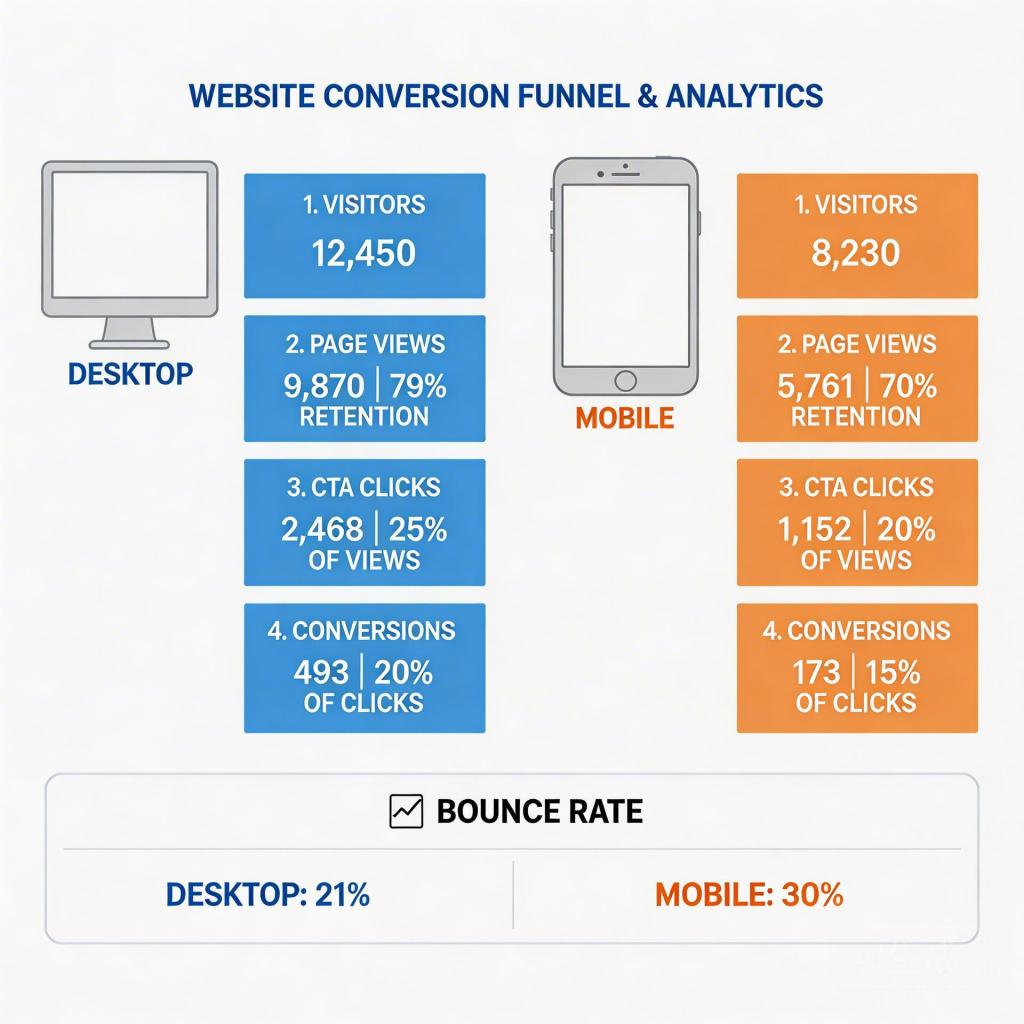
You paid for the click. Someone saw your ad, felt the pull, and tapped through. Then they left — sometimes in under three seconds. That’s the post-click drop-off problem, and it’s quietly draining more ad budget than most teams realize. A high bounce rate after an ad click isn’t a creative failure. It’s a landing page and funnel alignment problem, and it’s fixable with the right diagnostic lens.
→ If you’re already looking for a fix, Book a Free Demo and our team will audit your post-click funnel for free.
TL;DR: A bounce rate above 60% on paid social traffic is a red flag. The five root causes — message mismatch, slow mobile load speed, weak CTA clarity, audience-offer misalignment, and trust gaps — account for the vast majority of post-click drop-offs. According to WordStream, the average Facebook ads CVR sits at 9.21%; fixing these five issues routinely pushes teams above 10%.
Why Your Bounce Rate Is High After Ad Clicks
Bounce rate benchmarks differ sharply by traffic type. For paid social, excellent is 20–35%, acceptable is 55–70%, and anything above 60% on a direct-response campaign is a red flag worth investigating immediately. For a complete guide to improving overall conversion rates, see our Facebook ads conversion rate optimization guide.
The gap exists because social ads interrupt. Unlike search, where the user has expressed explicit intent, social ad clicks come from a disrupted mindset. That makes the first three seconds on your landing page the most critical conversion window you have. If those seconds don’t confirm the promise made in the ad, the user leaves — and your bounce rate climbs.
Here’s what makes this especially costly: you’ve already paid for that click. Facebook and Meta’s auction system charges you regardless of what happens after the tap. Every bounce is a paid click with zero return.
Citation Capsule: According to Semrush’s 2025 benchmarking report, the average bounce rate across all industries for paid traffic is 41–55%. Paid social specifically skews higher than paid search because of the intent gap between browsing and actively looking for a solution. Anything above 60% on a direct-response paid social funnel signals a structural problem.
The 5 Root Causes of Post-Click Drop-Off
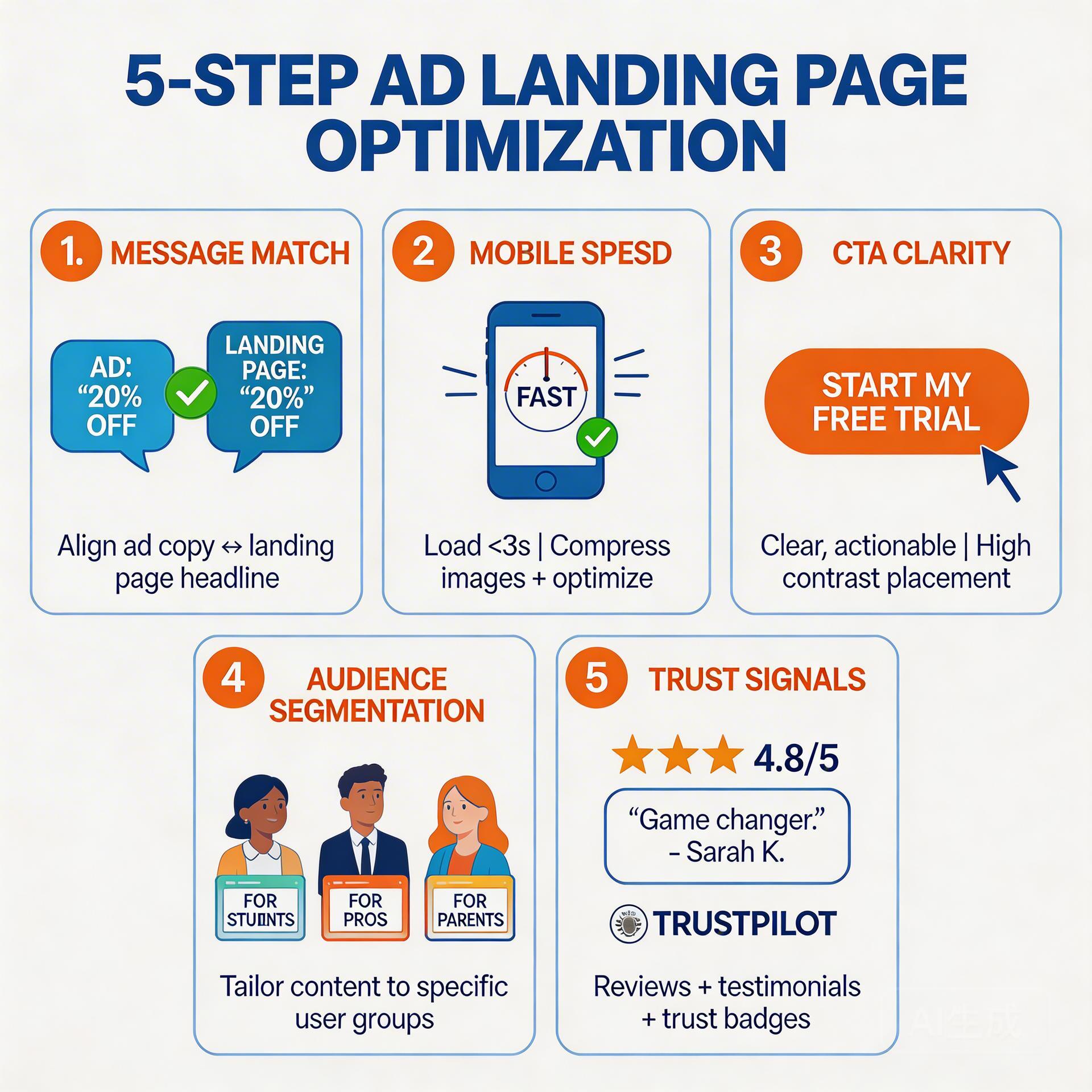
Post-click drop-off is rarely random. According to a 2025 analysis by Unbounce covering over 50,000 landing pages, message mismatch between the ad and the landing page is the single most cited cause of high bounce rates, affecting more than 68% of underperforming paid social campaigns.
1. Message Mismatch
Your ad makes a specific promise. The landing page doesn’t immediately confirm that promise. The user’s brain is pattern-matching in the first two seconds: “Does this page match what I just saw?” When the headline, visual, or offer on the landing page diverges from the ad creative, the user’s cognitive dissonance triggers an exit.
Message mismatch is especially prevalent in campaigns where teams create one landing page and run dozens of ad variations. Each ad variation makes a slightly different promise, but they all point to the same generic page. In our experience, teams using a single landing page across five or more ad angles typically see 15–20 percentage point higher bounce rates compared to teams using angle-matched landing pages.
2. Slow Mobile Load Speed
Most Facebook and Instagram ad traffic lands on mobile. According to Google’s 2024 PageSpeed Insights research, 53% of mobile users abandon a page that takes longer than three seconds to load. A one-second delay in load time correlates with a 7% reduction in conversions (Akamai, 2023). Mobile load speed is a compounding problem — slow pages also damage your Meta Quality Score, raising your CPC over time.
3. Weak or Ambiguous CTA
A page with multiple competing CTAs creates decision paralysis. Research from Marketing Experiments shows that pages with a single, prominent CTA convert 266% better than pages with multiple competing actions. The CTA problem isn’t just about count — it’s about specificity. “Get Started” tells the user nothing. “Start Your Free 7-Day Trial” tells the user exactly what happens next.
4. Audience-Offer Misalignment
Not every click is equal. If your ad targets a cold audience but your landing page assumes prior product familiarity, the mismatch produces confusion — and bounces. Cold traffic needs more context, social proof, and trust signals than a retargeting audience. Sending both audience types to the same page optimized for neither is a structural conversion leak.
5. Trust and Credibility Gaps
Users who arrive from social ads are inherently more skeptical than search traffic. Missing trust signals — no reviews, no social proof, no recognizable brand indicators — create a credibility gap. According to Baymard Institute’s 2024 UX research, 17% of users abandon a sign-up flow specifically because they don’t trust the site with their information.
How to Fix Each Cause (Step-by-Step)
Step 1: Audit Message Match Across Every Ad-to-Page Path
Pull your top 10 ad creatives by click volume. For each one, answer: does the landing page headline match the ad’s primary claim within the first viewport? If not, create a dedicated version of the page — or at minimum, a dynamic headline swap — for each major ad angle. The headline swap implementation is usually a 15-minute task in any landing page builder. You’ll see bounce rate improvement within 48–72 hours of sufficient traffic.
Teams running AI social apps (AI dating, AI companion) see disproportionate gains from message match fixes because their ad creatives make emotionally specific promises that a generic page can’t fulfill. Dedicated post-click pages that mirror the ad’s emotional promise outperform generic install pages by 2–3x.
Step 2: Fix Mobile Load Speed to Under 2.5 Seconds
Run your landing page through Google PageSpeed Insights and target a mobile score above 75. The three fastest wins are: compress all images to WebP format, remove render-blocking JavaScript, and enable lazy loading for below-the-fold content. Most teams can get from a 5-second load to under 2.5 seconds without a full technical rewrite.
Step 3: Reduce CTAs to One Primary Action Per Page
Pick the single most important action for a cold traffic visitor. Remove competing CTA buttons from above the fold entirely. Test your CTA copy for specificity. Replace vague verbs with outcome-specific language. “Download the App” becomes “Get [App Name] Free on iOS.” “Sign Up” becomes “Start My Free Trial — No Credit Card.” Each specificity upgrade answers a user objection before it’s raised.
Step 4: Build Separate Landing Pages for Cold vs. Warm Audiences
Cold traffic pages need: a clear explanation of what the product does, three to five social proof signals (ratings, user counts, press mentions), and a low-friction first CTA (free trial, free install, free signup). Warm retargeting pages can skip the explanation and lead with the specific offer or incentive. Two variants, properly segmented, will outperform one generic page for both audience types.
Step 5: Add Trust Signals Immediately Visible on Load
Trust signals must appear in the first viewport — above the fold, visible without scrolling. For app advertisers, these include: App Store / Google Play rating (star rating + review count), total download count, one or two user review quotes, and a recognizable media mention if available. For subscription products, add a “no credit card required” note next to your primary CTA.
How to Measure Your Post-Click Performance
According to HubSpot’s 2025 Marketing Report, 43% of marketing teams don’t track post-click engagement metrics beyond raw conversion rate. Track these four numbers as your post-click performance baseline:
- Bounce rate by ad campaign: Segment in GA4 by UTM campaign to see which specific campaigns drive the highest bounce rates.
- Time on page by traffic source: Short time on page (under 15 seconds) combined with high bounce rate confirms message mismatch.
- Scroll depth: If users are bouncing after viewing less than 25% of the page, the problem is above the fold.
- Click-to-conversion rate by ad creative: Compare CVR across different creatives pointing to the same page.
Citation Capsule: HubSpot’s 2025 State of Marketing report found that brands tracking post-click engagement metrics were 2.3x more likely to improve their CVR quarter-over-quarter compared to teams tracking only top-level conversion rate.
For a complete framework on improving Facebook ads CVR, see our Facebook ads conversion rate optimization guide.
Quick Wins Checklist
- Headline match check: Does your landing page H1 mirror the primary claim in your top ad creative?
- Mobile load test: Is your mobile PageSpeed score above 75? Is load time under 2.5 seconds?
- Single CTA audit: Does your above-the-fold section have exactly one primary CTA with specific copy?
- Trust signal check: Are at least three trust signals visible in the first viewport?
- Audience segmentation: Do you have separate landing pages for cold and retargeting traffic?
- Bounce rate baseline: Have you pulled your current bounce rate by campaign in GA4?
- Scroll depth tracking: Is enhanced measurement enabled in GA4?
- CTA specificity rewrite: Have you replaced generic CTA verbs with outcome-specific language?
Running through this checklist takes about 45 minutes. The mobile speed fix and headline match update alone typically produce the largest and fastest bounce rate improvements.
Stop losing conversions after the click.
DeepClick helps Meta advertisers fix post-click drop-offs and improve CVR by 30%+ through automated re-engagement and post-click link optimization.
{ “@context”: “https://schema.org”, “@type”: “BlogPosting”, “headline”: “How to Reduce Bounce Rate After Ad Click (2026 Guide) | DeepClick”, “inLanguage”: “en”, “datePublished”: “2026-04-02T12:05:24Z”, “dateModified”: “2026-04-02T12:05:24Z”, “author”: { “@type”: “Organization”, “name”: “DeepClick”, “url”: “https://deepclick.com” }, “publisher”: { “@type”: “Organization”, “name”: “DeepClick”, “url”: “https://deepclick.com” }, “mainEntityOfPage”: { “@type”: “WebPage”, “@id”: “https://deepclickads.com/how-to-reduce-bounce-rate-after-ad-click-2026/” }, “description”: “High bounce rate after Facebook ad click? Learn the exact 5-step method to fix post-click drop-off, improve landing page match, and cut wasted ad spend in 2026.” } DeepAds
留下评论