You’ve spent weeks building your Facebook audience segments. Lookalikes from your best customers. Retargeting lists from high-intent visitors. Interest stacks refined through months of testing. Yet when you look at the results, the cost-per-acquisition is inconsistent, and you’re not sure which audience segment is actually driving your most valuable conversions.
The problem usually isn’t the audiences themselves — it’s how they’re structured, prioritized, and matched to the post-click experience. Facebook custom audience best practices have evolved significantly in 2026, and the teams getting the best results are using them in ways that go beyond the basics.
→ If you’re already looking for a fix, Book a Free Demo and our team will audit your post-click funnel for free.
The State of Facebook Custom Audiences in 2026
Three forces have reshaped how custom audiences perform in 2026:
1. Signal quality degradation: iOS ATT and browser privacy changes have reduced the fidelity of Pixel-based audiences. Website custom audiences from browser events alone can undercount actual visitors by 20-30%. Audiences built on Pixel data are smaller and noisier than they were two years ago.
2. Meta’s Advantage+ Audience expansion: Meta increasingly asks advertisers to give the algorithm room to expand beyond their defined audience. Tightly defined custom audiences can conflict with Advantage+ expansion, requiring a different strategic approach to audience use.
3. First-party data as the differentiator: Customer lists uploaded directly (email, phone, customer ID) have become more valuable as third-party signal degrades. Teams with rich CRM data have a structural advantage over those relying purely on Pixel-based audiences.
What Still Works: The Four Custom Audience Types That Drive Results
In 2026, these four types of Facebook custom audiences consistently outperform alternatives:
- Customer list audiences (uploaded CRM data) — highest match quality, immune to browser restrictions
- Purchase/conversion audiences from CAPI-enhanced Pixel data — server-confirmed events are more reliable than browser-only Pixel
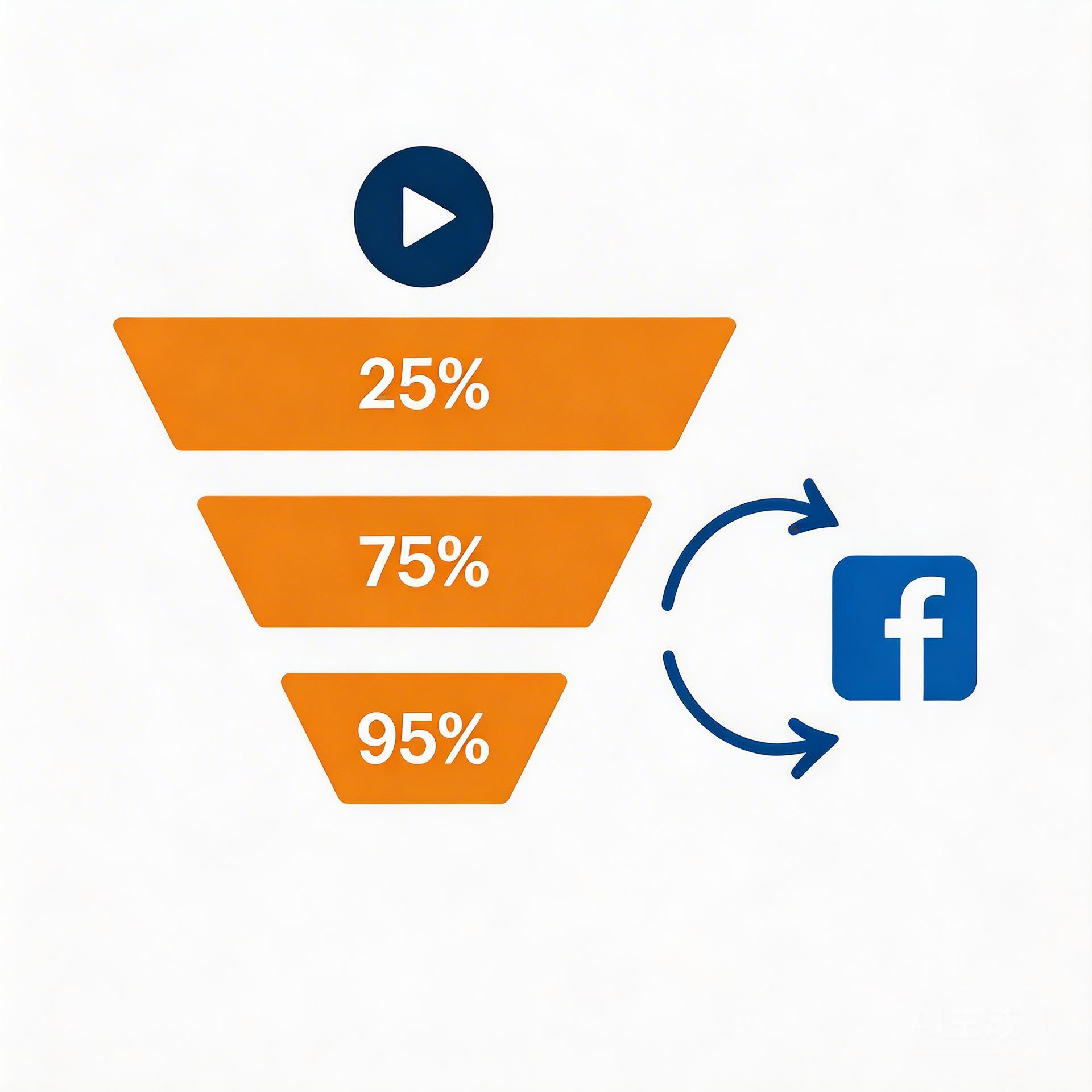
- Video engagement audiences (25%, 50%, 75% viewers) — strong intent signal that doesn’t rely on cookies
- Instagram/Facebook page engagement audiences — behavioral signal within Meta’s own properties, unaffected by iOS restrictions
Best Practices for Customer List Audiences
Customer list custom audiences are your most reliable foundation in 2026. Here’s how to maximize their performance:
Segment by Value, Not Just Activity
Most teams upload a single customer list. The teams getting the best results upload multiple segmented lists:
- High-LTV customers: Top 20% by lifetime revenue — use as seed for value-based lookalikes
- Recent purchasers (30-60 days): For exclusions and cross-sell campaigns
- Lapsed customers (90-180 days, no purchase): For win-back campaigns with different messaging
- Trial users who didn’t convert: For conversion campaigns with objection-handling creative
For AI social apps, also segment by: users who completed the first meaningful in-app action (first conversation, first connection) vs. those who installed and never engaged. These have very different conversion probabilities and need different ads.
Data Quality Is Everything
A customer list with 10,000 high-quality, properly formatted records will outperform 50,000 records with formatting errors and outdated contact data. Before uploading:
- Normalize email to lowercase
- Include country code with phone numbers (e.g., +1 for US)
- Include as many identifier columns as possible (email, phone, first name, last name, city, state, zip) — Meta matches on all available fields
- Remove bounced/invalid emails from your list
- Update the list at least monthly — customer data decays at roughly 20-25% per year
Value-Based Lookalikes: Your Highest-Potential Prospecting Audience
Value-based lookalikes (created from a customer list with a value column included) consistently outperform standard lookalikes because they tell Meta to find users who look like your highest-paying customers, not just any customers.
Best practices:
- Use 180 days of purchase data minimum for the seed list
- Include total customer lifetime value, not just last purchase amount
- Start with 1% lookalike for highest precision, expand to 2-3% if CPA targets are met
- Exclude your existing customer list from the lookalike campaign (you’re prospecting, not retargeting)
Engagement Audiences: The Underused Signal
Meta’s on-platform engagement audiences (video views, page engagement, Instagram engagement, lead form opens) are underused in most accounts. Because they’re tracked within Meta’s ecosystem, they’re unaffected by iOS restrictions and maintain full fidelity.
Video Engagement Audiences in Practice
If you’re running video content (Reels, Stories, in-feed video), building audiences from video viewers is one of the highest-intent signals available:
- 25% video viewers (180 days): Broad awareness audience — use for sequential retargeting with more information
- 75% viewers (30 days): Strong interest signal — use for consideration-level offers
- 95% viewers (14 days): Highest intent — treat similarly to website visitors, push conversion offers
The key insight: video engagement is a strong intent proxy that doesn’t depend on browser tracking. Building these audiences and adding them to your retargeting funnel adds a layer that iOS restrictions can’t touch.
Lead Form Engagement Audiences
If you run Lead Ads, you can build audiences from people who opened but didn’t submit your lead form — these users have shown explicit interest and deserve a follow-up campaign with different creative (address the reason they stopped before submitting).
Typical benchmark: Lead form openers who didn’t submit convert at 3-5x the rate of cold traffic when retargeted within 7 days with a compelling follow-up offer.
Want to know where your audience strategy is leaking conversions? DeepClick can audit your full post-click funnel.
Audience Exclusions: The Practice Most Teams Skip
Exclusions matter as much as inclusions. Without proper exclusions, you waste budget on users who’ve already converted (or who you explicitly don’t want to convert right now).
Exclusions to always run:
- Recent purchasers (30-60 days) excluded from prospecting campaigns
- Current subscribers/members excluded from acquisition campaigns
- Recent converters (7-14 days) excluded from retargeting campaigns (they just converted — let the post-purchase experience do its work)
- High-CPC segments (e.g., premium competitor keywords) excluded if you’re optimizing for efficient CPA
Exclusion Timing Windows
The exclusion window you choose matters. Excluding purchasers for only 7 days means users who bought last week see your acquisition ads again — that’s bad for brand experience and wastes spend. For subscription products, exclude current subscribers indefinitely (using your CRM list). For one-time purchases, 30-60 days is typical.
Connecting Custom Audiences to Post-Click Experience
Here’s the dimension most advertisers miss: the audience you’re targeting should inform what happens on the landing page after the click. This is where custom audience strategy and post-click optimization meet.
When you’re targeting a high-intent retargeting audience (e.g., 75% video viewers who visited your pricing page), the landing page they reach should reflect that context — higher urgency, more specific value proposition, friction-reduced conversion path. When you’re targeting a lookalike prospecting audience, the landing page should do more educational heavy lifting before pushing for conversion.
Teams that use the same landing page for all audience segments leave significant CVR improvement on the table. A retargeting visitor who saw your product video, visited your pricing page, and is now seeing your ad for the third time doesn’t need to be re-educated. They need a clean conversion path and a compelling reason to act now.
Also see: How to Reduce Bounce Rate After Ad Click for specific techniques to improve what happens after the click lands.
Practical Summary: Facebook Custom Audience Best Practices 2026
- ✅ Upload segmented CRM lists (high-LTV, recent, lapsed) — not one generic customer list
- ✅ Normalize and clean your list data before upload (lowercase email, full phone with country code)
- ✅ Build value-based lookalikes from your highest-revenue customers
- ✅ Create video engagement audiences (25%, 75%, 95% viewers) as an iOS-proof intent signal
- ✅ Build lead form opener audiences for follow-up retargeting
- ✅ Run proper exclusions (recent purchasers, current subscribers) on all campaigns
- ✅ Match your landing page experience to the intent level of the audience segment
- ✅ Refresh uploaded customer lists monthly as data decays
Stop losing conversions after the click.
DeepClick helps Meta advertisers fix post-click drop-offs and improve CVR by 30%+ through automated re-engagement and post-click link optimization.
 DeepAds
留下评论