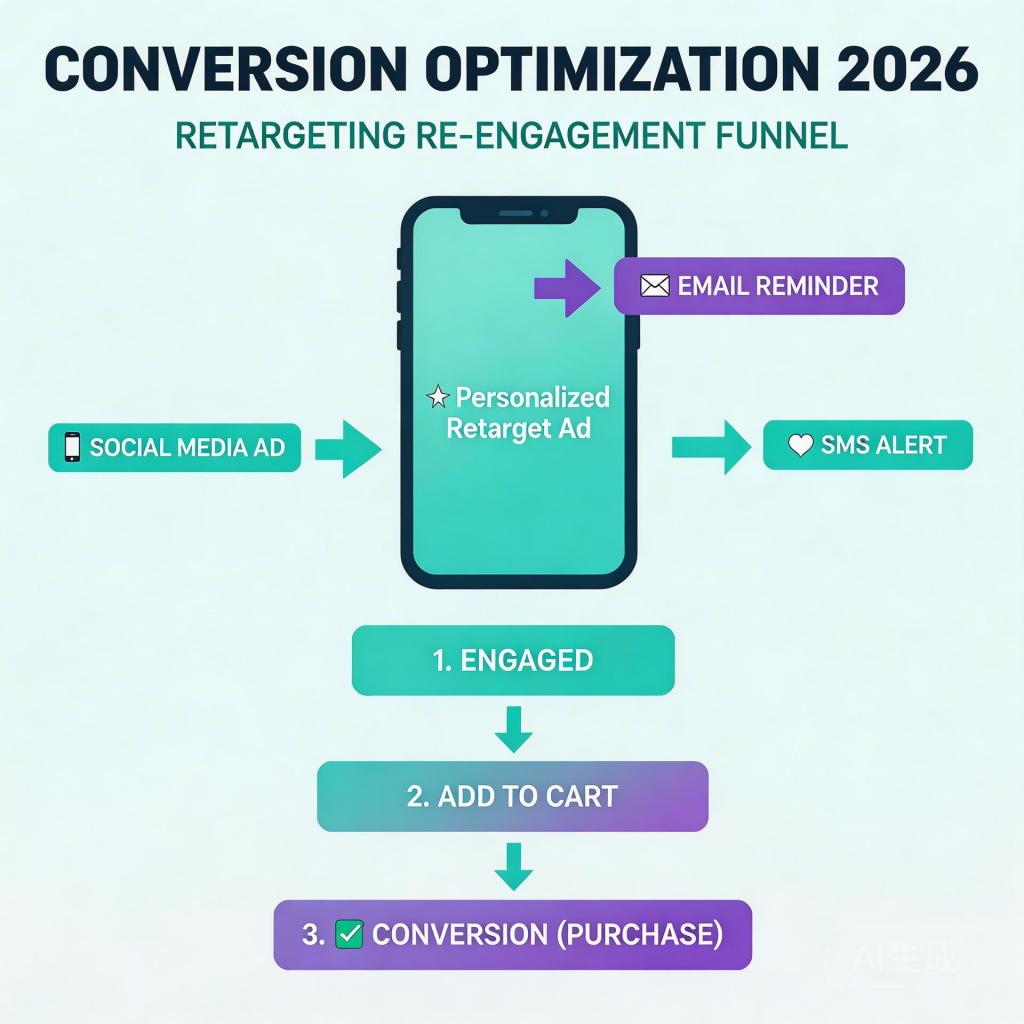
Most social ad campaigns are built around a single conversion event: the click. But for the majority of buyers — especially in competitive verticals like mobile gaming, AI apps, and subscription software — that first click almost never results in an immediate purchase. Industry data consistently shows that 75–85% of social ad clickers don’t convert on first touch. Without a structured post-click re-engagement system, you’re paying full price for traffic and recovering only a fraction of its value.
This guide walks through how to build a post-click re-engagement engine for social ads in 2026 — one that recovers lost intent, lowers effective CPA, and compounds value from every dollar you spend on traffic.
→ If you’re already looking for a fix, Book a Free Demo and our team will audit your post-click funnel for free.
Why First-Touch Conversion Rates Are Structurally Low
Before building re-engagement infrastructure, it helps to understand why most social ad clicks don’t convert immediately. The reasons vary by vertical, but three patterns recur:
- Discovery mindset: Users encountering a brand for the first time on social media are in browse mode, not buy mode. They’re evaluating, not deciding. Expecting a first-touch conversion is like expecting someone to buy a car from a billboard.
- Interruption context: Social ads appear while users are doing something else. Even interested users often don’t convert because the moment is wrong — they’re on a commute, in a meeting, or at a point in the feed where they’re not ready to stop scrolling.
- Trust deficit: For newer brands and apps, a single ad impression doesn’t establish enough trust to drive action. Multiple touchpoints are typically needed before users feel comfortable converting.
The implication: re-engagement isn’t a nice-to-have. It’s the mechanism that makes your acquisition spending economically viable.
The Re-Engagement Architecture: Three Layers
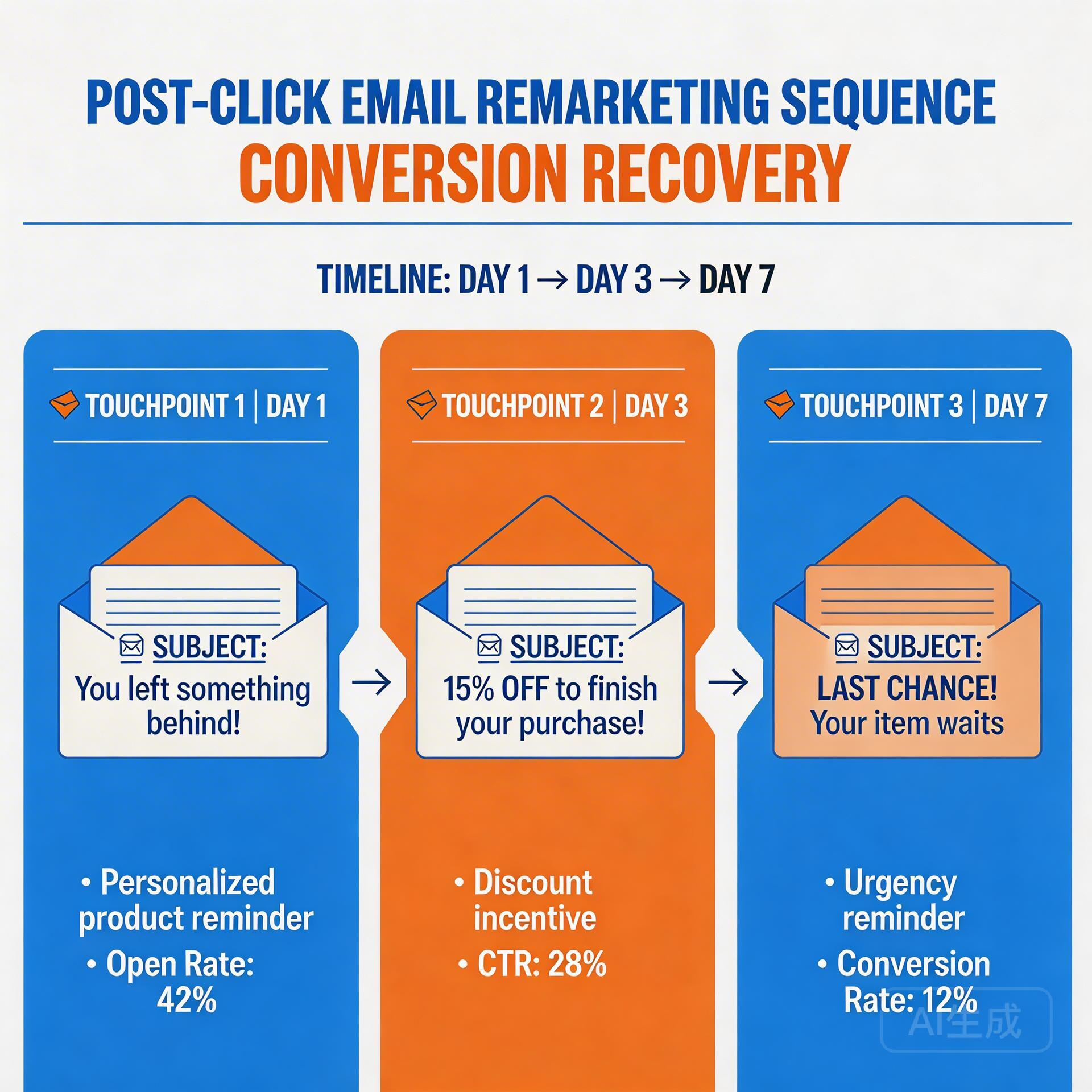
Effective social ad re-engagement in 2026 operates across three layers, each addressing a different stage of the post-click journey:
Layer 1: Pixel-Based Retargeting (Days 0–7)
The fastest-decaying intent lives in the first 24–72 hours post-click. Users who visited your landing page or app store listing and left without converting should immediately enter a retargeting sequence.
Key setup requirements:
- Custom audience: “Visited landing page in last 7 days, no conversion event”
- Frequency cap: 2–3 impressions per user per day (higher caps increase banner blindness)
- Creative rotation: minimum 3 variants to avoid ad fatigue — use different angles (social proof, feature highlight, urgency)
- Platform: run across Meta, and if budget allows, extend to Google Display for cross-platform coverage
This layer typically recovers 8–15% of non-converting clickers at CPAs 40–60% lower than cold acquisition.
Layer 2: Email or Push Capture (If Opt-In Exists)
If your landing page captures an email or your app requests push permission, you have a direct re-engagement channel that doesn’t require ad spend for follow-up touches.
For email re-engagement:
- Email 1 (Day 1): Welcome or “you left something behind” — keep it short, one CTA
- Email 2 (Day 3): Proof point — case study, testimonial, or data that addresses the most common objection
- Email 3 (Day 7): Last-touch offer — trial extension, bonus, or a direct “here’s what you’re missing”
Email re-engagement sequences convert at 2–5x higher rates than cold retargeting ads, and the marginal cost per conversion is near zero. If you’re not capturing emails pre-conversion, this is one of the highest-ROI changes you can make to your landing page.
Layer 3: Lookalike Expansion (Days 14–30)
Users who engaged with your post-click content (visited multiple pages, watched video to completion, or initiated checkout) but still didn’t convert are high-signal non-converters. Build 1% lookalike audiences from this segment and use them to expand reach to similar prospects — people with the same behavioral profile who haven’t been exposed to your brand yet.
This layer doesn’t recover existing clickers; it uses the behavioral data from non-converters to find more efficient new traffic. Teams that implement this typically see CPAs 20–35% lower than standard lookalikes built from converters alone.
For the mechanics of setting up these audiences, see our guide on Meta Ads remarketing vs retargeting in 2026.
Creative Strategy for Re-Engagement
Re-engagement creative should not be identical to acquisition creative. Users who’ve already seen your ad and visited your page know who you are. They don’t need awareness — they need a reason to reconsider.
Three creative angles that perform well in re-engagement:
- Social proof validation: “Here’s what other [role] are saying about us.” Address the skepticism of someone who considered but didn’t act. Specific metrics outperform vague testimonials (“Reduced CPA by 34% in 3 weeks” vs. “Game-changing tool”).
- Objection handling: Identify the most common reason users don’t convert on first touch (price, trust, uncertainty about fit) and address it directly in the creative. This requires knowing your own funnel — run exit surveys or session recordings on your landing page to find the dominant objection.
- Urgency or milestone trigger: For SaaS and app products, a limited trial, cohort launch, or feature unlock creates a time-bound reason to act. Avoid false scarcity; users recognize it. Real triggers (cohort enrollment closes Friday, feature launches next week) convert better.
For landing page optimization that supports your re-engagement sequence, see our analysis of Facebook Ads landing page conversion rate fixes for 2026.
Measuring Re-Engagement ROI
The standard metric for evaluating re-engagement is recovered conversion rate: the percentage of non-converting first-touch visitors who eventually convert through the re-engagement sequence.
Benchmark targets by vertical:
- Mobile gaming (casual): 12–18% recovery rate
- AI social apps: 10–15% recovery rate
- SaaS / subscription: 15–22% recovery rate
- E-commerce: 8–14% recovery rate
If your recovery rate is below these benchmarks, the most common culprits are: re-engagement window too narrow (expand from 7 to 21 days), creative fatigue (add more variants), or a broken conversion path on the landing page itself.
Track re-engagement CPA separately from acquisition CPA. In well-optimized campaigns, re-engagement CPA should be 30–50% lower than cold acquisition CPA. If it’s not, your re-engagement audience segmentation or bid strategy needs adjustment.
For the complete framework on post-click optimization across all Meta ad types, read our Facebook Ads CVR optimization guide.
Common Mistakes That Kill Re-Engagement Performance
- Too-broad retargeting audience: Including users who bounced in under 5 seconds pollutes your re-engagement pool with low-intent traffic. Filter to users who spent at least 30 seconds on page or viewed 2+ pages.
- Same creative as acquisition: Users who’ve already seen your acquisition ads will tune them out completely. Re-engagement needs fresh angles.
- No frequency cap: Uncapped retargeting is one of the fastest ways to generate negative brand sentiment. Keep daily frequency at 2–3 max.
- Re-engagement window too short: 7-day retargeting windows miss users who take 2–3 weeks to decide. Extend to 21–30 days, especially for higher-consideration purchases.
Action Plan: Social Ads Post-Click Re-Engagement 2026
- ☐ Set up retargeting custom audience: “visited page, no conversion, last 7 days”
- ☐ Build 3+ re-engagement creative variants (social proof, objection, urgency)
- ☐ Set frequency cap: 2–3 impressions/user/day
- ☐ Add email capture to landing page if not present; build 3-email follow-up sequence
- ☐ Create high-signal non-converter audience for lookalike expansion (Day 14+)
- ☐ Track re-engagement CPA separately; target 30–50% below acquisition CPA
- ☐ Extend retargeting window to 21–30 days for higher-consideration products
- ☐ Monthly audit: check recovery rate vs. vertical benchmarks
Stop losing conversions after the click.
DeepClick helps Meta advertisers fix post-click drop-offs and improve CVR by 30%+ through automated re-engagement and post-click link optimization.
 DeepAds
留下评论