AI apps — whether AI dating, AI companions, or AI-powered social platforms — face a conversion challenge that most standard Facebook ad playbooks don’t address. Users click. They land on the page. Then they leave without signing up. The problem isn’t your ad; it’s the post-click funnel. This guide breaks down where AI app post-click funnels break down and how to fix each stage in 2026.
→ If you’re already looking for a fix, Book a Free Demo and our team will audit your post-click funnel for free.
Why AI App Post-Click Funnels Break Differently
AI social apps aren’t selling a game or a SaaS tool. They’re selling a relationship, an experience, a persona. That creates specific psychological dynamics in the post-click moment that make standard conversion optimization tactics less effective.
Three characteristics make AI app funnels uniquely fragile:
- High curiosity, low commitment: Users click because they’re intrigued, not because they’re ready to sign up. The post-click experience needs to convert curiosity into enough trust to hand over an email or phone number.
- Privacy sensitivity: AI dating and companion apps often require account creation with personal data. Any friction point that feels unsafe or unclear kills the conversion.
- Expectation mismatch: If the ad shows a premium AI character experience and the landing page looks like a basic web form, the conversion gap is massive.
Industry benchmarks show AI social apps averaging 8–14% click-to-signup rates on Facebook ads. Apps with optimized post-click funnels reach 18–25%.
The 4 Stages of an AI App Post-Click Funnel
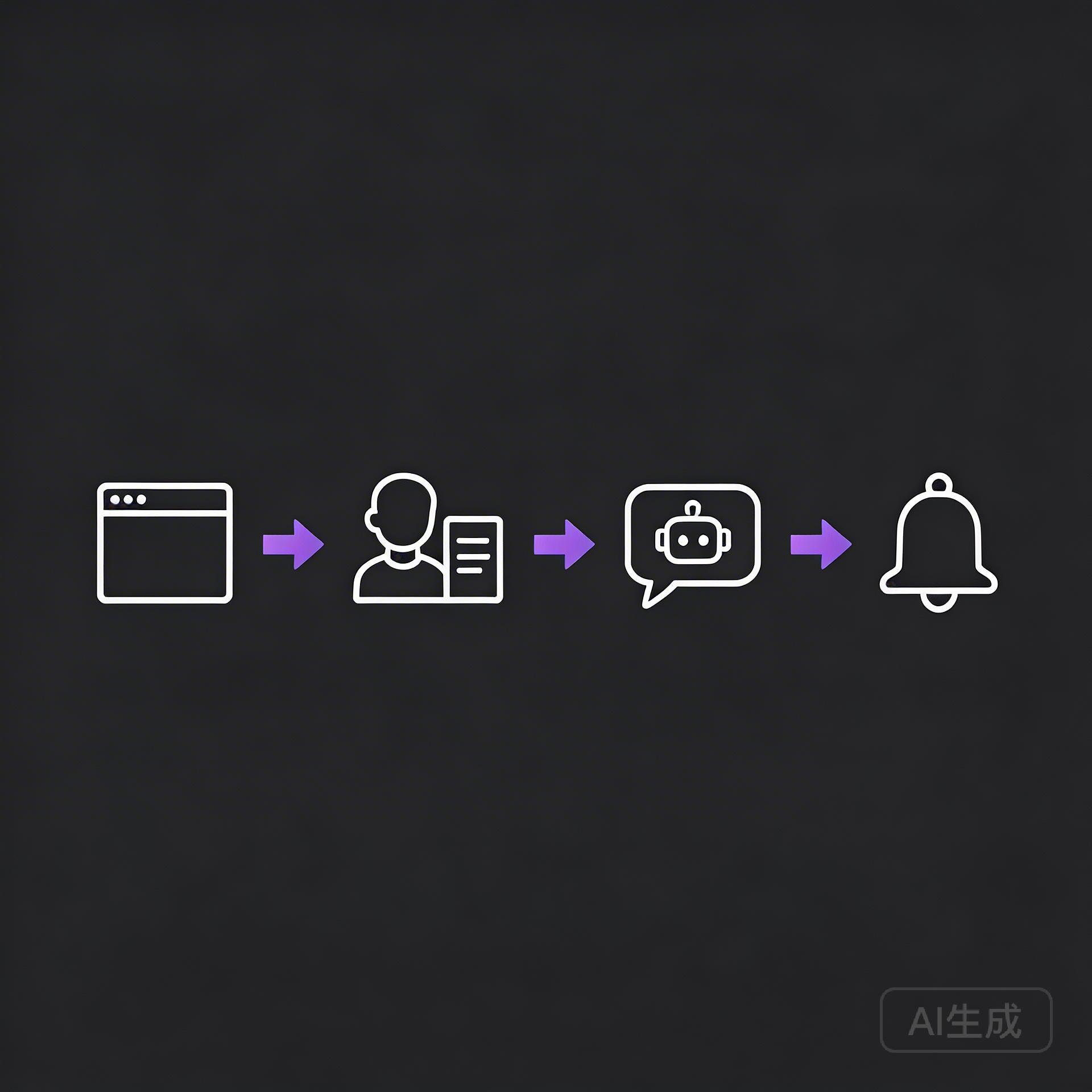
Stage 1: The Landing Page (First 5 Seconds)
The first five seconds after an ad click determine whether the user stays or bounces. For AI apps, these five seconds need to accomplish three things: confirm the user is in the right place, create emotional resonance, and surface a clear next action.
What high-converting AI app landing pages do:
- Show the AI persona face or interface immediately above the fold — no generic headlines
- Keep the primary CTA (Start for free / Try now) visible without scrolling
- Use social proof (user counts, ratings, testimonials) within the first screen
- Load in under 2.5 seconds on mobile
Common failure modes:
- App store redirect instead of a dedicated landing page (adds 1–2 extra steps and breaks the funnel)
- Long-form copy above the fold instead of the emotional hook
- Missing or buried CTA button
Stage 2: Signup Flow (Minutes 1–3)
Once a user clicks the CTA, the signup flow determines conversion rate. For AI apps, friction is the enemy. Every extra field, every confirmation screen, every “add a photo” prompt before the core experience loads increases drop-off.
Optimization steps:
- Reduce required fields to a minimum (email or phone + password; no birthday, no profile photo required at signup)
- Offer social login (Google, Apple) as the primary option — reduces signup friction by 30–40%
- Show a progress indicator if there are multiple steps — users complete flows more often when they can see the end
- Give users a taste of the AI experience before the signup wall, if possible (1–2 demo messages)
Stage 3: First Interaction (The “Aha” Moment)
Getting a user to create an account is only halfway to a conversion. For AI apps, the real conversion is the first meaningful interaction with the AI — the moment the user thinks “this is actually good.” This moment needs to happen within the first 2–3 minutes of the session.
How to engineer the Aha moment:
- Pre-configure a default AI persona that matches the ad creative — don’t make users choose a persona before they’ve experienced the product
- Open with a strong first message from the AI that matches the tone and topic from the ad
- Remove all setup steps that don’t directly lead to the first interaction
Stage 4: Re-Engagement for Non-Converters
Users who clicked your ad but didn’t complete signup (or who signed up but never returned) represent your highest-ROI re-engagement opportunity. These users have already shown intent — they just need a second push.
Re-engagement strategy:
- Create a Custom Audience from Facebook Pixel click events, segmented by how far they got in the funnel (bounced at landing page vs. dropped during signup)
- Run separate re-engagement ads to each segment with messages that address the drop-off point: landing page bouncers get an emotional re-hook, signup drop-offs get a “you were so close” reminder
- Timing: re-engagement ads within 24 hours perform 3x better than ads served 3+ days later
For detailed re-engagement playbooks, see: Social Ad Re-Engagement After the Click: 2026 Playbook.
Measuring AI App Post-Click Funnel Performance
These are the metrics to track at each funnel stage:
- Ad click to landing page bounce rate: Target below 55%. Above 65% means your landing page isn’t matching the ad promise.
- Landing page to signup initiation rate: Target 35–45%. Below 25% means your above-the-fold experience needs rework.
- Signup initiation to completion rate: Target 60–75%. Below 50% means your signup flow has too much friction.
- Signup to first AI interaction rate: Target 70–80%. Below 60% means users are getting lost before the Aha moment.
If any of these stages falls below target, that stage is your conversion bottleneck. Fix the worst-performing stage first — the impact will cascade through the rest of the funnel.
Three Immediate Actions to Improve Your AI App CVR
Action 1: Build Campaign-Specific Landing Pages
Stop sending all traffic to your homepage or app store page. Create dedicated landing pages for each major ad campaign — matching the AI persona, tone, and visual style of the ad creative. Campaign-specific pages consistently outperform generic pages by 20–40% on signup rate.
Action 2: Streamline Your Signup to Two Steps Maximum
Audit your current signup flow and count the number of screens between ad click and first AI interaction. If it’s more than 4 steps, you’re losing a measurable percentage of users at each step. Reduce to a minimum: credentials → verification → first interaction.
Action 3: Test a Pre-Signup Demo Experience
Allow users to send 2–3 messages to the AI before asking for account creation. This gives users enough of the experience to be convinced before they’re asked to commit. Apps that implement this report 15–30% higher signup completion rates.
For the full framework covering ad-to-funnel alignment and split testing, see: Facebook Ads Split Test Landing Pages: 2026 Guide.
And for broader CVR optimization across all campaign types, our pillar guide covers the complete methodology: Facebook Ads Conversion Rate Optimization — Complete Guide.
Summary
AI app post-click funnels fail for predictable reasons: landing pages that don’t match ad promises, signup flows with too much friction, and no re-engagement strategy for non-converters. Each of these is fixable with targeted changes. Start with your landing page load speed and above-the-fold experience, then work backward through your signup flow, and finally add re-engagement campaigns for click-but-no-signup users.
Stop losing conversions after the click.
DeepClick helps Meta advertisers fix post-click drop-offs and improve CVR by 30%+ through automated re-engagement and post-click link optimization.
 DeepAds
留下评论