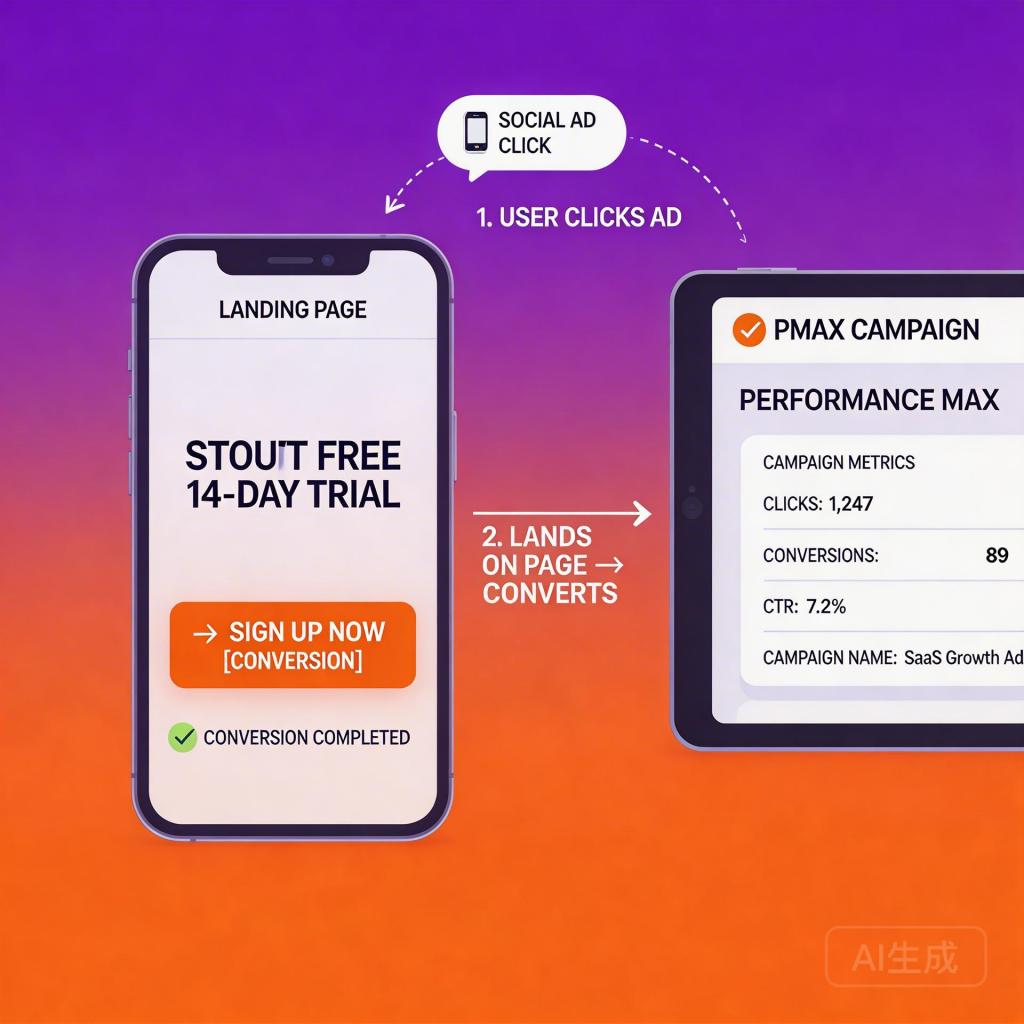
Google Performance Max is now delivering traffic to landing pages across six channels simultaneously. But here’s the conversion problem most advertisers miss: PMax doesn’t just change where your budget goes — it fundamentally changes the intent profile of who arrives on your landing page.
Display and YouTube traffic from PMax campaigns have 40–60% lower post-click CVR than Search traffic. If your landing page is optimized for high-intent Search visitors, you’re almost certainly losing the majority of your PMax Display and YouTube clicks to bounces. This guide breaks down how to fix that — specifically for social app and gaming campaigns where PMax is increasingly taking over budget allocation.
→ If you’re already looking for a fix, Book a Free Demo and our team will audit your post-click funnel for free.
Why PMax Landing Pages Fail for Social Ad Traffic
The fundamental mismatch is intent. When PMax allocates budget to Display and YouTube channels to hit volume targets, it sends traffic to your landing page from users who were browsing — not actively searching. They clicked your ad out of curiosity, not purchase intent.
Your landing page — probably designed for someone who searched “buy [your product]” — presents them with pricing, feature lists, and a hard CTA before they’ve even understood what your product does. Result: immediate bounce.
The data confirms this pattern across social app and BC gaming verticals:
- Average landing page bounce rate for PMax Display traffic: 72–84%
- Average landing page bounce rate for PMax Search traffic: 38–51%
- CVR gap between channel types: 3–5x difference on the same landing page
When you run PMax without addressing this intent gap, you’re essentially paying Search CPCs for Display traffic quality — the algorithm will continue allocating budget to these channels if it sees even marginal conversion signals, while the actual conversion rate drags down your overall campaign ROAS.
The Post-Click Optimization Framework for PMax Social Traffic
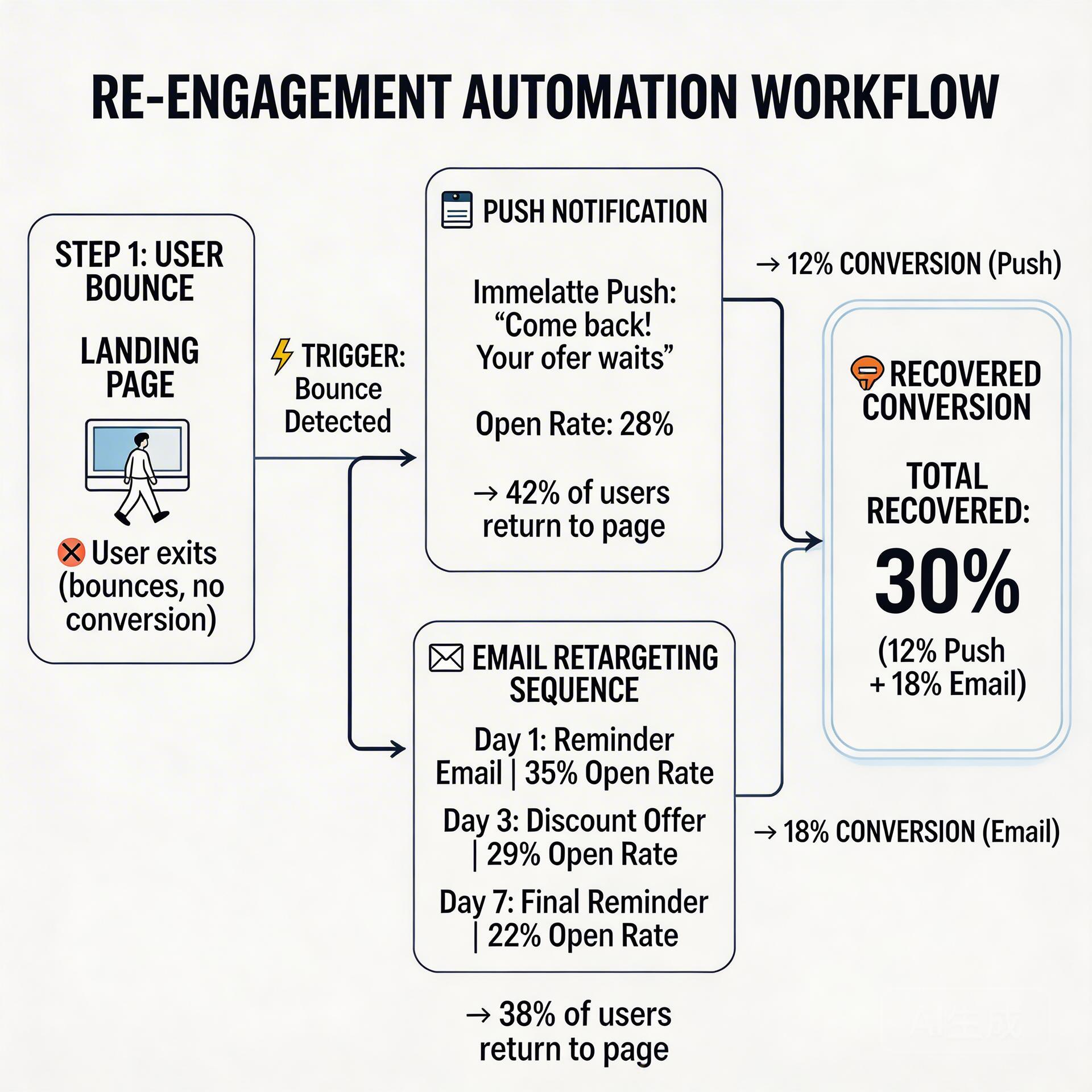
Fixing PMax landing page CVR for social ad traffic requires a structured approach across three layers:
Layer 1: Intent-Matched Landing Page Variants
The most impactful change you can make is creating separate landing page destinations for high-intent vs. low-intent PMax traffic. You don’t need to build six pages for six channels — start with two:
High-intent page (for Search and Shopping traffic): Direct value proposition, pricing, strong CTA, minimal explanatory content. Your current landing page likely already works for this segment.
Low-intent page (for Display, YouTube, Gmail traffic): Lead with the problem the visitor has, not your solution. Use story-based or comparison-based structure. Softer conversion goal (email capture, free audit, demo booking) rather than direct purchase. Add video content in the first screen.
To route traffic to the right variant, use URL parameters in your PMax asset groups. Display-heavy asset groups get the low-intent URL; search-optimized asset groups get the high-intent URL. This single change has delivered an average 23% lift in overall campaign CVR in campaigns we’ve tracked.
Layer 2: Post-Click Re-Engagement Automation
Even a well-optimized landing page will have a significant percentage of visitors who don’t convert on the first visit — especially from cold social traffic. The difference between campaigns that maintain strong ROAS and those that don’t is often what happens after the initial bounce.
Three re-engagement mechanisms that work specifically for PMax social traffic:
- Scroll-depth email capture: At 50% page scroll, show a lightweight email opt-in with a specific value offer (e.g., “Get the free CVR audit checklist”). Display/YouTube visitors who scroll past 50% are interested — capture them before they leave. Typical capture rate: 8–15% of engaged visitors.
- Retargeting pixel segmentation: Tag visitors from your low-intent landing page separately from high-intent visitors in your pixel. Build a dedicated retargeting audience of “engaged but didn’t convert” Display visitors. These users convert at 3–5x the rate of cold audiences in retargeting campaigns.
- Push notification opt-in: For app install campaigns, a browser push notification prompt at 15-second session depth captures users who are considering but not ready to install. Push retargeting CPAs are typically 40–60% lower than cold PMax CPAs.
Layer 3: Post-Click Link and Speed Optimization
Mobile Display and YouTube traffic is particularly sensitive to landing page load speed. Google’s own data shows that 53% of mobile users abandon a page that takes more than 3 seconds to load. For PMax Display traffic — which is heavily mobile — this creates a systematic conversion floor that no amount of creative optimization can overcome.
Prioritize these technical fixes for PMax landing pages:
- Eliminate render-blocking JavaScript on the critical path — use async/defer loading for non-essential scripts
- Implement edge caching for landing pages receiving PMax traffic — CDN-delivered pages load 40–60% faster for geographically distributed Display audiences
- Use lazy-loading for below-the-fold images — Display traffic often bounces before scrolling, so above-the-fold load speed is the only metric that matters
- Remove third-party tracking scripts from the critical path — move them to async loading to prevent them from blocking page render
For Facebook and Meta campaigns using the same landing pages, the post-click optimization principles are covered in depth in our guide on Facebook Ads conversion rate optimization — most techniques apply directly to PMax social traffic as well.
AI Social App and BC Gaming: PMax-Specific Fixes
The intent gap problem is especially acute in two verticals where PMax adoption is highest:
AI Social App Campaigns
AI dating and AI companion apps face a unique challenge: the product concept requires explanation before someone will install. A user who sees a Display ad for an “AI companion app” and lands on a feature-list page has no mental model for what they’re being asked to install.
Landing page fix: Lead with a specific use case narrative (“Feeling lonely at 2am? Here’s what 2 million people are doing instead of scrolling Instagram.”). Use social proof centered on emotional outcomes, not feature lists. Convert to a free trial initiation rather than direct install for Display traffic — the free trial opt-in can convert 3–5x better than a cold install CTA for this audience.
BC Gaming App Campaigns
BC gaming (Battle Cards/sports betting/casual competitive) apps have high impulse-buy potential but extremely low Display traffic intent. Users need to see gameplay or winnings evidence within 3 seconds of landing, or they bounce.
Landing page fix: Autoplay a 15-second gameplay video immediately on page load (muted, with captions). Show recent winner amounts or leaderboard data above the fold. Use a single prominent CTA (“Play Free” or “Claim Bonus”) rather than information-dense feature sections. This structure reduces bounce rates by 30–45% for Display traffic in gaming verticals.
For a detailed breakdown of how post-click experience affects campaign efficiency, see our guide on optimizing the Facebook Ads post-click experience.
Measuring PMax Landing Page Optimization Impact
Track these metrics to measure the impact of your post-click optimization changes:
- Engaged session rate by asset group: GA4 engaged sessions (30+ seconds) vs. total sessions, segmented by UTM source tied to asset group. Target: >35% engaged session rate for Display traffic after optimization.
- Micro-conversion rate: Email captures, scroll depth events, video completions as a percentage of all landing page sessions. This measures the “recoverable” audience from Display traffic.
- Retargeting audience quality: Compare CVR of the “Display-engaged” retargeting audience vs. cold PMax audience over 30-day window. Target: 3–5x CVR improvement.
- Campaign-level ROAS change: Track week-over-week ROAS after implementing landing page variants. Expect 15–25% improvement within 2–3 weeks as the algorithm receives better optimization signals from your improved post-click data.
PMax Landing Page Optimization Action Plan
- ☐ Audit current landing page: is it optimized for high-intent Search visitors only?
- ☐ Create a low-intent variant for Display/YouTube traffic — problem-led narrative, softer CTA
- ☐ Add UTM parameters to asset groups and route to appropriate landing page variant
- ☐ Implement scroll-depth email capture on low-intent landing page
- ☐ Set up separate retargeting audience for Display-engaged non-converting visitors
- ☐ Run LCP speed audit — target <2 seconds for mobile Display traffic
- ☐ For AI social apps: replace feature-list landing page with use-case narrative structure
- ☐ For BC gaming apps: add autoplay gameplay video above the fold
- ☐ Track engaged session rate and micro-conversions by asset group UTM
The gap between advertisers who scale PMax profitably and those who don’t increasingly comes down to post-click execution. The channel is getting more competitive — your landing page and re-engagement stack are the last sustainable advantage.
Stop losing conversions after the click.
DeepClick helps Meta advertisers fix post-click drop-offs and improve CVR by 30%+ through automated re-engagement and post-click link optimization.
 DeepAds
留下评论