→ If you’re already looking for a fix, Book a Free Demo and our team will audit your post-click funnel for free.
Meta’s attribution landscape is undergoing its most significant shift in years. With the platform now distinguishing between Click-through attribution and Engage-through attribution, advertisers who built their conversion models around last-click or even standard view-through are facing a fundamental recalibration. If you’re running Meta ads for AI social apps or mobile games, this directly affects how you measure CPA — and where you should be investing your optimization effort.
What Meta’s Click-Through vs. Engage-Through Attribution Actually Means
Until recently, Meta counted a conversion as yours if a user clicked your ad and completed an action within the attribution window (typically 1 or 7 days). Simple, clean, but increasingly misleading — especially for apps where the path from click to install to first purchase can stretch over days.
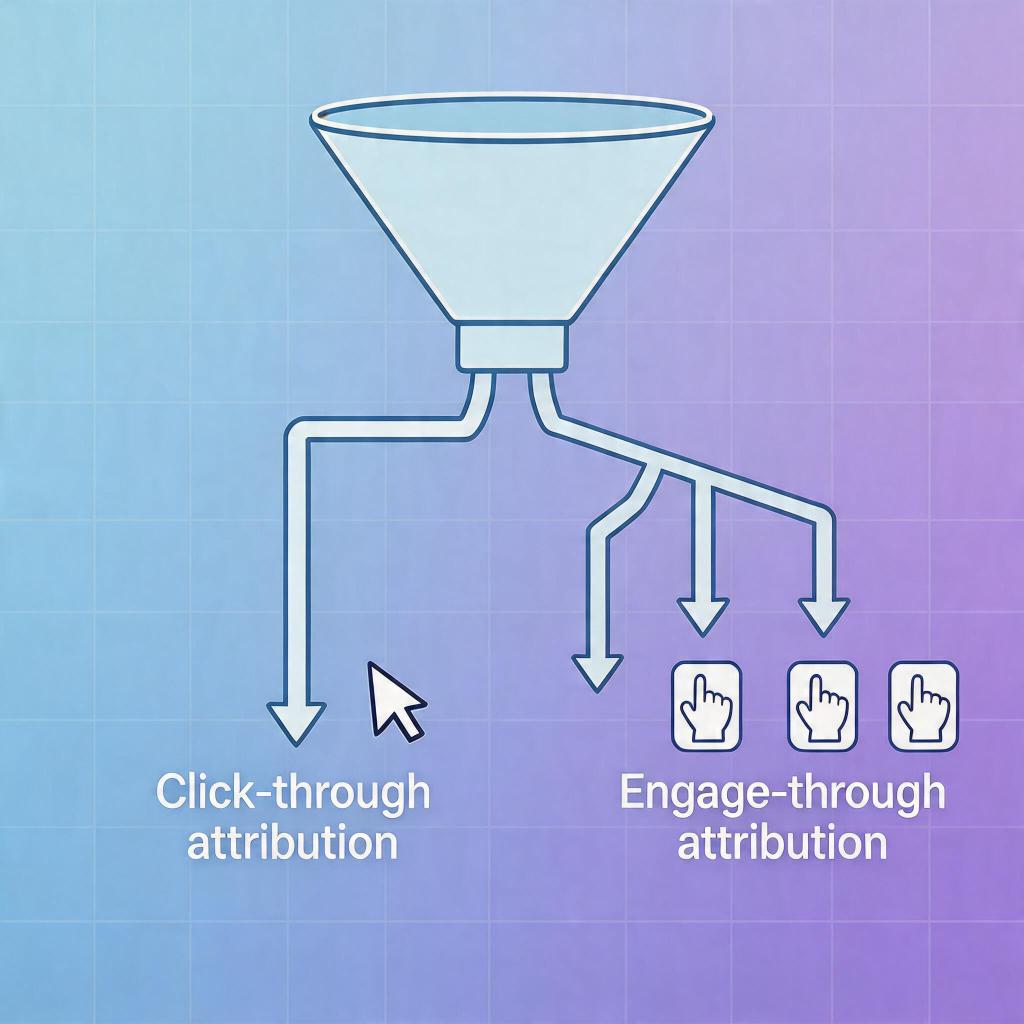
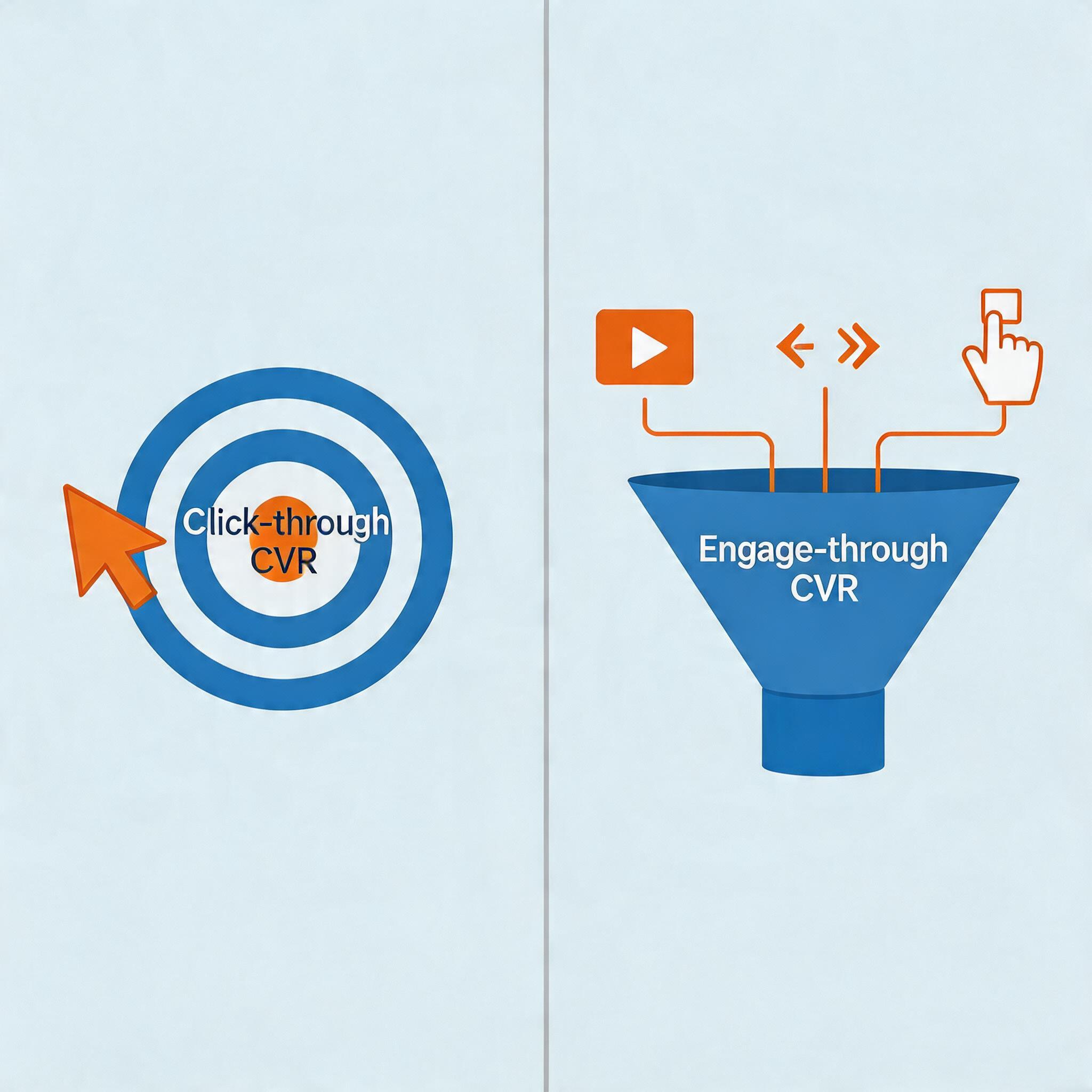
Click-through attribution credits the ad when a user clicks and converts within the window. Standard stuff.
Engage-through attribution is Meta’s way of recognizing that many users don’t convert immediately after clicking. If a user engages with your ad (through a carousel swipe, video view, or story interaction) and then converts within the window — even without a direct click — the ad still gets credited. It’s broader, it’s more inclusive of the actual discovery journey, and it’s Meta’s acknowledgment that the click isn’t always the moment of intent.
Why does this matter right now? Because Meta is actively pushing Engage-through as the default lens for reporting, which means your reported CPA numbers are likely dropping — not because your funnel got worse, but because the model is crediting more touchpoints. If you haven’t adjusted your CPA targets accordingly, you’re probably over-optimizing and leaving spend on the table.
Why AI Social Apps and Mobile Games Are Hit Hardest
AI dating apps and social networking products have notoriously long conversion paths. A user clicks a Meta ad, downloads the app, creates a profile, maybe browses for a few days — and only converts to a paid subscription weeks later. Under pure Click-through attribution, this user was never yours.
Under Engage-through, that late conversion gets attributed back to Meta’s touchpoints. Your reported ROAS goes up. Your actual ROAS hasn’t changed. The illusion of performance improvement can mask real inefficiencies in your post-click experience — and that’s where DeepClick helps you close the gap.
Mobile games face a similar dynamic. A user installs via a Click-through attribution, plays casually for a week, and spends $20 in in-app purchases. Under Click-through, Meta gets zero credit. Under Engage-through, it might get partial credit. Either way, you as the advertiser are holding the bag for a conversion that took days of user nurturing — none of which happened on Meta’s platform.
Step-by-Step: How to Recalibrate Your CPA Targets for Engage-Through
Step 1: Pull Both Attribution Views Side by Side
Log into Meta Ads Manager. In the Reports section, set up a custom report that shows both Click-through conversions and Engage-through conversions for the same time period. Don’t use Meta’s default view — build your own comparison. Look at the gap. For AI social apps with long conversion windows, you may see Engage-through conversions running 30–60% higher than Click-through.
Step 2: Establish a New Baseline CPA
Take your actual CPA under Click-through (this is what you know is real). Now look at your Engage-through CPA. The ratio between them is your “attribution inflation factor.” If Engage-through CPA is 40% lower than Click-through CPA, you should be comfortable with a CPA target that’s approximately 30–35% higher than your Click-through baseline — because Engage-through is capturing conversions that are genuinely happening but weren’t being credited before.
Step 3: Stop Penalizing Ads That Aren’t Getting Direct Clicks
A common mistake: advertisers see low Click-through conversions from a campaign and turn it off, when that campaign may actually be driving real Engage-through conversions that are being attributed elsewhere. Before you cut a campaign, check its Engage-through performance. If it’s driving installs and early engagement events, it’s doing its job even without the click.
Step 4: Shift Budget Toward Post-Click Optimization
Here’s where the real leverage is. If Engage-through is now giving you credit for more of your conversions, the bottleneck is no longer getting the click — it’s what happens after the click. Your landing page, your app onboarding flow, your re-engagement sequences. These are the levers that determine whether Engage-through conversions stay engaged or quietly churn.
The Real Insight: Attribution Is a Mirror, Not a Strategy
Engage-through attribution reveals something uncomfortable: you have more credit coming to you from Meta than you thought. But that also means Meta is absorbing more of the credit for conversions that your post-click experience worked hard to close. The question isn’t whether Meta’s new attribution model is fair. The question is: are you investing enough in the post-click side of the equation?
For AI social app advertisers, this means optimizing not just your ad creative and targeting, but your app’s first-24-hour experience. For mobile game advertisers, it means tuning your in-app events and push notification sequences to maximize the lifetime value that Engage-through is now correctly attributing back to your campaigns.
The teams that will win in 2026 are the ones who treat the click as the beginning of a relationship, not the end. DeepClick’s post-click optimization platform is built exactly for this — fixing the drop-offs that happen after the click, so that every conversion Meta now credits you with stays converted.
Summary: Recalibrating for Meta’s Attribution Shift
- Meta’s Engage-through attribution gives credit for conversions driven by ad engagement, not just direct clicks
- Your reported CPA may improve under Engage-through, but this isn’t extra performance — it’s better accounting
- Recalibrate CPA targets by comparing Click-through and Engage-through side by side
- Stop cutting campaigns based on Click-through alone — check Engage-through first
- Invest in post-click optimization: landing pages, onboarding, and re-engagement are the new competitive advantage
- DeepClick can audit your post-click funnel and identify where conversions are leaking after the click
Stop losing conversions after the click.
DeepClick helps Meta advertisers fix post-click drop-offs and improve CVR by 30%+ through automated re-engagement and post-click link optimization.


发表评论