
# Meta Ads Platform Risk and Diversification: Why 2026 Is the Year to Rethink Your Post-Click Strategy
Meta’s advertising ecosystem is tightening. Between regulatory pressure cracking down on high-CPS verticals like law firm ads, algorithm shifts inside Advantage+ campaigns, and mounting reports of post-click CVR collapse, paid social advertisers in 2026 are facing a platform concentration risk unlike anything in the past five years. If your entire acquisition strategy runs through Meta, this is your warning: the cost of not diversifying isn’t theoretical — it’s showing up in your CPA data right now.
This article breaks down what’s actually happening to Meta’s ad ecosystem in 2026, why post-click optimization matters more than ever as a buffer against platform volatility, and what specific steps you can take to reduce your dependence on any single traffic source without sacrificing scale.
—
## The 2026 Meta Landscape: Three Cracks Forming Simultaneously
### Regulatory Pressure on High-Value Verticals
Meta began restricting ads for personal injury law firms, debt relief services, and certain financial products in multiple markets starting in late 2024. By 2026, these restrictions have expanded — and more critically, the enforcement mechanism has shifted from manual review to automated systems that flag entire sub-verticals without warning.
What makes this especially dangerous for advertisers: the restrictions don’t just affect the flagged categories. They alter the broader competitive dynamics of Meta’s auction. When entire categories exit, the remaining advertisers face changed CPM dynamics, altered audience overlap patterns, and in some cases, reduced delivery for adjacent audience segments.
Law firm advertising is a textbook case. Law firms represented some of the highest-CPM, highest-converting ad categories on Meta. Their exit didn’t just remove competition — it changed the quality signals Meta’s system uses to optimize delivery. Advertisers who remained in adjacent categories started seeing CPA fluctuations they couldn’t explain by creative or audience changes alone.
### Advantage+ Is Eating Your Margin Without You Noticing
Meta’s Advantage+ shopping campaigns promised automation, simplicity, and better ROAS. For many advertisers, the reality in 2026 is different. Advantage+ centralizes control inside Meta’s black-box algorithm, which optimizes for attributed conversions — but attribution logic changes without notice, and when it does, your CPA can swing 30–50% in a matter of days.
The core problem: Advantage+ optimizes post-click behavior based on attributed signals Meta controls. When post-click conversion events are misattributed, delayed, or filtered out by Meta’s consent-mode settings, the algorithm keeps bidding as if the problem doesn’t exist. Advertisers see spend continue at full pace while CVR drops — a dangerous combination.
The second issue is audience concentration risk. Advantage+ learns from your existing customer pool. As that pool changes (seasonally, due to market conditions, or because of platform policy shifts), the algorithm struggles to adapt quickly enough. You end up paying premium rates for an audience that’s increasingly stale.
### Post-Click Drop-Off Is Amplifying Every Problem
Here’s the compounding effect most advertisers aren’t accounting for: when platform risk materializes — whether it’s a policy change, an auction shift, or an algorithm update — the damage is concentrated at the post-click stage. If your landing page, offer, or conversion funnel isn’t already optimized, you have no buffer. A 20% CPA increase from Meta becomes a 40% CPA increase in net conversions because your post-click CVR was already weak.
This is why post-click optimization isn’t just a nice-to-have in 2026. It’s your primary defense against platform volatility.
—
## Why Diversification Without Post-Click Optimization Is Half a Strategy
Many advertisers hear “diversify your channels” and immediately think about TikTok, Google, or organic. But channel diversification without post-click infrastructure is like buying insurance on a house with no walls — you’re spreading risk without addressing the underlying vulnerability.
The real question isn’t just “where else can I acquire users?” It’s “where else can I acquire users profitably when Meta’s algorithm changes?” The answer requires both channel diversification and post-click optimization working together.
When you optimize post-click CVR across your entire funnel — not just Meta, but also TikTok, Google, and any other acquisition channel — you create a compounding effect:
– Better Quality Scores across platforms (landing page signals improve)
– Lower effective CPA on every channel (same spend, more conversions)
– More tolerance for platform volatility (you need fewer conversions from any single source)
– Cleaner attribution data (higher conversion volumes reduce signal noise)
DeepClick’s post-click optimization platform addresses exactly this. By fixing post-click drop-offs, automating re-engagement for visitors who don’t convert on first click, and continuously optimizing the post-click experience based on real conversion data, DeepClick helps advertisers extract maximum value from every click — regardless of which platform it came from.
—
## The Diversification Playbook: Practical Steps for 2026
### Step 1: Audit Your Channel Concentration Ratio
Start with data. Calculate what percentage of your total conversions come from Meta. Most healthy portfolios have no single channel exceeding 60% of total conversions — and ideally, no single platform accounts for more than 40%.
If Meta represents 70%+ of your conversions, you’re in the red zone. The goal isn’t to abandon Meta — it’s to build parallel conversion pipelines so that a Meta algorithm change costs you 15% of conversions instead of 40%.
### Step 2: Implement Post-Click Tracking Across Every Channel
Before you can optimize post-click behavior, you need complete visibility. This means:
– Ensuring your Meta Pixel and Conversion API are firing correctly with proper consent-mode configuration
– Setting up server-side tracking for TikTok and Google Ads
– Implementing cross-channel view-through and post-view attribution so you can see the full conversion path
– Capturing post-click behavioral signals: scroll depth, time on page, CTA clicks, form starts
DeepClick’s post-click link optimization gives you this visibility automatically. Every click gets routed through DeepClick’s infrastructure, which captures behavioral data from the moment of arrival through conversion or exit. You see where drop-offs happen, which traffic sources produce the highest-intent visitors, and where your funnel has fixable leaks.
### Step 3: Build Re-Engagement Into Your Post-Click Funnel
The advertisers who survive platform volatility best are the ones who don’t depend on first-click conversion alone. Re-engagement — reaching visitors who clicked but didn’t convert — is the most underused tool in the paid social arsenal.
Why does it work? Because a visitor who clicked your ad once has already demonstrated intent. They may not have converted for timing reasons (they needed to think about it), device reasons (they clicked on mobile but wanted to convert on desktop), or friction reasons (your landing page had something that put them off). Re-engagement lets you address those reasons without paying for a
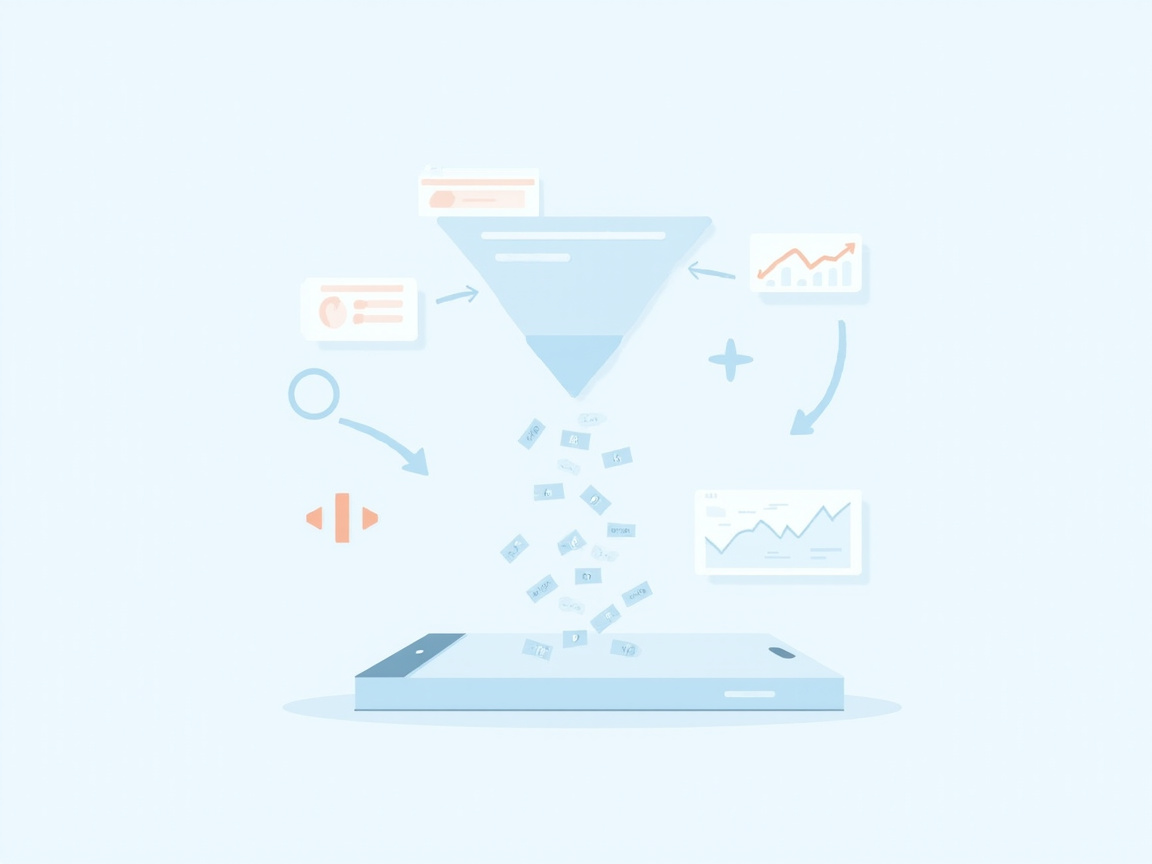
new click.
DeepClick automates re-engagement through its回流 (re-engagement) pipeline: when a visitor drops off after clicking, DeepClick triggers follow-up touchpoints — via Push, WhatsApp, or other channels — to bring them back. The result is conversions that would have been lost forever, recovered at a fraction of the cost of a new acquisition click.
### Step 4: Test Landing Page Performance Under Real Conditions
A/B testing your landing page in a vacuum tells you what wins in a test. It doesn’t tell you what wins in production with real Meta traffic. The two are different because real Meta traffic includes:
– Users who arrived via Advantage+ placements across Instagram Feed, Stories, Reels, and Audience Network — each with different attention contexts
– Users whose intent signals have been processed through Meta’s conversion modeling (which devalues certain signal types)
– Users whose post-click experience varies dramatically based on device, connection speed, and consent settings
Test your landing pages with real traffic, segmented by source and placement. The insights are consistently different from standalone A/B test results — and usually much more actionable.
### Step 5: Set Up Channel-Specific CVR Benchmarks
Different channels have different baseline CVRs. Your Meta CVR should not look like your TikTok CVR, and neither should look like your Google CVR. If you’re benchmarking all channels against the same conversion rate, you’re comparing apples to oranges — and making poor allocation decisions as a result.
Establish channel-specific benchmarks based on at least 90 days of data. Track not just the conversion rate but the post-click journey: time to conversion, device breakdown, geography breakdown, and most importantly, the cost per conversion by channel after accounting for post-click optimization spend.
—
## What Platform Diversification Actually Looks Like in Practice
Diversification isn’t about spreading budget evenly across five platforms and hoping for the best. It’s about identifying which channels produce genuinely different customer profiles and building acquisition pipelines that complement each other rather than compete.
Meta’s core strength remains broad awareness and consideration-stage reach at scale. Its weakness is post-click opacity and algorithm dependency. Pair Meta with channels that fill those gaps:
– TikTok: Stronger for lower-funnel conversion in specific verticals (gaming, beauty, entertainment apps), but with different audience profiles and lower intent signals. Post-click optimization is essential here because TikTok’s conversion attribution is notoriously incomplete.
– Google Ads (UAC/PMAX): Works best for high-intent, search-driven demand. CVR tends to be higher because the user already expressed intent. But PMAX can swallow your budget on low-quality conversions if you don’t have proper post-click conversion tracking in place.
– Programmatic/display: Lower intent, but retargeting via post-click optimization can extract real value from display traffic that would otherwise be pure waste.
The common thread across all channels: post-click optimization is the infrastructure that makes diversification work. Without it, you’re just spreading budget across multiple leaky funnels.
—
## The Post-Click Advantage: Why DeepClick Is the Multiplier
DeepClick is built for exactly this moment in the paid social industry. While other tools focus on creative optimization, bid management, or audience targeting — all pre-click levers — DeepClick operates at the point where most of your money actually leaks: after the click.
Here’s what DeepClick delivers that no pre-click tool can:
1. Post-Click Funnel Visibility
Every click is tracked and analyzed. You see exactly where visitors are dropping off, which pages hold attention, and which conversion paths work best for which traffic sources. This isn’t sample-based analytics — it’s full-funnel data from every paid click.
2. Automated Re-Engagement
Visitors who don’t convert on first click enter DeepClick’s automated re-engagement pipeline. Using Push, WhatsApp, and other direct channels, DeepClick triggers follow-up outreach based on behavioral triggers — time on page, scroll depth, CTA interactions. The result is a second (and third) chance at conversion from the same original click.
3. CVR Improvement averaging 30%+
DeepClick’s clients typically see CVR improvements of 30% or more within 60 days of implementation. That improvement applies to every channel — Meta, TikTok, Google — because it’s happening at the landing page and post-click level, not inside any single platform’s algorithm.
4. Platform Risk Mitigation
When Meta changes its algorithm, Advantage+ model, or attribution logic, advertisers using DeepClick have a buffer: their CVR doesn’t collapse because the optimization is happening post-click, outside Meta’s control. The algorithm change costs you some conversions — not your entire funnel.
—
## Building Your 2026 Buffer: A Practical Timeline
If you haven’t yet built meaningful post-click optimization infrastructure, the window to do so is narrowing. Platform volatility doesn’t announce itself in advance. Here’s a practical timeline:
– Month 1: Implement DeepClick post-click tracking across all active channels. Establish baseline CVR by channel and source.
– Month 2: Activate automated re-engagement for your highest-volume traffic sources. Start A/B testing landing page variants based on DeepClick’s post-click data.
– Month 3: Evaluate channel diversification opportunities. Use DeepClick’s cross-channel CVR data to identify which new channel would compound best with your existing post-click infrastructure.
– Ongoing: Treat post-click optimization as a continuous process, not a one-time project. Meta’s algorithm changes quarterly at minimum. Your post-click infrastructure needs to adapt in parallel.
—
## Conclusion: The Only Sustainable Competitive Advantage in Paid Social
In 2026, the advertisers who will consistently win are not those with the best creative, the largest budget, or the most sophisticated pre-click targeting. They’re the ones who have built an acquisition system that doesn’t depend on any single platform’s goodwill or algorithm stability.
Post-click optimization is that system. It works regardless of which platform your traffic comes from, it compounds over time as your data grows, and it gives you a measurable buffer when platform risk materializes.
DeepClick is the infrastructure layer that makes this possible. If you’re running paid social in 2026 without post-click optimization, you’re playing a game where half the board is hidden from you — and your competitors can see your cards.
—
Stop losing conversions after the click.
DeepClick helps Meta advertisers fix post-click drop-offs and improve CVR by 30%+ through automated re-engagement and post-click link optimization.
—
→ If you’re already looking for a fix, Book a Free Demo and our team will audit your post-click funnel for free.
—


留下评论