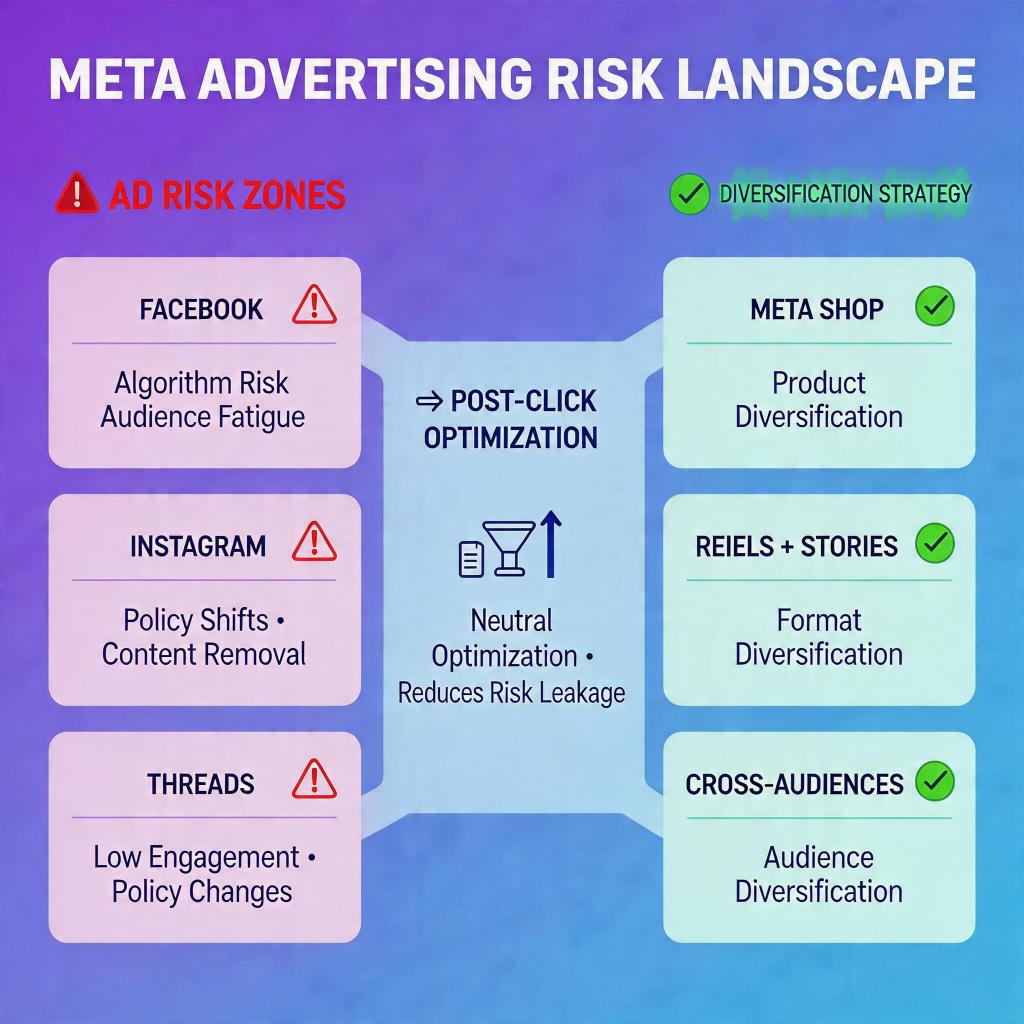
When Meta banned law firm advertisements across its ad network earlier this year, it sent a shockwave through the performance marketing ecosystem. For advertisers who’d built their entire user acquisition engine on Meta’s targeting and attribution infrastructure, the message was unambiguous: platform risk is not theoretical — it’s operational. Combined with ongoing controversy around Advantage+ automated bidding and tightening audit policies that are squeezing AI social apps and game BC advertisers especially hard, 2026 is shaping up to be the year smart advertisers start treating post-click optimization as a core infrastructure layer — not a nice-to-have.
Book a Free Demo to see how DeepClick delivers platform-neutral CVR optimization across Meta, TikTok, and every major traffic source your campaigns touch.
Two Crises Converging: Audit Tightening and a Deteriorating Bidding Environment
Meta’s enforcement actions in 2025–2026 have been aggressive and, from an advertiser perspective, often opaque. The law firm ad ban was the most visible example, but it’s not an outlier. Meta has simultaneously escalated its content policy enforcement for AI social apps and game BC (broadcast) products — categories that sit in genuinely gray regulatory territory across multiple markets. Advertisers in these verticals are experiencing a pattern of operational pain that goes well beyond isolated account suspensions:
- Ad account suspension rates climbing, sometimes with no explanation provided
- Retroactive policy changes applied to creative that was previously approved and running
- Advantage+ campaigns consistently overspending daily budgets while delivering lower-quality users
- Attribution windows shortened without corresponding performance improvements
- Pixel firing inconsistencies that make conversion tracking unreliable across iOS and Android
The Advantage+ controversy deserves particular attention. Meta’s automated bidding suite was marketed as a way to optimize for conversion value, but many advertisers have reported the opposite: Advantage+ is optimizing for volume, not value. Advertisers are paying for installs that don’t convert, and the lack of granular control makes it nearly impossible to diagnose why. When your entire media buying strategy is wrapped inside a black-box algorithm you can’t inspect or override, you’re not running a performance marketing campaign — you’re hoping.

What Platform Dependency Actually Costs You in 2026
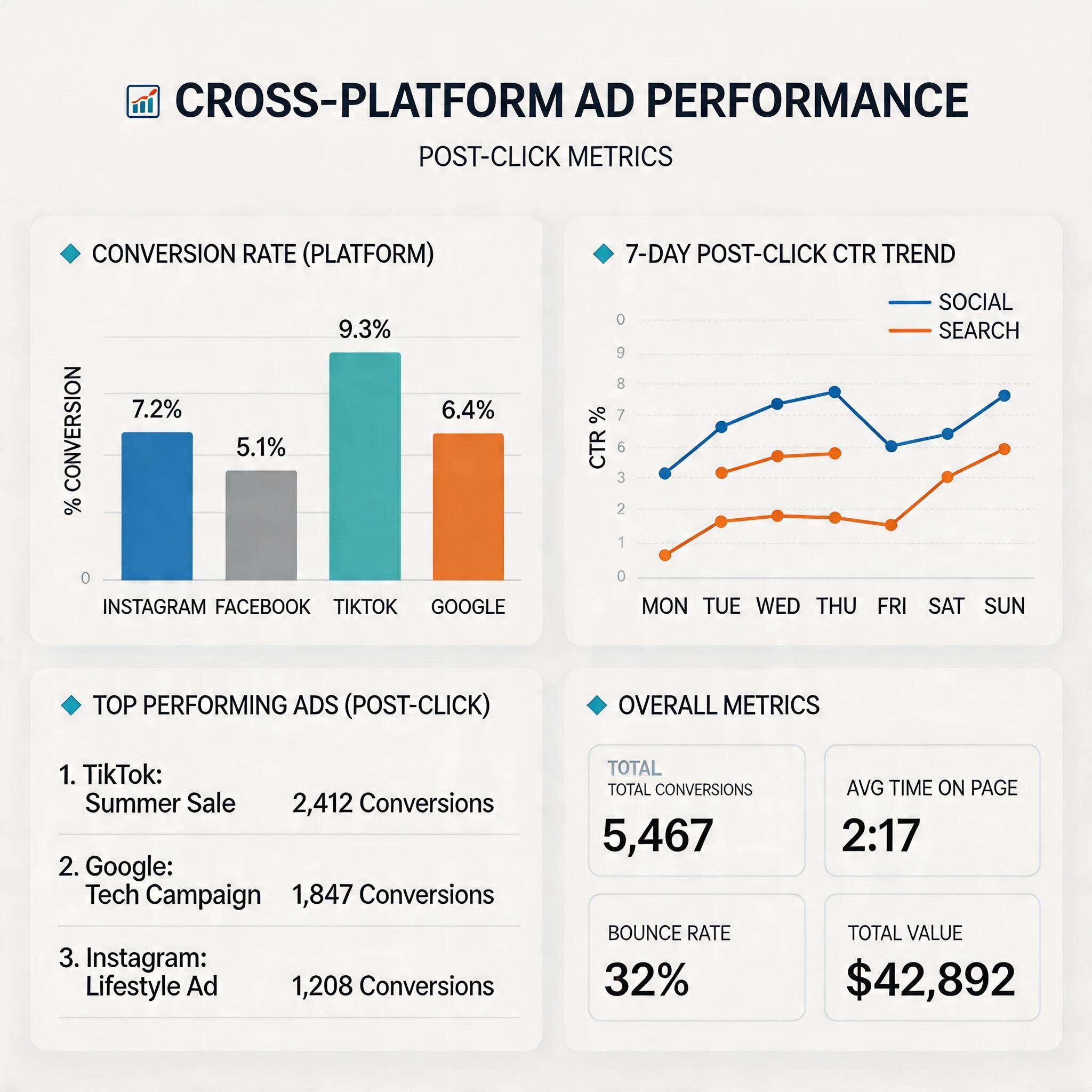
The financial exposure from platform dependency goes far beyond the obvious risk of account suspension. Let’s quantify what “platform risk” actually means for a typical performance marketing team running $50K–$500K/month across Meta:
Attribution distortion. When you’re dependent on Meta’s conversion API and pixel for tracking, you have no independent view of what your traffic actually does post-click. Meta’s measurement framework is designed to show Meta’s contribution — not the full picture of user behavior across your funnel. This means your CPA calculations are systematically wrong, your creative testing is based on corrupted data, and your optimization decisions are made in the dark.
Algorithm vulnerability. Advantage+ and Meta’s automated bidding systems make decisions on your behalf with very limited transparency. When Advantage+ optimizes toward volume, advertisers report CPC increases of 30–60% without corresponding CVR improvements. You can’t debug what you can’t see, and Meta isn’t motivated to show you the internals.
Creative fatigue acceleration. When you’re running the same ad formats, the same audiences, and the same landing page flows because changing anything means risking Advantage+ performance, you accelerate creative fatigue. The platform rewards high-volume, low-friction creative — which often means the creative that performs best in Meta’s system isn’t the creative that converts best on your site.
Market concentration risk. Running 70–80% of your paid media budget on Meta means your entire acquisition engine is a Meta engine. Policy changes, competitive dynamics on the auction, or algorithm shifts that Meta makes to serve its own revenue interests can devastate your unit economics overnight — as many advertisers discovered when Meta tightened its AI social app policies in Q4 2025.
The Case for Platform-Neutral Post-Click Optimization
Post-click optimization — the layer of infrastructure between an ad click and a converted customer — is the most underappreciated leverage point in performance marketing. While advertisers spend enormous energy on creative testing, audience segmentation, and bidding strategy, the post-click experience determines whether any of that effort produces a revenue outcome.
Platform-neutral post-click optimization means building conversion infrastructure that doesn’t depend on any single ad platform’s tracking, attribution, or measurement systems. It means capturing, qualifying, and converting traffic from any source — Meta, TikTok, Google, organic — using your own first-party data and your own conversion logic.
For AI social app and game BC advertisers, this has specific implications:
- Deferred conversion capture: Many Meta users don’t convert on the first session. Building post-click flows that capture interest and re-engage users across email, push, and in-app messaging means you’re not dependent on Meta’s attribution window — which can be as short as 1 day for some verticals — to get credit for conversions that happened on your terms.
- Landing page CVR optimization independent of platform tracking: When your post-click optimization layer is platform-neutral, you can run genuine A/B tests on landing page elements without Meta’s JavaScript pixel interfering with your measurement. The result is better CVR data and faster iteration.
- Cross-channel attribution truth: By using your own conversion data (server-side events, API-level integrations with your product database), you can build a unified view of the customer journey that isn’t constrained by any platform’s attribution model.
The key insight: post-click optimization isn’t a Meta strategy or a TikTok strategy. It’s a business strategy that makes every paid channel perform better because you’re no longer letting the channel’s measurement self-interest distort your understanding of what’s actually happening on your platform.
How DeepClick Delivers Platform-Neutral Conversion Optimization
DeepClick’s post-click layer is built to operate independently of any single ad platform’s infrastructure. Here’s what that means in practice for your team:
Server-side event capture. DeepClick captures conversion events at the server level, independent of pixel firing rates, browser restrictions, or platform attribution windows. For AI social apps and game BC products where post-install behavior is the true conversion signal, this matters enormously — you can’t optimize for Day-7 retention if your tracking only fires on Day-1 conversions.
Automated re-engagement across channels. When a user clicks a Meta ad but doesn’t convert, DeepClick triggers multi-channel re-engagement sequences (email, push, in-app) that keep the user in your funnel on your terms. This isn’t retargeting — it’s deferred conversion capture that reduces your dependence on Meta’s attribution window to close revenue.
Landing page performance optimization. DeepClick’s post-click optimization includes real-time landing page CVR analysis and automated testing. The system identifies which page elements, load sequences, and form flows produce the highest conversion rates — independent of any platform’s measurement — and continuously iterates your post-click experience.
Multi-platform attribution truth. By building a unified, server-side view of the customer journey, DeepClick shows you the real contribution of each traffic source — not the self-interested view that Meta or TikTok’s attribution model presents. This lets you allocate budget based on actual revenue contribution rather than platform-reported metrics.
For advertisers running across Meta, TikTok, Google, and other platforms, DeepClick’s platform-neutral approach means your conversion performance stops being held hostage by any single platform’s algorithm changes, policy shifts, or measurement limitations.
The Risk You Cannot Afford to Ignore
Platform risk is not a tail risk — it’s a central feature of how Meta and other ad platforms operate. Their incentives are not aligned with your conversion performance; they’re aligned with their own revenue and engagement metrics. The advertisers who will be most exposed in 2026 are those who’ve built their entire acquisition infrastructure on the assumption that Meta’s platform will remain stable, transparent, and aligned with their interests.
The advertisers who will win in 2026 are building conversion infrastructure that’s resilient to platform disruption. Post-click optimization — properly implemented, platform-neutral, and data-driven — is the foundation of that resilience.
The time to build this layer is before you need it, not after a policy change or algorithm shift has already damaged your numbers. If you’re running AI social apps or game BC products on Meta’s platform, the post-click layer isn’t an insurance policy — it’s the only sustainable foundation for long-term growth.
Stop losing conversions after the click.
DeepClick helps Meta advertisers fix post-click drop-offs and improve CVR by 30%+ through automated re-engagement and post-click link optimization.
 DeepAds
留下评论