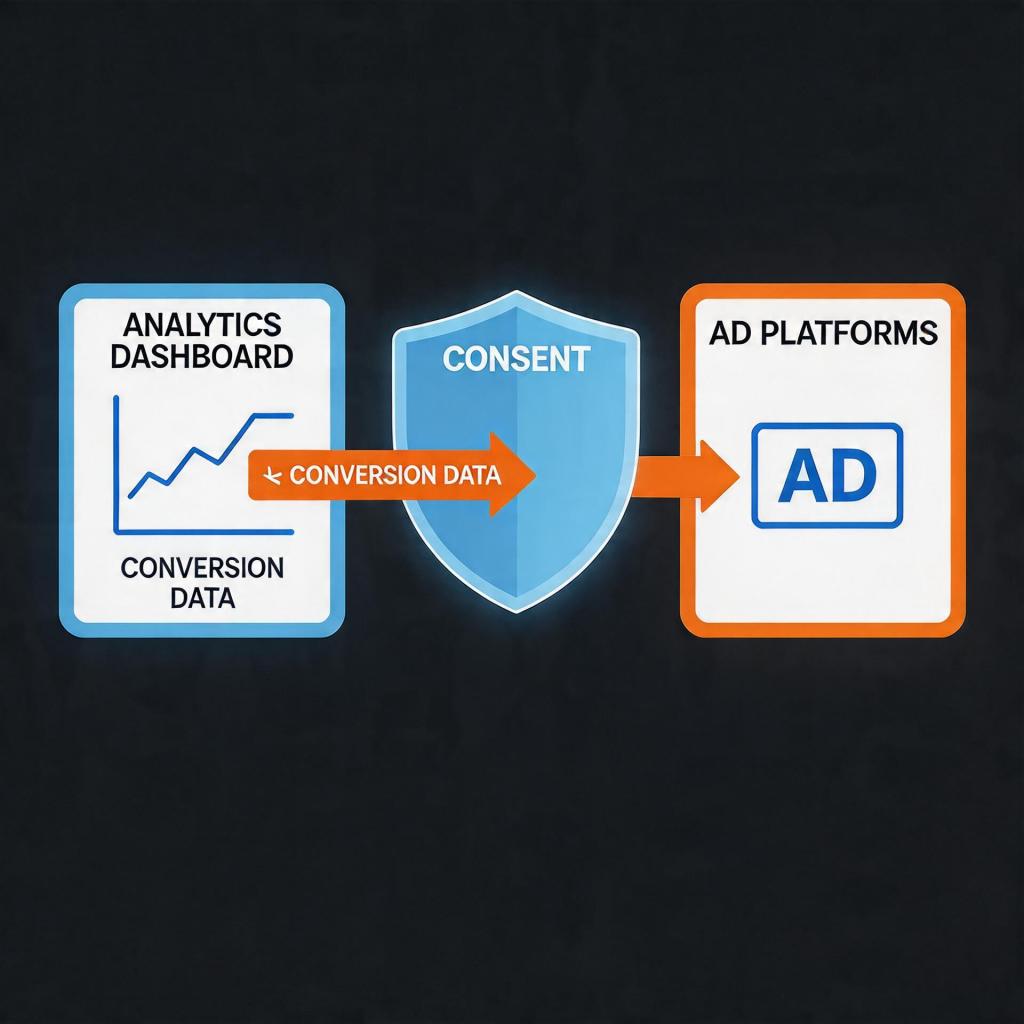
Google just confirmed that by June 15, 2026, Google Analytics ad data authority will be fully separated — and Consent Mode V2 will become the only control layer for how your conversion data flows between Analytics and Ads. If you’re running Meta or social ads and relying on Google Analytics for cross-channel attribution, this change could silently break your post-click conversion tracking overnight.
One advertiser reported a 90% drop in tracked conversions in a single night after misconfiguring Consent Mode — and they didn’t notice for three days.
→ If you’re already looking for a fix, Book a Free Demo and our team will audit your post-click funnel for free.
What Is Changing with Google Consent Mode V2
Starting June 15, 2026, Google will fully decouple ad data authority from Google Analytics. In practice, this means:
- Consent Mode V2 becomes mandatory — if your consent implementation doesn’t meet the V2 spec, Google Ads will stop receiving conversion signals from Analytics entirely.
- No more passive data sharing — previously, linking your GA4 and Google Ads accounts meant conversion data flowed automatically. After the change, Consent Mode V2 acts as the gatekeeper.
- Enhanced Conversions depend on it — Enhanced Conversions for Web and Leads (merging into a single toggle in June) require a properly configured Consent Mode V2 foundation.
For social advertisers who use GA4 as a cross-channel attribution layer, this creates a specific risk: your post-click data from Meta, TikTok, or other platforms may show zero conversions in GA4 — not because users stopped converting, but because the consent signal was misconfigured.
Why This Breaks Post-Click Conversion Tracking
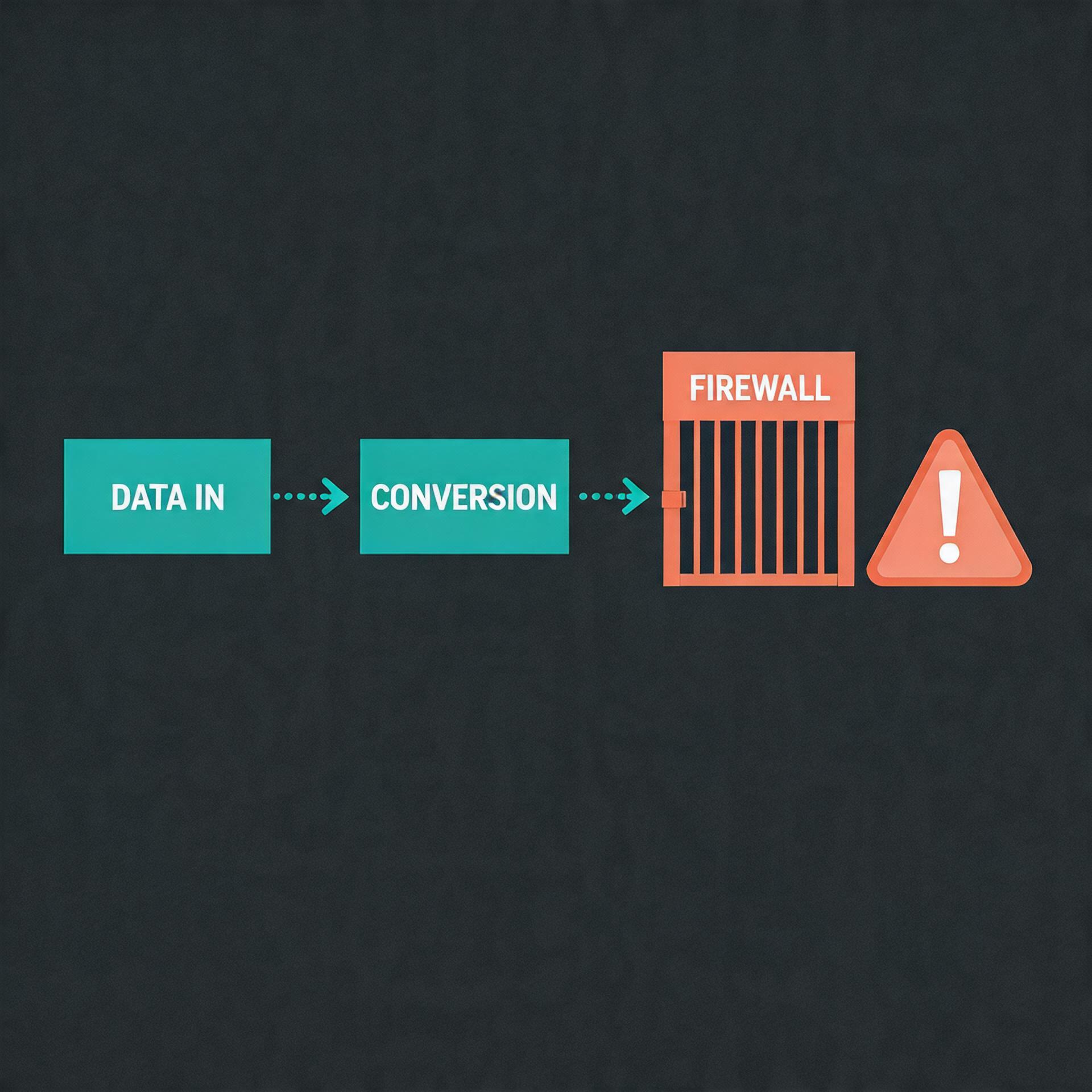
Most social ad teams track post-click performance through a combination of platform pixels (Meta Pixel, TikTok Pixel) and GA4. The typical flow looks like this:
- User clicks ad → lands on your page
- Meta Pixel fires a PageView + conversion event
- GA4 also records the session and conversion
- You compare Meta’s reported conversions vs GA4’s cross-channel view
With Consent Mode V2 as the sole gatekeeper, step 3 can silently fail. If the user’s consent state isn’t properly detected and passed to Google’s tags, GA4 drops the conversion signal entirely. Your Meta Pixel may still fire correctly, but your GA4 dashboard shows a flatline.
The dangerous part: this looks like a traffic quality problem, not a tracking problem. Teams often react by pausing campaigns or cutting budgets — when the real issue is a consent configuration gap.
Data from early adopters suggests that improperly configured Consent Mode V2 can reduce tracked conversions by 30-60% compared to actual conversions. For advertisers spending $50K+ monthly, that’s hundreds of phantom “lost” conversions driving bad optimization decisions.
How to Audit Your Consent Mode V2 Setup (4-Step Checklist)
Before June 15, run this audit to ensure your post-click tracking survives the transition:
Step 1: Verify Consent Mode V2 Implementation
Check that your Google Tag (gtag.js or GTM) includes both ad_storage and analytics_storage consent states. V2 requires explicit default states — if you only set analytics_storage, ad conversion data won’t flow.
In Google Tag Manager, go to Admin → Container Settings and confirm “Enable consent overview” is active. Then check each tag’s consent settings.
Step 2: Test the Consent → Conversion Pipeline
Use Google Tag Assistant to simulate a user journey:
- Load your landing page with consent denied → verify no conversion tags fire
- Grant consent → verify conversion tags fire and data appears in GA4 real-time
- Check that Google Ads conversion actions show “Recording” status, not “Inactive”
Step 3: Align Your CMP with V2 Requirements
Your Consent Management Platform (CMP) must pass granular consent signals — not just a blanket “accept all.” Google’s V2 spec requires separate signals for:
ad_storage— controls ad cookies and conversion measurementanalytics_storage— controls analytics cookiesad_user_data— controls sending user data to Google for adsad_personalization— controls ad personalization features
If your CMP only sends a single consent signal, Google treats all four as “denied” by default.
Step 4: Set Up Consent Mode Monitoring
Create a GA4 exploration report that segments by consent state. Monitor weekly for sudden drops in the “consent_granted” segment — this is your early warning system for configuration drift.
Also link this to your Facebook Pixel vs Conversions API setup — if GA4 tracking breaks, your Pixel + CAPI pipeline becomes your sole source of truth for Meta ad performance.
What Social Advertisers Should Do Now
The June 15 deadline is less than two months away. Here’s your action plan:
- Don’t rely solely on GA4 for cross-channel attribution — ensure your Meta CAPI (Conversions API) and platform pixels are independently tracking conversions. If GA4 goes dark, you need a fallback.
- Run a parallel tracking test — compare conversion counts between GA4, Meta Ads Manager, and your server-side events for 7 days. Any discrepancy greater than 15% signals a consent configuration issue.
- Invest in post-click infrastructure — landing page conversion tracking, re-engagement triggers, and server-side event pipelines that don’t depend on client-side consent for core measurement.
- Audit your landing pages for consent UX — pages with aggressive cookie banners that default to “deny all” will see the steepest conversion tracking drops. Optimize for clear, compliant consent flows that maximize opt-in rates.
The advertisers who will be least affected are those who already have robust post-click conversion optimization in place — because they’re not solely dependent on GA4 for measuring what happens after the click.
Summary: Protect Your Post-Click Data Before June 15
Google’s Consent Mode V2 mandate isn’t just a compliance checkbox — it’s a fundamental change in how conversion data flows. For social advertisers, the risk is clear: misconfigured consent = invisible conversion tracking failure = bad budget decisions.
Your action checklist:
- ✓ Audit Consent Mode V2 implementation (all four consent signals)
- ✓ Test consent → conversion pipeline with Tag Assistant
- ✓ Ensure CMP sends granular V2 consent states
- ✓ Set up consent state monitoring in GA4
- ✓ Strengthen platform-native tracking (Meta CAPI) as a GA4 fallback
- ✓ Invest in post-click re-engagement infrastructure that works independently of consent-gated analytics
Stop losing conversions after the click.
DeepClick helps Meta advertisers fix post-click drop-offs and improve CVR by 30%+ through automated re-engagement and post-click link optimization.
 DeepAds
留下评论