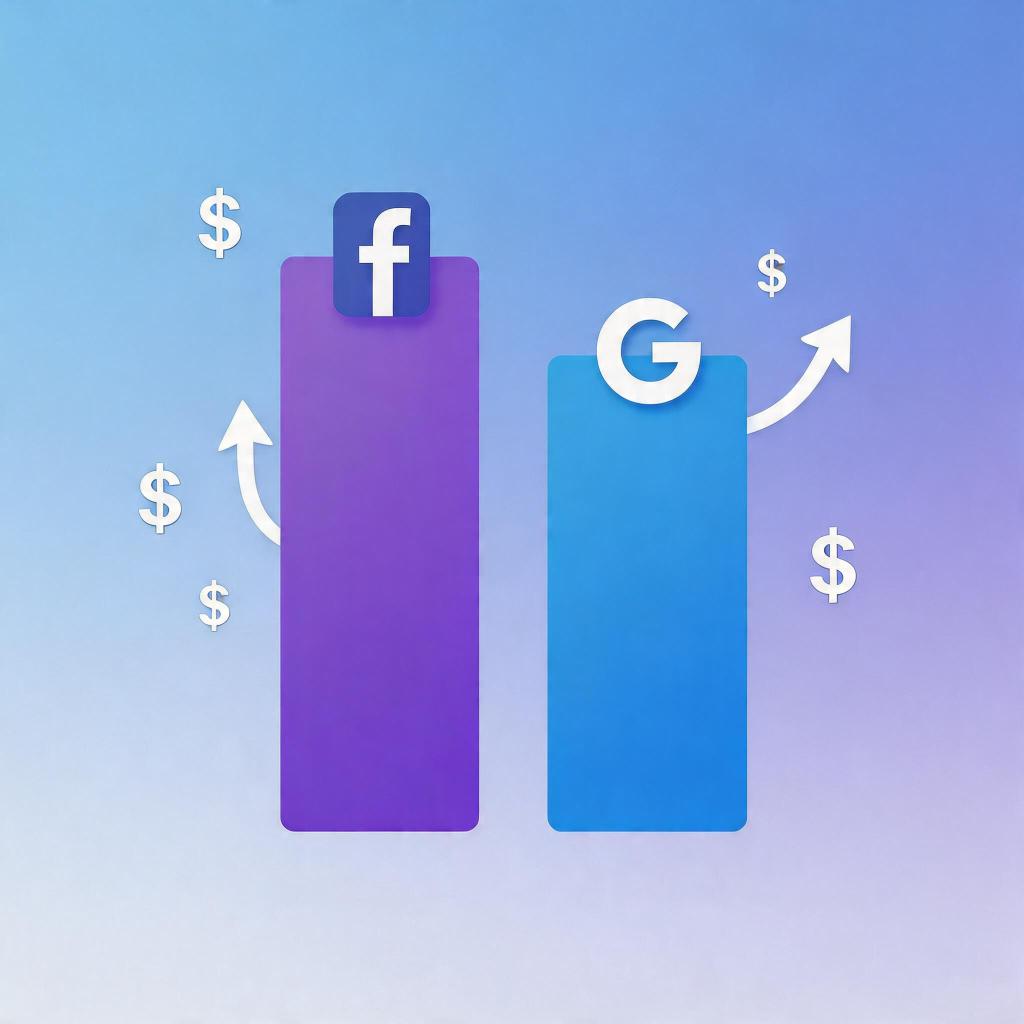
Meta is projected to overtake Google in global ad revenue for the first time in 2026 — $243.46 billion versus Google’s $239.54 billion. For advertisers running Facebook and Instagram campaigns, this isn’t just a headline. It’s a signal that the balance of digital advertising power has shifted, and the strategies that worked in 2024 may actively hurt your CVR (conversion rate) in 2026.
Meanwhile, a growing number of DTC brands are still running their Meta ad accounts like Google Ads campaigns — wrong account structures, keyword-style targeting, and single-campaign setups that waste 30-50% of their budget before a single conversion happens. If you’re an AI social app or game BC team pouring money into Facebook Ads, this guide is your wake-up call.
→ If you’re already looking for a fix, Book a Free Demo and our team will audit your post-click funnel for free.
Meta Surpasses Google: What the 2026 Revenue Shift Means for Advertisers
For decades, Google held the undisputed crown in digital advertising revenue. Search ads were the default — intent-based, high-converting, and seemingly unbeatable. But 2026 marks a structural inflection point: Meta’s ad revenue is forecasted at $243.46 billion, edging past Google’s $239.54 billion for the first time.
This isn’t a fluke. Several forces are converging:
- Social commerce acceleration: Instagram Shopping, Facebook Marketplace, and in-app checkout have turned social platforms into full-funnel sales channels — not just awareness tools.
- AI-driven creative optimization: Meta’s Advantage+ campaigns now auto-generate creative variations, audience segments, and bidding strategies that outperform manual setups for most advertisers.
- Google’s search dominance erosion: For the first time, Google’s share of U.S. search ad revenue has dropped below 50%, as younger users shift discovery to TikTok, Instagram, and AI chat interfaces.
For AI dating apps, companion apps, and social networking products, this shift is existential. Your target users aren’t searching Google for “AI girlfriend app” — they’re discovering your competitors through Instagram Reels and TikTok ads. If your Meta ad strategy is stuck in 2022, you’re not just behind. You’re invisible.
But here’s the catch: Meta’s dominance also means auction competition is fiercer than ever. CPMs are up. Attention spans are down. And the difference between a profitable campaign and a money pit increasingly comes down to what happens after the click — your post-click funnel, landing page experience, and re-engagement strategy. For a deeper look at how post-click optimization fits into this new landscape, see our guide on Meta Ads Post-Click Optimization 2026.
Why DTC Brands Waste 30-50% of Budget on Wrong Account Structures
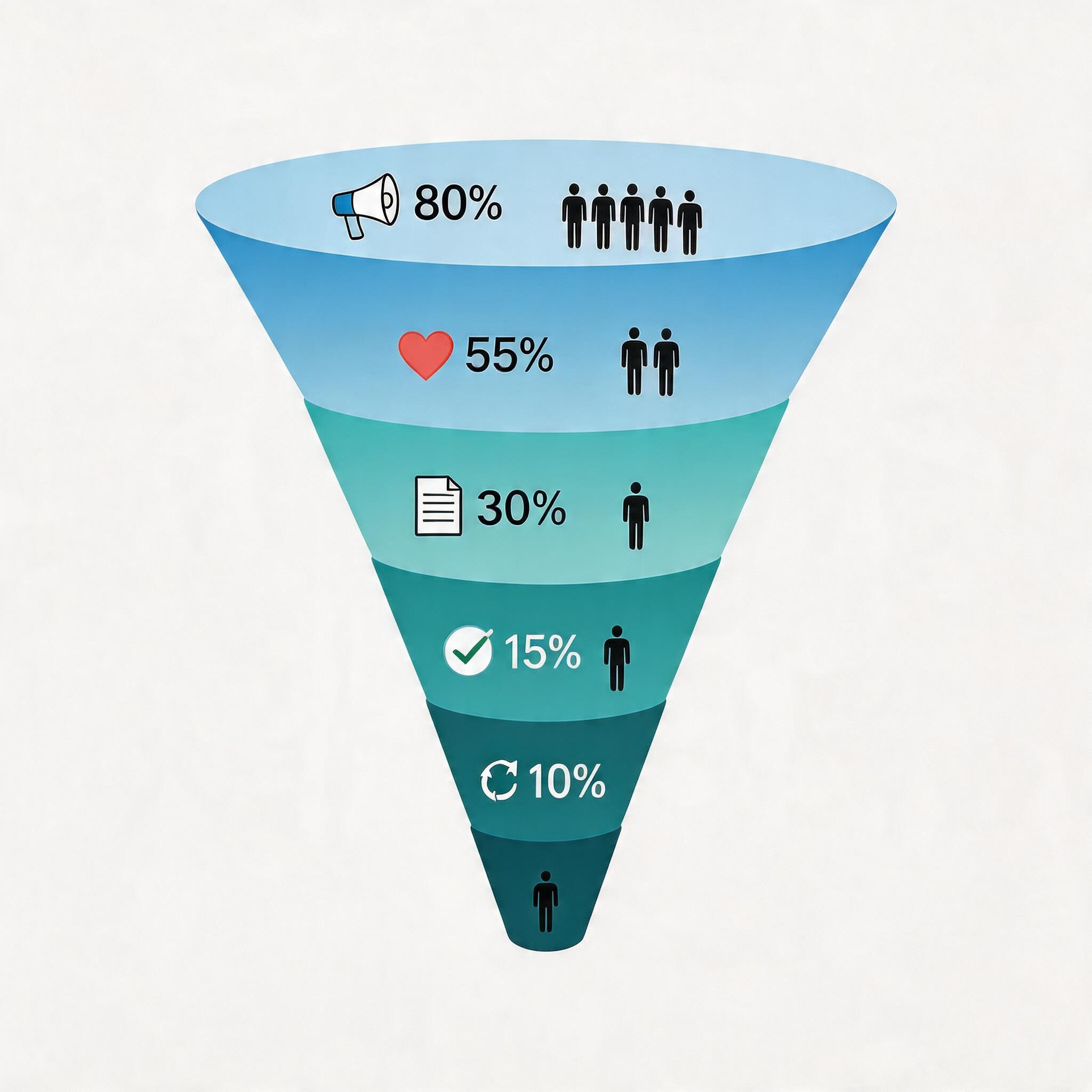
Here’s a scenario we see weekly: a DTC brand or AI app team migrates from Google Ads to Meta, brings their Google mindset with them, and builds a single campaign with broad targeting “to let the algorithm work.” Six weeks later, they’re wondering why their CPA is 3x the benchmark.
The problem isn’t the algorithm. It’s the account structure.
The Google Ads to Meta Ads Translation Error
Google Ads is built around intent capture. Someone searches “best AI dating app” — you bid on that keyword. The structure is keyword → ad group → ad. Simple, linear, and effective for search.
Meta Ads is built around interest and behavior discovery. Your audience doesn’t know they want your product yet. The structure needs to be: campaign objective → ad set (audience segment) → creative variation. Each layer tests a different hypothesis.
When DTC brands apply Google logic to Meta, they typically make these mistakes:
- Single campaign, single ad set: No audience segmentation means you can’t tell which user type converts. You’re blending high-intent and cold traffic into one CPA number — and optimizing for the average, which helps no one.
- Keyword-style interest targeting: Stacking 50 interests into one ad set because “that’s how Google does broad match.” Meta’s algorithm sees this as noise, not signal. Advantage+ works best with fewer constraints, not more.
- No creative testing framework: Google Ads creative is mostly headline/description variations. Meta creative is video-first, hook-driven, and platform-native. Running 2-3 static images against TikTok-style UGC video is a guaranteed loss.
- Neglecting post-click: Google sends traffic to a landing page optimized for search intent. Meta sends traffic from an emotional, scroll-stopping video to… often the same generic homepage. The disconnect kills CVR.
Industry data from multiple agency audits shows that brands making 3+ of these mistakes typically see 30-50% of their ad spend generate zero attributable conversions. Not “low ROAS” — literally zero. The budget burns on clicks that never had a chance to convert because the downstream experience was broken.
What a Proper Meta Account Structure Looks Like
For an AI social app or game BC campaign in 2026, a minimal viable structure should include:
- Campaign layer: Separate campaigns by objective (App Install, Conversion, Retargeting). Don’t mix prospecting and retargeting in the same campaign — Meta’s optimization will favor the cheaper retargeting audience and starve your top-of-funnel.
- Ad set layer: 3-5 ad sets per campaign, each testing a distinct audience hypothesis (e.g., “AI interest + 18-24,” “Lookalike 1% of purchasers,” “Engaged shoppers + dating app users”). Budget caps per ad set prevent one winner from eating the entire campaign.
- Creative layer: 3-5 creative variations per ad set, mixing formats (UGC video, product demo, testimonial, problem/solution hook). Kill underperformers at 3,000 impressions, not 30,000.
This structure isn’t over-engineering. It’s the minimum required to answer the question: “Which audience, with which creative, at what cost per conversion?” Without that answer, you’re not optimizing. You’re gambling.
Social Ads CVR Optimization: The Post-Click Perspective
Let’s talk about the real CVR killer on Meta: post-click drop-off.
Industry benchmarks vary, but a typical Meta campaign for an AI app or mobile game sees:
- CTR (click-through rate): 0.8-1.5% for prospecting, 2-4% for retargeting
- Landing page CVR: 5-15% for app installs, 1-3% for direct purchases
- Post-click drop-off rate: 70-90% of clicks never convert
That last number is the one that should keep you up at night. For every 1,000 people who click your ad, 700-900 leave without converting. Not because the ad was bad — because what they found after clicking didn’t match what the ad promised.
The Three Post-Click Failure Modes
1. Speed Death
Mobile landing pages that take >3 seconds to load lose 53% of visitors. On Meta traffic — where users are thumb-scrolling at speed — this is even more brutal. A 1-second delay in mobile load time can reduce CVR by 20%. If your landing page is a bloated Shopify template or a generic app store redirect, you’re bleeding conversions before the page even renders.
2. Message Mismatch
The ad promises “AI companion that remembers your personality.” The landing page shows a generic chatbot screenshot with no mention of memory or personalization. The user bounces — not because they weren’t interested, but because they don’t recognize the value proposition they clicked for. This is the #1 fixable CVR killer we see in audits.
3. Friction Overload
Every field in a signup form, every extra tap to install, every “create account” step before value is a conversion killer. Meta traffic is interruption-based — users weren’t planning to install your app when they opened Instagram. The more steps between click and value, the higher your drop-off. For a detailed breakdown of how to fix these issues, read our analysis on Meta Post-Click Optimization Strategies.
The Post-Click Optimization Checklist
Here’s what we implement for clients seeing sub-10% landing page CVR:
- Sub-2-second mobile load time: Strip non-critical scripts, compress images, use AMP or lightweight landing page builders. Test on 3G, not just WiFi.
- Ad-to-landing page message match: The headline on your landing page should echo the hook from your top-performing ad. If your winning ad says “AI that actually listens,” your landing page H1 shouldn’t say “Welcome to AppName.”
- Single conversion action per page: Don’t ask users to install, subscribe, and follow on social in the same view. One page, one goal.
- Social proof above the fold: For AI apps and games, trust is the conversion currency. Reviews, download counts, “as seen on” badges — all visible without scrolling.
- Exit-intent recovery: Not a generic popup — a context-aware offer that addresses the likely objection (e.g., “Not sure if AI companions are for you? Try 3 conversations free — no signup required”).
Implementing these five changes typically lifts CVR by 20-40% within two weeks. The low-hanging fruit is that abundant because most advertisers optimize their ads obsessively and treat landing pages as an afterthought.
Meta Billing Changes 2026: Cash Flow and Spend Management
In early 2026, Meta rolled out significant billing changes that affect how advertisers manage cash flow. The shift from threshold-based to monthly invoicing or direct debit requirements has caught many teams off guard — especially smaller DTC brands and indie app developers who relied on credit-card float to manage ad spend cycles.
Key implications:
- Cash flow pressure: Monthly invoicing means you need 30-day working capital for your full ad budget, not just the daily threshold amount. For teams spending $50K+/month, this is a material change.
- Spend predictability: Direct debit reduces the risk of ad delivery pauses due to declined cards — a common cause of campaign disruption and learning phase resets.
- Attribution timing: With consolidated monthly billing, reconciliation between ad spend and conversion data becomes more complex. Teams need tighter integration between their media buying dashboards and financial tracking.
For a full breakdown of the billing transition deadlines and setup steps, see our article on Meta Ad Billing Changes 2026.
The billing change is also a forcing function for better account hygiene. Advertisers who were running campaigns with poor structure and no CVR tracking now face a double penalty: wasted spend and cash flow strain. Fixing your post-click funnel isn’t just a performance play — it’s a financial survival move in 2026.
How DeepClick Fixes Post-Click CVR for Meta Advertisers
At DeepClick, we built our platform specifically for the post-click problem that most Meta advertisers ignore. Here’s how we address the core CVR challenges:
Automated Re-engagement for Drop-off Users
When a user clicks your Meta ad but doesn’t convert, they’re not lost — they’re delayed. DeepClick identifies these users and triggers automated re-engagement sequences via push notifications, email, and retargeting pixels. For AI social apps, this means a user who bounced at the signup page can receive a personalized nudge: “Your AI companion is ready to meet you — tap to start chatting.” Typical recovery rate: 8-15% of drop-offs return and convert.
Post-Click Link Optimization
DeepClick generates smart links that adapt based on user context — device type, geo, traffic source, and even the specific ad creative they clicked. An AI dating app can send iOS users to a streamlined App Store page with pre-filled referral data, while Android users get a PWA preview that loads instantly. The result: lower bounce rates, higher CVR, and cleaner attribution.
Quality Score and CPC Improvement
Meta’s ad auction rewards relevance. DeepClick’s landing page optimization — faster load times, message match, and mobile-first design — improves your Quality Ranking, which directly lowers CPC and CPM. For competitive niches like AI companions and BC games, a 10-15% CPC reduction can be the difference between profitable and unprofitable campaigns.
CVR Lift Measurement
We don’t do vanity metrics. DeepClick tracks post-click CVR by traffic source, creative, and landing page variant — so you can see exactly which ad-to-page combination drives installs or purchases. Most clients see 30%+ CVR improvement within the first month of implementation.
Action Checklist: Optimize Your Social Ads CVR in 2026
Here’s your prioritized action list, based on the signals and strategies covered in this guide:
Immediate (This Week)
- Audit your Meta account structure: Do you have separate campaigns for prospecting vs. retargeting? If not, rebuild.
- Test your landing page mobile load time. If it’s >2 seconds, fix it before spending another dollar on ads.
- Match your top 3 ad creatives to their landing page headlines. Any mismatch = immediate rewrite.
- Verify your Meta billing setup is compliant with 2026 requirements (monthly invoicing or direct debit active).
Short-Term (Next 30 Days)
- Implement creative testing framework: 3-5 variations per ad set, kill losers at 3K impressions.
- Add exit-intent recovery to your primary landing page. Test 2-3 offer variations.
- Set up post-click CVR tracking by traffic source. You can’t optimize what you don’t measure.
- Review your TikTok ad measurement setup — third-party verification is increasingly critical for brand safety. See our coverage of Integral Ad Science TikTok 2026 and additional IAS TikTok coverage for details.
Ongoing (Quarterly)
- Re-audit account structure against Meta’s latest best practices (Advantage+, ASC campaigns).
- Benchmark CVR against industry data. If you’re below median for your vertical, investigate post-click before blaming creative.
- Review billing and cash flow alignment. Ensure your finance team understands Meta’s 2026 payment structure.
- Stay current on platform changes — Meta’s 2026 revenue lead means more frequent product updates and policy shifts.
Stop losing conversions after the click.
DeepClick helps Meta advertisers fix post-click drop-offs and improve CVR by 30%+ through automated re-engagement and post-click link optimization.
 DeepAds
留下评论