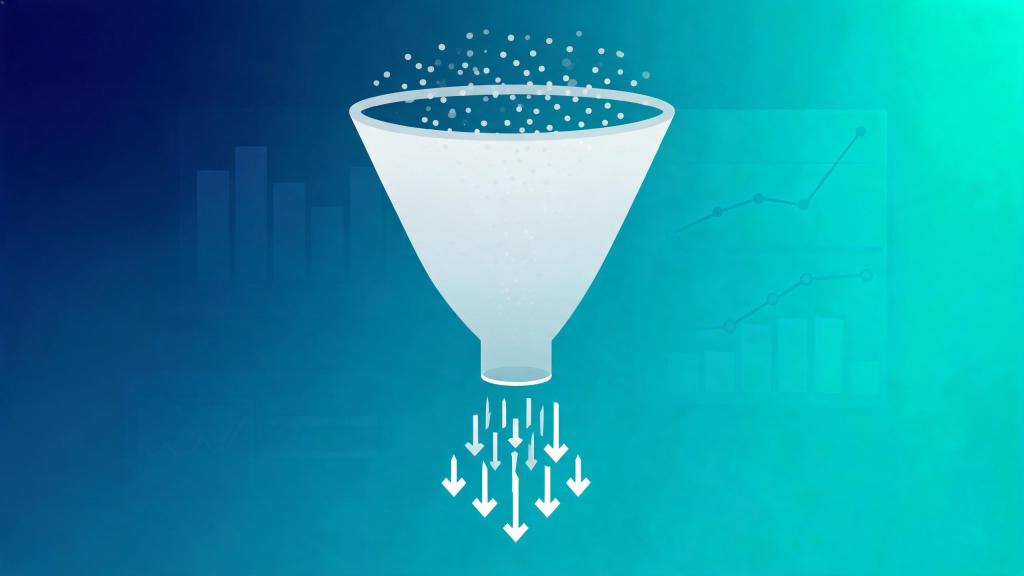
Google just retired its Display & Video 360 reach planner and several legacy forecasting tools. The message is clear: the era of impression-based planning is over, and conversion-focused performance is the only metric that matters now.
For advertisers running social ads on Meta or TikTok, this shift has a direct implication. If even Google is doubling down on conversion outcomes over reach estimates, your post-click experience — the journey from ad click to actual conversion — is now the single highest-leverage optimization surface you have.
→ Curious how return links work? See DeepClick in 1 minute — no review required, more impressions per click.
Why Google Killed Its Display Planning Tools
In May 2026, Google officially removed multiple planning and forecasting tools from its ad platform, including the Display & Video 360 reach planner and the older Keyword Planner forecast feature set. Google’s Performance Planner — which focuses entirely on conversion predictions — is now the only planning tool that remains.
This wasn’t a quiet deprecation. Google explicitly stated that advertisers should shift budgets toward “conversion-verified channels” and use Performance Planner to model outcomes rather than impressions.
The takeaway: reach-based metrics (CPM, impressions, view-through) are being de-prioritized across the industry. What matters is what happens after the click.
What This Means for Social Advertisers on Meta and TikTok
If you’re running Facebook or Instagram ads, you might wonder why a Google tool change matters. The answer is ecosystem convergence. Google’s move signals an industry-wide shift toward post-click accountability that Meta and TikTok will follow — and in some ways already have.
Consider the data:
- Meta’s own 2026 attribution updates now weight engage-through actions more heavily than simple click-through, pushing advertisers to prove downstream value.
- TikTok’s algorithm update in 2026 prioritizes SEO-intent content over viral reach, meaning even organic strategies now reward conversion depth.
- Average landing page bounce rates for social ads remain above 60%, according to industry benchmarks — meaning most ad spend is wasted in the post-click gap.
When you combine these trends, the conclusion is inescapable: optimizing what happens after the ad click is no longer optional. It’s the primary battlefield for ROAS improvement.
For a deeper look at how conversion rate optimization works across the full Facebook funnel, see our complete Facebook Ads CVR optimization guide.
Three Post-Click Strategies That Work in a Conversion-First World
Here’s how performance advertisers are adapting to this new reality:
Step 1: Audit Your Landing Page Load Time and Match Rate
Start with the basics. Run your top 10 landing pages through Google PageSpeed Insights and check two things: mobile load time (must be under 3 seconds) and message match — does the landing page headline mirror the ad creative’s promise?
A mismatch between ad creative and landing page messaging is the #1 cause of post-click bounce. Fix this first before touching any campaign settings.
Step 2: Implement Return Link Technology for Re-Engagement
One of the highest-ROI post-click optimizations available today is the return link — a fallback page that re-engages users who clicked your ad but didn’t convert. Instead of losing that click forever, a return link captures the user’s intent and delivers additional conversion touchpoints without requiring a new ad review.
Advertisers using return links report 10-20% additional click recovery and 5-15% incremental conversions — without increasing ad spend.
Step 3: Build Conversion-Specific Funnels per Audience Segment
Stop sending all traffic to one landing page. In a conversion-first world, each audience segment (prospecting, retargeting, lookalike) needs its own post-click experience. Prospecting traffic needs social proof and education. Retargeting traffic needs urgency and a clear CTA. Lookalike traffic needs feature comparison and trust signals.
Segment your funnels and watch your CVR climb. Teams running segmented post-click funnels see 25-40% higher conversion rates compared to single-page approaches.
If you’re running Google PMax campaigns alongside Meta ads, understanding how to fix PMax channel-level CVR gaps is equally critical.
How to Measure Post-Click Performance Correctly
With Google eliminating reach-based planning tools, your measurement framework needs to shift as well. Here’s what to track:
- Post-click conversion rate (PCCR): Conversions divided by landing page sessions (not ad clicks — the difference accounts for bounce).
- Time-to-conversion: How long from click to purchase/signup. Shorter is better, but if it’s too short, you may be counting only easy conversions and missing the retargeting opportunity.
- Return link recovery rate: What percentage of bounced visitors are recaptured through fallback pages and re-engagement flows.
- Segment-level CVR: Break down conversion rates by audience type, creative variant, and landing page version.
These metrics give you a clear picture of where value is being created — and where it’s being lost — in your post-click experience.
The Bottom Line: Post-Click Optimization Is Now Table Stakes
Google’s decision to kill its display planning tools isn’t just a product update — it’s a declaration that the ad industry’s center of gravity has shifted from impressions to conversions. For social advertisers on Meta and TikTok, this means the post-click experience is no longer a “nice to have.” It’s the core optimization lever.
Start with a landing page audit, implement return link technology for click recovery, and build audience-segmented conversion funnels. These three steps will position your campaigns to thrive in a world where every platform rewards conversion depth over reach width.
Advertisers who have already adapted to Advantage+ review changes using post-click strategies are seeing measurable gains. The conversion-first era isn’t coming — it’s here.
One ad click, multiple no-review impressions — that’s the DeepClick return link.
DeepClick helps Meta advertisers recover lost clicks with Ad Fallback Pages (+10-20% clicks), reduce ad complaints by 80%, and unlock 5-15% more conversions — without going through ad review again.
 DeepAds
留下评论