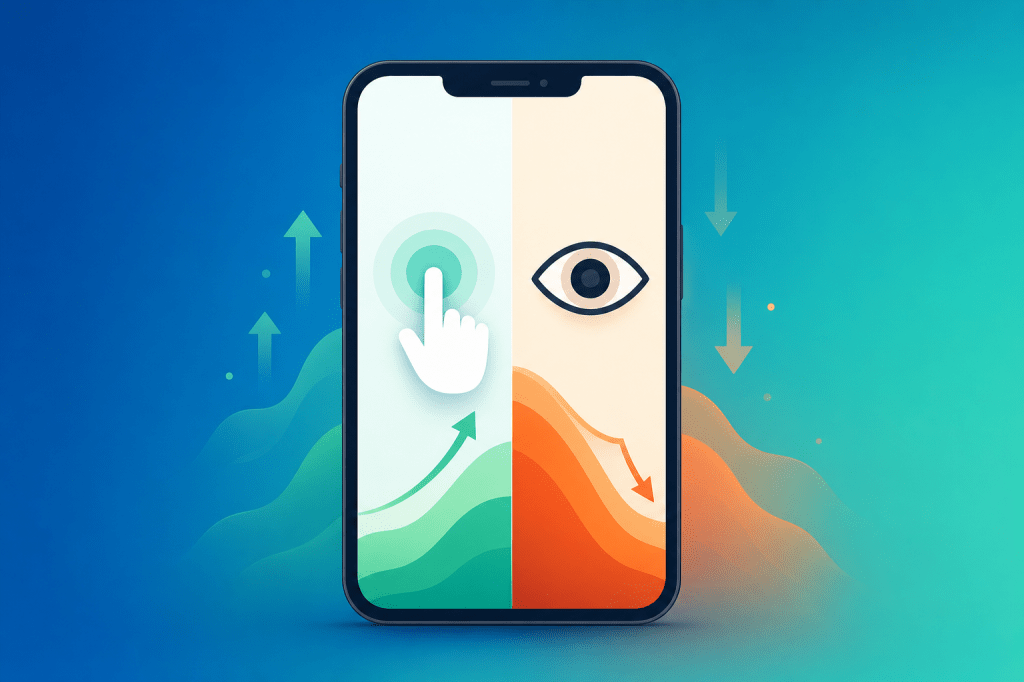
Meta just changed how it counts conversions — and if your CPA targets haven’t moved, you’re flying blind. The shift from click-through attribution to engage-through attribution means a new wave of “attributed” users is flooding your funnel. These users watched your video or engaged with your ad, but they never clicked. They arrive with lower intent, and your post-click funnel wasn’t built for them. Here’s exactly what changed, what breaks, and how to fix your conversion rate before your next reporting cycle.
→ Curious how return links work? See DeepClick in 1 minute — no review required, more impressions per click.
What Meta’s Attribution Shift Actually Changes
For years, Meta’s default attribution window was 7-day click-through plus 1-day view-through. Click-through attribution was simple: a user clicked your ad, landed on your page, and converted (or didn’t) within seven days. The click was the qualifying event.
In 2026, Meta introduced engage-through attribution as a new default signal inside Advantage+ campaigns. Engage-through counts users who interacted with your ad — watched 15+ seconds of video, expanded a carousel, swiped through an Instant Experience — but never clicked through to your landing page. If those users later convert (via organic search, direct visit, or another touchpoint), Meta claims the credit.
This isn’t a minor tweak. Early data from advertisers running AI social apps and gaming verticals shows engage-through can inflate attributed conversions by 20-35% while simultaneously dropping actual landing page conversion rates by 10-15%. The math doesn’t lie: you’re paying the same CPA target, but the users you’re “getting” are fundamentally different.
The change also affects how Meta’s algorithm optimizes delivery. When engage-through conversions are counted alongside click-through conversions, the algorithm learns that it can find “converters” more cheaply — by serving impressions to users who are likely to engage but unlikely to click. Over time, this shifts your entire traffic mix toward lower-intent audiences without any change to your campaign settings.
Why Engage-Through Users Break Your Funnel
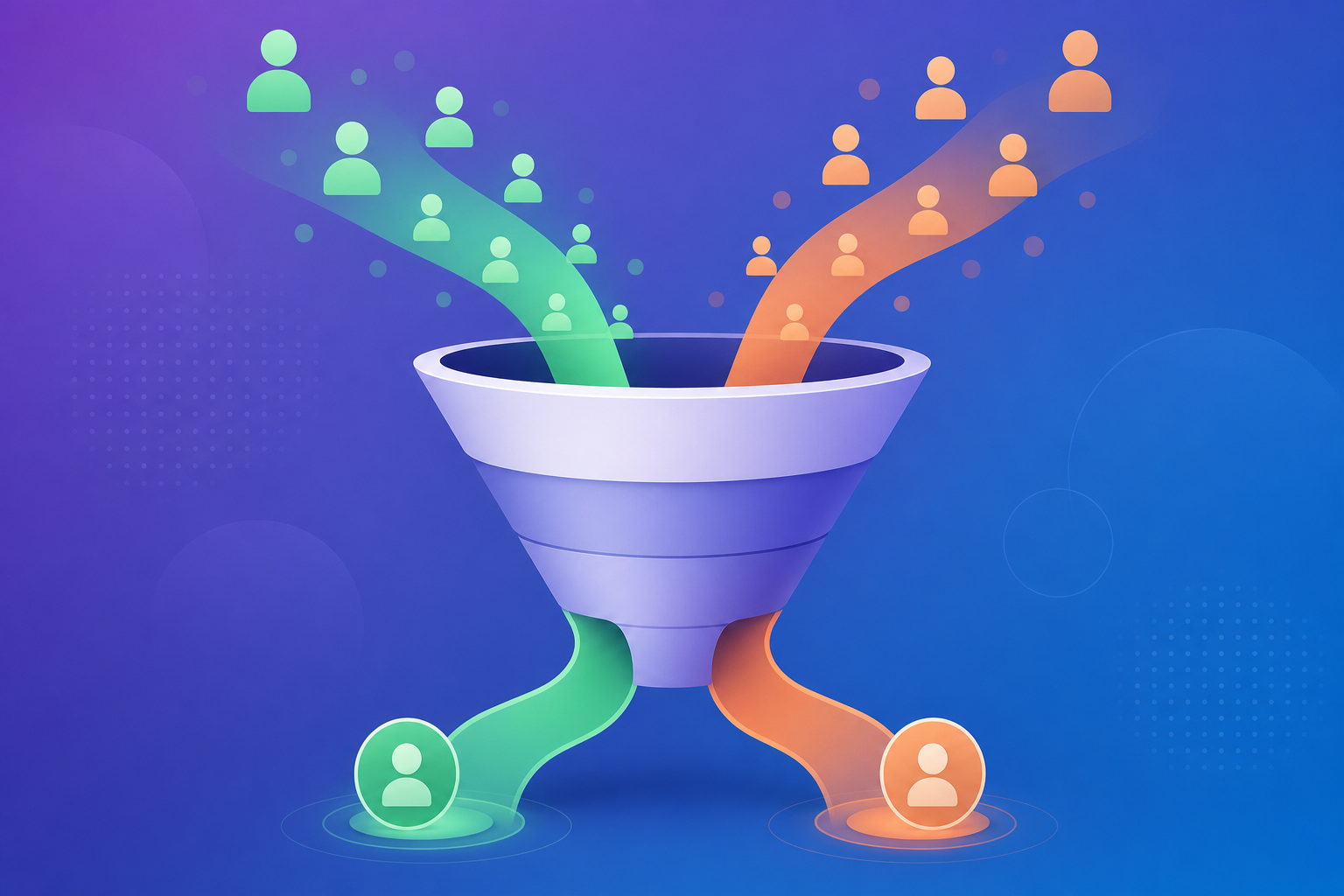
The core problem is intent mismatch. Click-through users took a deliberate action — they saw your ad, decided it was worth investigating, and clicked. By the time they hit your landing page, they had self-selected as interested prospects.
Engage-through users did something much weaker. They watched your video (possibly on autoplay). They swiped a carousel (possibly by accident). They never made the conscious decision to visit your page. When these users eventually arrive at your site — through a branded search days later, or a retargeting ad — they arrive with a different mental model. They may not even remember your ad.
For AI dating and companion apps running Meta campaigns, this is especially destructive. These apps already face a trust barrier at the landing page: users need to believe the AI experience is worth trying. Click-through users have already overcome that initial skepticism by choosing to click. Engage-through users haven’t. They need more convincing, better social proof, and a faster path to value — or they bounce.
For gaming teams running BC campaigns, the impact hits the install-to-first-purchase funnel. Engage-through users install at a lower rate, and those who do install show 25-40% lower Day-1 retention compared to click-through cohorts. Your ROAS calculations built on click-through data are now dangerously optimistic.
There’s a compounding effect too. As your funnel fills with lower-intent users, your landing page’s overall conversion rate drops. Meta sees the lower conversion rate and raises your CPM to compensate — creating a vicious cycle where you pay more per impression to reach an audience that converts worse. Understanding and breaking this cycle requires separating attribution types at the data layer before making any optimization decisions.
Three Post-Click Fixes for the Engage-Through Era
Step 1: Segment Your Attribution Data Immediately
Before you change anything on your landing page, you need to see the damage clearly. In Meta Ads Manager, break down your campaign results by attribution setting. Compare click-through conversions versus engage-through conversions side by side. Calculate separate CPAs for each.
What you’ll likely find: your blended CPA looks “fine,” but click-through CPA is rising (because Meta is shifting budget toward cheaper engage-through inventory) and engage-through CPA is artificially low (because those conversions were going to happen anyway through organic channels).
Action: Create a custom column set that shows click-through and engage-through conversions separately. Set this as your default view. Never look at blended numbers again without this context, as detailed in our post-click measurement framework.
For teams running campaigns across multiple ad accounts, export this data weekly to a shared dashboard. The attribution shift affects each account differently depending on creative mix — video-heavy accounts see a much larger engage-through share than static-image accounts, making cross-account comparisons misleading if you don’t segment first.
Step 2: Rebuild Your Landing Page for Low-Intent Visitors
Your current landing page was optimized for click-through users — people who already wanted to learn more. Engage-through users need a different experience:
- Lead with proof, not features. Replace your hero section’s feature list with a specific result: “47,000 matches made this month” for dating apps, or “Average session: 23 minutes” for gaming.
- Add a 15-second video recap. These users engaged with your video ad but didn’t click. Give them the core message again, immediately, in a format they already responded to.
- Reduce friction to first action. For AI apps, let users try one interaction before sign-up. For games, show a playable demo. The lower the intent, the lower the commitment bar needs to be.
- Use progressive disclosure. Don’t show pricing, subscription tiers, or complex onboarding on the first screen. Earn attention in stages.
Consider running an A/B test that separates click-through traffic from engage-through traffic using UTM parameters or Meta’s URL parameters. Serve your existing high-conversion page to click-through visitors, and a new proof-first variant to engage-through visitors. This way you protect your existing conversion rate while testing whether a different page structure converts the new audience better.
Step 3: Deploy Return Links to Recover Bounced Engage-Through Traffic
Here’s the uncomfortable truth: most engage-through users who visit your landing page will bounce. They weren’t ready. But they weren’t uninterested either — they engaged with your ad for a reason. The question is whether you can reach them again without paying for another ad impression.
Return links solve this by creating a post-click recovery pathway that doesn’t require a new ad review. When an engage-through user bounces, they can be re-engaged through the ad fallback page — giving you 10-20% additional click recovery without re-entering the auction. This is especially valuable for engage-through traffic because these users need multiple touchpoints before converting, and each touchpoint through traditional retargeting costs incremental CPA.
The economics are compelling: traditional retargeting to re-engage a bounced user costs $2-5 per thousand impressions. Return links achieve the same re-engagement at zero incremental media cost because they operate within the original ad’s impression lifecycle. For campaigns where engage-through traffic now represents 30% or more of attributed conversions, this single change can reduce effective CPA by 8-12%.
Recalibrating Your CPA Targets
With engage-through in the mix, your old CPA benchmarks are obsolete. Here’s the recalibration framework:
- Calculate your true click-through CPA. Isolate click-through-only conversions and divide by total spend. This is your real cost of acquiring an intentional visitor.
- Assign a discount factor to engage-through conversions. Based on early data, engage-through conversions are worth 40-60% of click-through conversions in terms of downstream LTV. Apply this discount when setting targets.
- Set separate bid caps. If your click-through CPA target was $15, your engage-through target should be $6-9 (reflecting the lower downstream value).
- Monitor the ratio weekly. Meta’s algorithm will naturally shift toward cheaper engage-through inventory. If your engage-through share exceeds 40% of total conversions, you’re likely overpaying for low-intent users.
Teams running campaigns across Google PMax and Meta simultaneously should also review their cross-channel CVR gaps to ensure the attribution shift isn’t masking true performance differences between platforms.
What to Do This Week
The engage-through attribution change isn’t optional — it’s already live in Advantage+ campaigns and rolling out across standard campaigns. Here’s your action checklist:
- Break down current campaign data by attribution type (click-through vs. engage-through)
- Calculate separate CPAs and downstream LTV for each attribution cohort
- Adjust bid caps to reflect the lower value of engage-through conversions
- Audit your landing page for low-intent user readiness (proof-first layout, reduced friction, video recap)
- Set up A/B testing to serve different page experiences to click-through vs. engage-through traffic
- Implement return links to recover bounced engage-through visitors without additional ad spend
- Set a weekly review cadence to monitor the click-through vs. engage-through ratio
The advertisers who adapt fastest will gain a structural CPA advantage. Those who keep targeting blended metrics will watch their true acquisition cost rise while their dashboards show “stable” performance. The window to get ahead is now — before your competitors figure out the same math.
One ad click, multiple no-review impressions — that’s the DeepClick return link.
DeepClick helps Meta advertisers recover lost clicks with Ad Fallback Pages (+10-20% clicks), reduce ad complaints by 80%, and unlock 5-15% more conversions — without going through ad review again.
 DeepAds
留下评论