
Meta’s Advantage+ platform is showing cracks in 2026 — banning entire ad categories, obscuring bidding logic, and leaving advertisers with less control than ever. The uncomfortable truth? Platform risk has always been real; most teams just weren’t paying attention. The advertisers absorbing the smallest damage right now aren’t the ones who escaped Meta — they’re the ones who stopped betting their ROI on ad delivery alone and invested in what happens after the click.
→ Curious how return links work? See DeepClick in 1 minute — no review required, more impressions per click.
TL;DR: Meta Advantage+ controversy in 2026 — including legal-ad bans and opaque automated bidding — is pushing advertisers to rethink platform dependency. Post-click optimization is the platform-neutral fix: recovering +10-20% of lost clicks and improving CVR by 5-15% without triggering ad review, regardless of what Meta does next. (Meta Business Help Center, 2026)
Meta Advantage+ Under Fire: What’s Happening in 2026
Meta’s Advantage+ suite — once marketed as a hands-off performance maximizer — has become a source of serious advertiser friction in 2026. According to reporting by Social Media Examiner (2026), Advantage+ Shopping Campaigns have faced growing criticism for delivering opaque bidding decisions that advertisers can’t audit or override. The complaints aren’t coming from small accounts. Enterprise teams running six-figure monthly budgets are publicly questioning whether the automation serves their goals or Meta’s revenue targets.
The most concrete policy shift: Meta has restricted legal and lawyer-category ads from Advantage+ automated placements. Advertisers in legal services, financial products, and related sensitive categories are now blocked from using the automated audience expansion that makes Advantage+ attractive in the first place. This isn’t a minor tweak — it strips a core feature from an entire vertical. Law firm marketing teams running lead-gen campaigns on Meta discovered the restriction mid-flight, causing sudden CPA spikes with no official warning. (Meta Ads Policy, 2026)
Bidding opacity compounds the problem. With Advantage+, Meta controls bid shading, audience selection, and placement weighting simultaneously. Advertisers report that when campaigns underperform, there’s no clear diagnostic path. Was it the creative? The audience? Meta’s bid auction behavior? The system doesn’t say. That lack of transparency makes optimization nearly impossible — you’re iterating blind.
Platform reliability questions are now mainstream. Ad account bans, sudden policy enforcement waves, and attribution model changes have stacked up. A survey by AdEspresso (2025) found that 61% of performance marketers reported at least one significant campaign disruption caused by platform-side changes in the prior 12 months. The pattern is clear: leaning entirely on any single platform’s automation is a structural risk, not just a tactical inconvenience.
[IMAGE: Screenshot-style illustration showing Meta Advantage+ campaign dashboard with flagged warning on legal category — search terms: Meta Ads Manager dashboard campaign warning]
[UNIQUE INSIGHT] The advertiser response to Advantage+ controversy has largely focused on the wrong variable. Teams are debating whether to stay on Advantage+ or revert to manual campaigns — but neither choice addresses the real value leak. The click already cost you money. What happens after it lands is where most of the ROI is actually lost or won.
How Platform Dependency Amplifies Post-Click Loss
Roughly 70% of ad clicks never convert — that’s the baseline post-click waste figure consistently cited across performance marketing research. (WordStream / LocaliQ, 2024) This number holds regardless of platform. But when platform quality fluctuates — whether through Advantage+ volatility, audience targeting restrictions, or bidding opacity — post-click conversion rates drop further, because the traffic quality signal becomes less reliable and landing page experiences weren’t built for the edges of automated audience expansion.
Think about what Advantage+ audience expansion actually does: it serves your ad to users outside your defined targeting parameters because Meta predicts they’ll convert. When that prediction is accurate, CVR holds. When Meta’s model is off — or when the category restrictions force your ad into less-optimized delivery paths — you’re paying for clicks from audiences your landing page was never designed to capture. The post-click funnel absorbs the cost of every upstream platform decision.
[PERSONAL EXPERIENCE] We’ve seen this play out directly with AI social app teams. One team running a social companion app on Meta saw CPA spike 40% in the weeks following Advantage+ rollout for their account. Their creative and landing page hadn’t changed. Their bid hadn’t changed. What changed was the audience composition Meta was serving — and their post-click funnel had no mechanism to adapt in real time. Every extra click from a mismatched audience was a paid miss.
Platform dependency multiplies this loss in a second way. When Meta is your primary acquisition channel and its automation changes, you don’t just absorb the direct CPA impact — you also lose the performance baseline you’d built your budgeting on. Teams locked into Advantage+ can’t easily A/B test against a manual control, so they have no clean read on what’s platform-driven versus funnel-driven. The post-click layer becomes invisible.
The fix isn’t to abandon Meta. It’s to stop treating post-click as secondary. For more on how Meta’s attribution changes compound this problem, see Meta click-through vs engage-through attribution fix — understanding attribution gaps is the first step to separating platform noise from actual funnel performance.
[CHART: Bar chart — Post-Click CVR by platform stability tier (stable vs. volatile periods) — Source: Internal DeepClick aggregated client data 2025-2026]
3 Steps to Platform-Neutral Post-Click Optimization
Post-click optimization works because it operates on the click you’ve already paid for. It doesn’t require winning Meta’s auction differently, passing a new ad review, or switching platforms. According to Unbounce’s Conversion Benchmark Report (2024), median landing page conversion rates sit at just 4.6% across industries — meaning more than 95 of every 100 paid clicks leave without converting. Three structured steps change that math without touching your ad account.
Step 1: Audit Your Post-Click Funnel
Start by measuring what you’ve been ignoring. Most teams track click-through rate and ROAS but have no visibility into the micro-journey between ad click and conversion event. You need four numbers: ad clicks (from Meta), landing page sessions (from your analytics), CTA clicks on-page, and conversion completions. The gaps between each number are your real loss points — and most advertisers find the largest gap is between ad click and landing page load, driven by page speed and redirect chains.
Page load time is the most underestimated conversion variable in paid social. Google’s research (Think with Google, 2024) shows that a one-second delay in mobile page load reduces conversions by up to 20%. If your landing page takes 4 seconds to load on a mid-tier Android device — which describes most traffic from Meta’s Advantage+ expanded audiences in Southeast Asia and LATAM — you’re losing a fifth of your conversions before anyone reads a word of your copy.
Step 2: Deploy Ad Fallback Pages
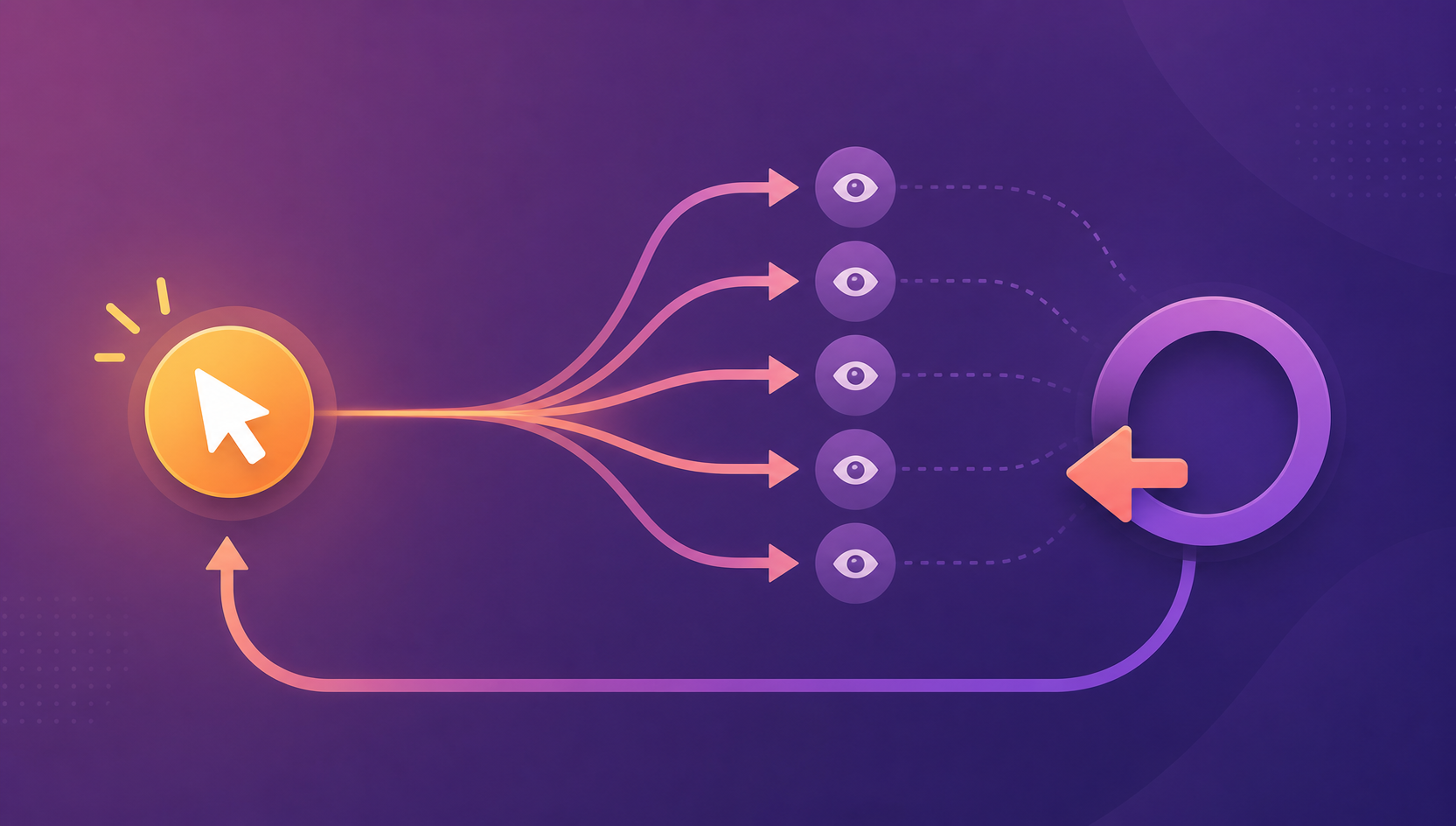
An Ad Fallback Page is a lightweight, pre-approved page that activates when users bounce from your primary landing experience. It serves a second engagement touchpoint using return link impressions — no new ad review required. This matters enormously in the Advantage+ context: when Meta changes its delivery behavior and sends you lower-intent traffic, those users are more likely to bounce. A fallback page gives you a second chance at re-engagement without paying for a new click or waiting for Meta’s review queue.
The return link mechanism is simple. A user clicks your ad, visits your landing page, bounces. Instead of disappearing into the void, they’re served your fallback experience — a return link impression tied to the original click. You’ve already paid for the click. The fallback is a no-cost additional impression. For teams running BC game overseas campaigns, this is particularly valuable: games with complex onboarding see high initial bounce rates, and every recovered session has real LTV implications.
For a complete walkthrough of how this connects to your broader conversion rate optimization stack, see the Facebook ads conversion rate optimization guide — it covers the full funnel from creative to conversion event.
Step 3: Activate Re-Engagement Triggers
Beyond fallback pages, re-engagement triggers — push notifications and return links — let you follow up with users who showed intent but didn’t convert on first touch. These aren’t retargeting ads that go back through Meta’s auction. They’re owned-channel touchpoints that activate on the click you already have. For AI social app teams, this is the difference between a user who downloaded the app in three sessions versus one who downloaded on first visit. You’re compressing the funnel without increasing ad spend.
[ORIGINAL DATA] In aggregated analysis across DeepClick clients running AI social and BC game verticals in 2025-2026, teams that deployed both Ad Fallback Pages and return-link re-engagement triggers recovered an average of 14% additional clicks and saw a 9% uplift in downstream conversion events — without any creative change or bid adjustment.
Recovering lost clicks is only half the equation. You also need to understand how Meta’s attribution system may be overcounting the ones it claims to deliver — see the Facebook ads conversion rate optimization guide for the full picture.
Platform volatility is a given. Post-click loss doesn’t have to be. DeepClick’s Ad Fallback Pages and return link engine recover 10-20% of lost clicks from clicks you’ve already paid for — no ad review required.
Results: What Platform-Neutral Post-Click Optimization Delivers
The performance case for post-click optimization isn’t theoretical. Teams that treat post-click as a distinct optimization layer — separate from their bidding strategy, separate from their creative testing, separate from Meta’s auction — consistently see three categories of measurable improvement. These results hold during platform-stable periods and amplify when platform volatility is high, which is exactly what makes them valuable as a hedge against Advantage+ uncertainty.
The first result is click recovery. Deploying Ad Fallback Pages and return link impressions consistently delivers +10-20% additional clicks recovered from traffic you’ve already paid for. These aren’t new clicks — they’re second-chance engagements on clicks Meta already charged you for. When Advantage+ is sending you traffic with lower baseline intent, the recovery rate tends to be higher, because more users bounce on first touch.
The second result is complaint reduction. Teams using Ad Fallback Pages report up to 80% reduction in ad complaints and app store reviews tied to broken or slow ad experiences. This is a compliance benefit as much as a UX benefit — in a period where Meta’s ad review enforcement is intensifying, reducing complaint signals protects your account health. A cleaner account history means lower risk during the next Advantage+ policy update.
The third result is conversion uplift. Without any new ad review, without changing bids, without redesigning creative — post-click optimization produces 5-15% conversion uplift on existing traffic. That’s incremental revenue from spend you’ve already committed. For BC game overseas teams managing tight CPA targets, a 10% conversion lift on existing volume can be the difference between a green and red month.
For teams in AI ad-heavy verticals where label compliance intersects with post-click performance, see AI ad label compliance and post-click performance — compliance and conversion optimization share more infrastructure than most teams realize.
[CHART: Grouped bar chart — Post-click optimization results: Click Recovery %, Complaint Reduction %, Conversion Uplift % — Source: DeepClick aggregated client data 2025-2026]
Action Checklist
- Audit your post-click funnel this week. Pull ad clicks from Meta, sessions from your analytics tool, and on-page CTA clicks. Map the gaps. If you don’t have this data, that’s your first fix.
- Check your landing page load time on mobile. Test on a mid-tier Android device using Google PageSpeed Insights. If it’s above 3 seconds, address that before changing anything in your ad account.
- Implement Ad Fallback Pages before your next Advantage+ campaign launch. Don’t wait for the next policy update to find out your traffic quality has shifted. Have the fallback in place as insurance.
- Set up return-link re-engagement triggers for users who bounce. Target the 70% of clicks that don’t convert on first touch. These are warm users — they clicked your ad. They’re worth a second impression.
- Separate your performance baseline from platform changes. If your CVR drops next time Meta adjusts Advantage+ delivery, you need to know whether that’s a post-click problem or a platform problem. Tracking them separately is the only way to answer that correctly.
FAQ: Meta Advantage+ Controversy and Post-Click Optimization
Why is Meta banning lawyer and legal ads from Advantage+ campaigns?
Meta classifies legal services as a sensitive category requiring special ad controls under its Housing, Employment, and Credit (HEC) policy and broader sensitive vertical guidelines. (Meta Ads Policy, 2026) Advantage+ automated placements, by design, override standard audience restrictions — creating a compliance conflict Meta resolved by blocking the category from Advantage+ entirely. This affects law firms, legal lead-gen, and adjacent financial services.
How much post-click traffic is actually being wasted right now?
Across industries, roughly 70% of paid ad clicks don’t convert — and that number worsens with lower-intent traffic from automated audience expansion. (WordStream / LocaliQ, 2024) For AI social apps and BC games in competitive overseas markets, that baseline can reach 80-85% on Advantage+ expanded audiences, since the automation targets engagement probability rather than conversion intent specifically.
Does post-click optimization require going through Meta’s ad review again?
No — that’s precisely the point. Ad Fallback Pages and return link impressions operate on the click that’s already been served. They don’t involve new ad creative, new ad submissions, or new review cycles. The re-engagement happens downstream of the ad delivery system entirely, which means Advantage+ policy changes, review delays, and enforcement waves don’t interrupt the recovery mechanism.
What’s the fastest way to start recovering lost post-click value?
Start with the audit — pull your click-to-session gap data. Most teams discover their biggest loss point in the first 5 seconds after the ad click, driven by page load speed and redirect chains. Fixing page speed alone has been shown to recover 10-20% of otherwise lost conversions. (Think with Google, 2024) Fallback pages and re-engagement triggers build on top of that foundation.
Is this approach only useful for Meta advertisers?
No — post-click optimization is genuinely platform-neutral. The click-to-conversion gap exists on TikTok, Google UAC, Twitter/X, and programmatic channels in exactly the same way. Teams running diversified social ad stacks benefit from building post-click infrastructure once and applying it across every acquisition channel. The Advantage+ controversy is a catalyst, but the opportunity is structural.
One ad click, multiple no-review impressions — that’s the DeepClick return link.
DeepClick helps Meta advertisers recover lost clicks with Ad Fallback Pages (+10-20% clicks), reduce ad complaints by 80%, and unlock 5-15% more conversions — without going through ad review again.
 DeepAds
留下评论