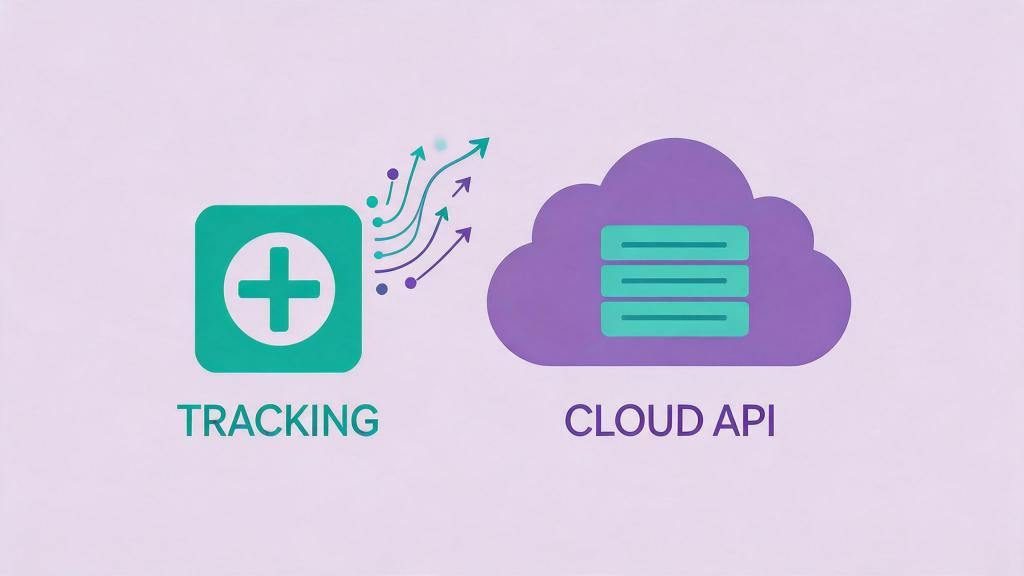
Meta just rolled out a major upgrade to both Meta Pixel and Conversions API (CAPI) in April 2026. The update simplifies tracking setup and promises better event matching. But for performance advertisers focused on post-click conversion, the real question is: what does this change for your data quality, and what should you do right now?
This article breaks down what actually changed, what it means for your post-click funnel tracking, and the specific steps to take advantage of the upgrade before your competitors do.
→ Curious how return links work? See DeepClick in 1 minute — no review required, more impressions per click.
What Meta Changed in the Pixel and CAPI Upgrade
This is not a minor version bump. Meta restructured how Pixel and CAPI work together, and the changes affect three critical areas for post-click tracking.
1. Automatic event deduplication. Previously, if you fired both a Pixel event and a CAPI event for the same conversion, you had to manually configure deduplication using event_id or event_name matching. Now Meta handles deduplication automatically using a combination of timestamp, user identifiers, and event parameters. This eliminates the double-counting problem that inflated conversion numbers for many advertisers.
2. Simplified CAPI Gateway 2.0. Meta replaced the old CAPI integration options (direct API, partner integrations, Shopify plugin) with a unified CAPI Gateway that runs as a lightweight server container. Setup dropped from a multi-day engineering project to under 2 hours for most configurations. The gateway auto-discovers your Pixel events and mirrors them server-side.
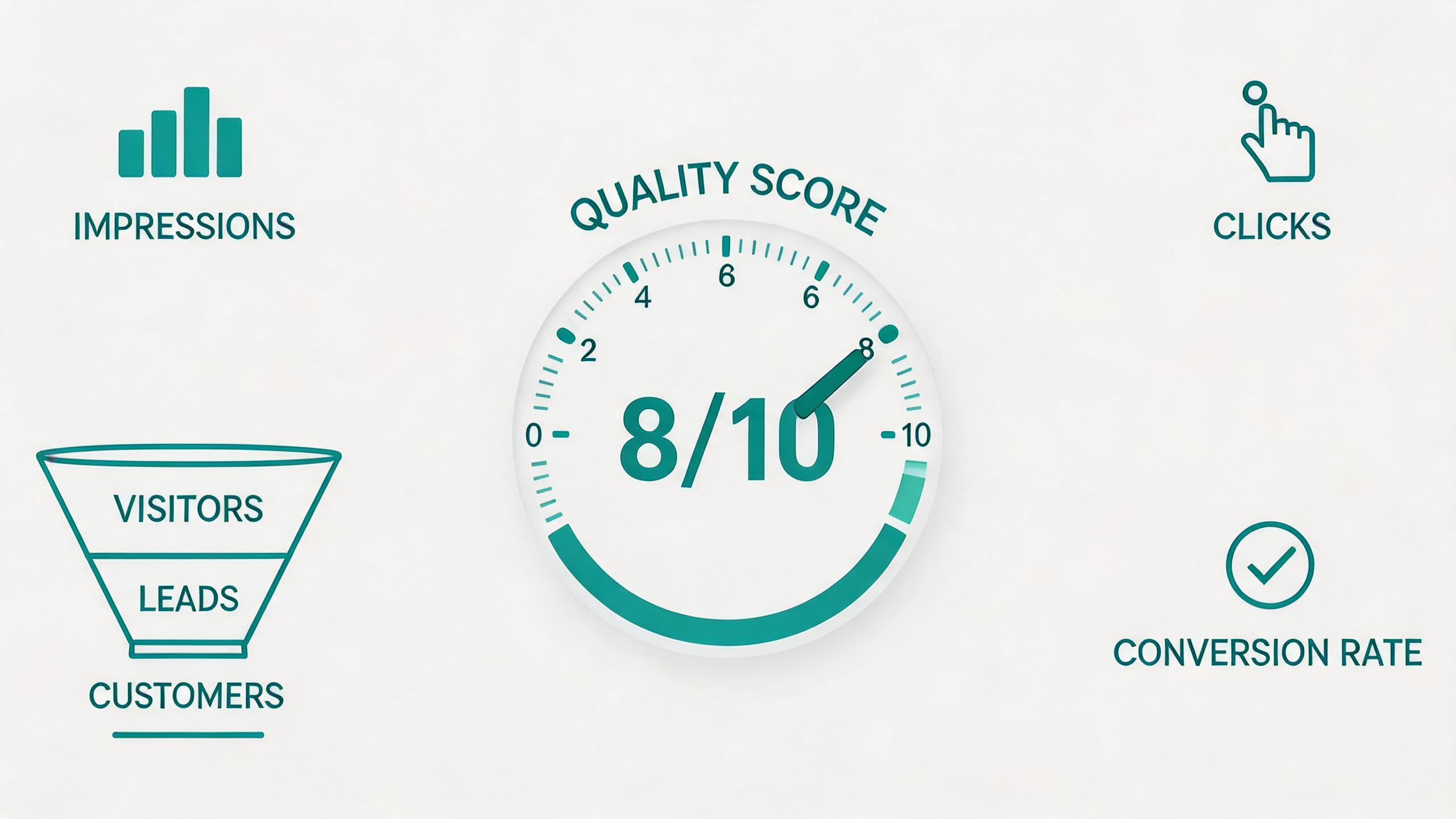
3. Enhanced match quality scoring. The Events Manager now shows a real-time “Match Quality Score” (1-10) for each event type, replacing the old “Event Match Quality” percentage. A score below 6 triggers automated recommendations for adding specific user parameters. Above 8 means your event matching is strong enough that cookie loss has minimal impact on attribution.
For advertisers who rely on accurate post-click data to optimize landing pages and funnels, this upgrade removes several long-standing headaches. But only if you implement it correctly.
Why This Matters for Post-Click Conversion Tracking
The post-click funnel is where most ad spend actually gets converted or wasted. And accurate tracking of that funnel is what separates profitable campaigns from money pits.
Here is how the upgrade specifically impacts post-click optimization:
Better landing page attribution. With automatic deduplication, you now get a single, clean conversion count per user journey. Before, advertisers running both Pixel and CAPI often saw inflated conversion numbers on landing pages, which masked actual CVR problems. If your landing page was converting at a “reported” 4% but the real number was 2.5% due to double-counting, you had no signal to optimize. That noise is now gone.
Faster learning phase exit. CAPI Gateway 2.0 sends higher-quality conversion signals to Meta’s algorithm. Higher match quality means Meta can attribute conversions to the right ad sets faster, which means campaigns exit learning phase sooner. For post-click optimizers, this is critical: the faster a campaign stabilizes, the sooner you can run meaningful A/B tests on your landing pages.
Cookie-independent funnel visibility. With enhanced match quality scoring, you can now see exactly how much of your funnel is visible to Meta despite cookie restrictions. A Match Quality Score of 8+ means you are tracking 85%+ of conversions server-side. This makes your conversion rate optimization data reliable regardless of browser privacy changes.
4 Steps to Maximize the Upgrade for Your Campaigns
Step 1: Migrate to CAPI Gateway 2.0
If you are still on direct CAPI integration or an older partner integration, migrate now. The new Gateway handles 90% of configuration automatically.
- Go to Events Manager → Data Sources → your Pixel → Settings
- Click “Upgrade to CAPI Gateway 2.0” (the banner appeared for most accounts in late March)
- Choose your hosting: Meta-hosted (free, recommended for most) or self-hosted (for enterprises needing data sovereignty)
- The migration wizard auto-maps your existing events. Review the mapping, confirm, and the gateway goes live within 1 hour
Watch out: If you have custom event names (not standard events), verify they map correctly. The auto-mapper sometimes mismatches custom events with similar names.
Step 2: Check your Match Quality Scores
After migration, give it 48 hours for scores to stabilize, then review each event type.
- Navigate to Events Manager → your Pixel → Overview
- Each event now shows a Match Quality Score (1-10)
- Target: all key conversion events at 7+. Purchase, Lead, CompleteRegistration should ideally be 8+
- Below 6: Meta will show specific recommendations (e.g., “add phone number parameter”). Implement these recommendations immediately.
Step 3: Audit your post-click funnel for double-count cleanup
With automatic deduplication now active, your reported conversion numbers may drop compared to last week. This is not a performance decline — it is the removal of inflated data.
- Pull a 7-day comparison: pre-upgrade conversions vs. post-upgrade conversions for each campaign
- Cross-reference with your server-side data (GA4, MMP, or internal analytics)
- If the post-upgrade Meta numbers now match your server-side numbers more closely, the deduplication is working correctly
- Re-baseline your CPA targets using the cleaned data. Do not optimize against old, inflated benchmarks
This step is essential. Many advertisers will see “worse numbers” and panic. The numbers are not worse — they are finally accurate. Optimizing against accurate data is how you find real CVR improvement opportunities across channels.
Step 4: Set up conversion value optimization
The upgrade also improved how Meta handles conversion value data sent via CAPI. If you are optimizing for value (ROAS campaigns) rather than volume (CPA campaigns), update your CAPI events to include the value and currency parameters on every conversion event.
- For e-commerce: send actual transaction value
- For SaaS/apps: send predicted LTV or first-purchase value
- For lead gen: assign value tiers (e.g., qualified lead = $50, demo booked = $200)
Meta’s algorithm uses this value data to find users who are not just likely to convert, but likely to convert at higher value. Combined with cleaner post-click attribution, this gives you significantly better ROAS optimization.
Post-Click Optimization and the New Tracking Stack
The Pixel and CAPI upgrade solves the measurement problem. But measurement alone does not fix a broken funnel. You still need to optimize what happens after the click.
With cleaner data, here is what becomes possible:
- True landing page A/B testing: Without double-counting, your test results are reliable. A 0.3% CVR improvement is real, not noise.
- Funnel stage attribution: You can now accurately measure where users drop off (landing page → form → confirmation) because CAPI tracks each step independently of browser cookies.
- Cross-channel comparison: Compare Meta post-click CVR against PMax channel performance using the same server-side data source. Apples-to-apples comparison reveals which channel delivers the highest-quality clicks.
The advertisers who combine the new tracking stack with systematic post-click optimization will pull ahead. Clean data plus optimized funnels is the compound advantage that is hard to replicate.
Action Checklist
- Migrate to CAPI Gateway 2.0 — takes under 2 hours, eliminates manual deduplication
- Review Match Quality Scores — target 7+ on all conversion events, implement Meta’s recommendations for anything below 6
- Re-baseline CPA/ROAS targets — your numbers may look different post-dedup; use the clean data, not the old inflated benchmarks
- Add value parameters to CAPI events — enables value-based optimization
- Run a 14-day landing page A/B test — the first test with clean data will be your most actionable result in months
The upgrade is live. The advertisers who act on it first get the cleanest data and the biggest head start on optimization. Everyone else will catch up eventually, but the first-mover advantage in data accuracy compounds daily.
One ad click, multiple no-review impressions — that’s the DeepClick return link.
DeepClick helps Meta advertisers recover lost clicks with Ad Fallback Pages (+10-20% clicks), reduce ad complaints by 80%, and unlock 5-15% more conversions — without going through ad review again.
 DeepAds
留下评论