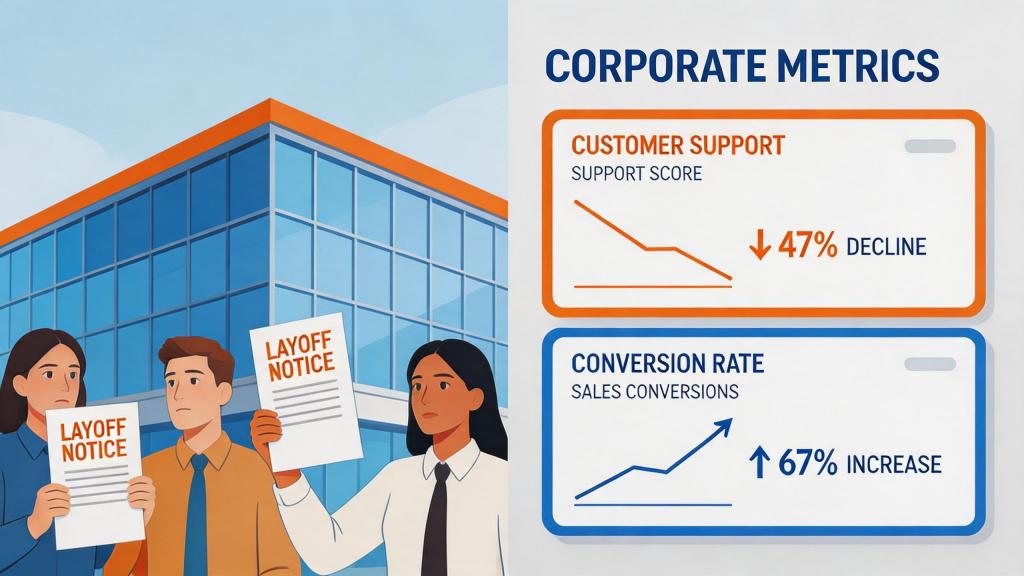
On May 20, 2026, Meta begins one of its largest workforce reductions in company history — roughly 10% of its global headcount, or approximately 8,000 employees. For the millions of advertisers who depend on Meta’s ad platform, this isn’t just corporate news. It’s a direct threat to campaign performance, support responsiveness, and the conversion rates that keep businesses profitable.
If you’ve ever relied on a Meta ad rep to troubleshoot a campaign, escalate a disapproved ad, or advise on audience strategy, those lifelines are about to get significantly thinner. The advertisers who will weather this disruption are those who’ve already invested in self-serve optimization — particularly on the post-click side of the funnel, where conversions actually happen.
This article breaks down exactly what the layoffs mean for advertisers, why post-click optimization becomes non-negotiable in this new reality, and the concrete steps you can take right now to protect your conversion rates.
→ Curious how return links work? See DeepClick in 1 minute — no review required, more impressions per click.
Meta’s 2026 Layoffs: What Advertisers Are Actually Losing
Meta’s layoff plan, first reported by Bloomberg and confirmed in internal communications, targets teams across Reality Labs, ad operations, and partner support. While the company frames the cuts as a strategic reallocation toward AI infrastructure, the practical impact on advertisers is already becoming clear.
Ad Support Response Times Will Spike
Meta’s advertiser support has been declining for years. A 2024 survey by Disruptive Advertising found that 67% of mid-market advertisers rated Meta’s ad support as “poor” or “very poor.” With fewer support staff, expect resolution times on ad disapprovals, account restrictions, and billing issues to stretch from days to weeks. During Meta’s 2022 layoff cycle (which cut 11,000 employees), advertisers reported support ticket resolution times increasing by 40-60% in the following quarter, according to data compiled by Social Media Examiner.
Dedicated Ad Reps Are Disappearing
Advertisers spending $50K-$500K per month have historically been assigned dedicated account representatives. These reps provided manual campaign optimization suggestions, audience recommendations, and escalation pathways for policy issues. Industry insiders report that the May 2026 cuts will eliminate a significant portion of these mid-tier rep positions, with only enterprise accounts ($500K+/month) retaining dedicated human support.
Product Development Will Slow
Meta’s advertising tools — Ads Manager, the Conversions API, the Meta Pixel — already lag behind advertiser needs. With engineering and product teams reduced, expect slower rollouts of new features, longer bug-fix cycles, and delayed responses to platform issues. The Meta Pixel and CAPI upgrade timeline for 2026 is already under pressure, and these cuts will only compound delays.
Why This Directly Impacts Your Conversion Rates
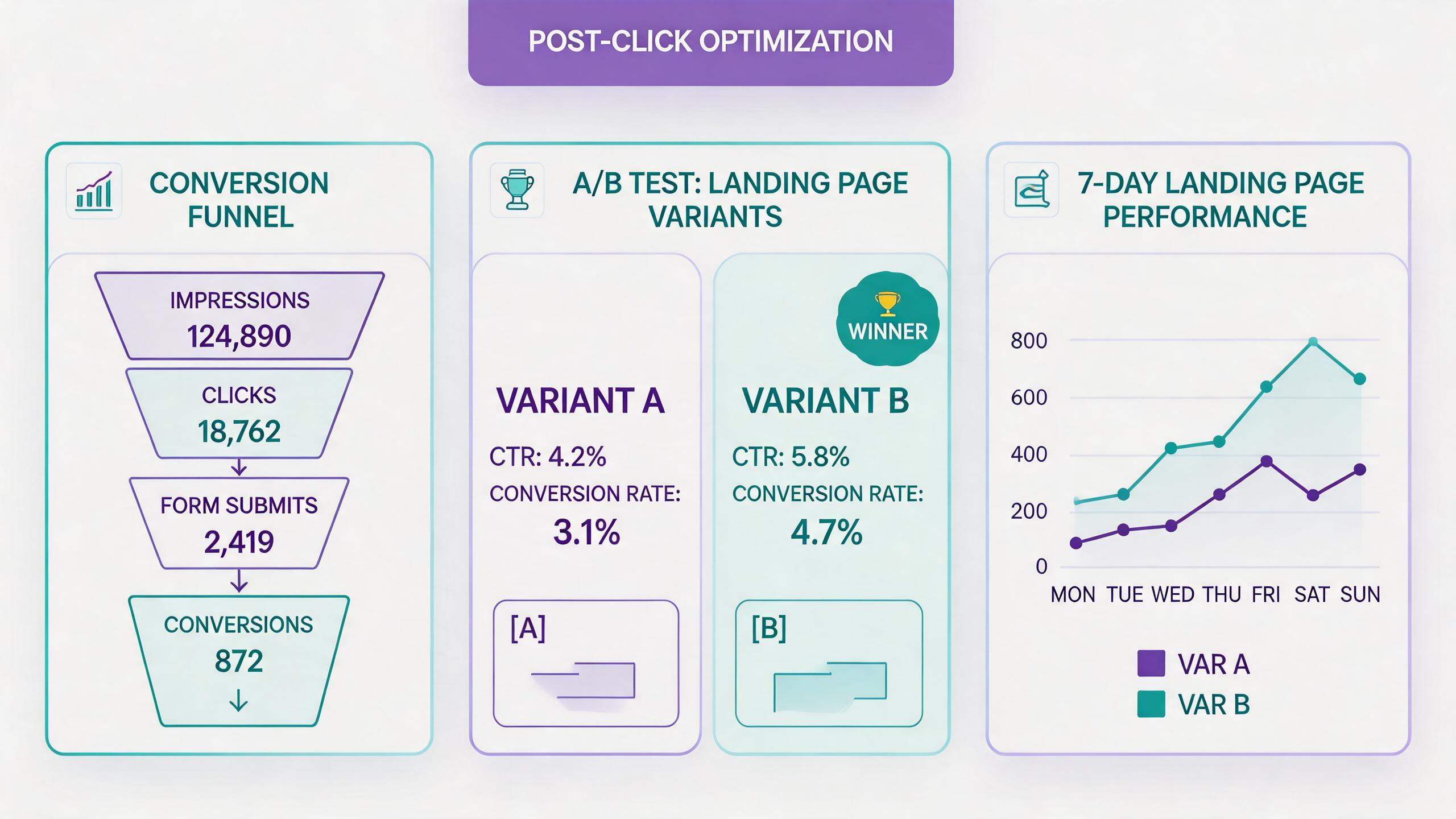
The connection between Meta’s internal layoffs and your bottom line isn’t abstract — it’s mechanical. Here’s how the dominoes fall.
The Manual Optimization Gap
Many advertisers, particularly those in the $10K-$100K/month spend range, have relied on Meta reps for optimization guidance that they haven’t built in-house. According to a 2025 Wordstream benchmark report, advertisers who received active rep support saw an average 12-18% higher CVR compared to fully self-serve accounts — not because the reps had magic, but because they provided a second set of eyes on landing page alignment, audience-creative matching, and conversion event configuration.
When those reps disappear, advertisers who haven’t internalized that optimization knowledge will see performance decay. Based on patterns from Meta’s 2022 layoffs, we can project a 10-15% CVR decline for rep-dependent advertisers within 60-90 days of support reduction.
Ad Disapprovals Will Cost More
With fewer staff to review appeals, ad disapprovals become more expensive in terms of lost time and revenue. The average Facebook ad appeal currently takes 24-48 hours to resolve. Post-layoff, expect 5-7 business days. For e-commerce advertisers running time-sensitive promotions, a week-long disapproval can mean thousands in lost revenue. Understanding how Meta’s attribution models work becomes critical when you need to self-diagnose why a campaign underperformed during these disruptions.
Attribution and Tracking Issues Will Linger
When Meta’s Conversions API throws errors, when pixel events stop firing correctly, when attribution windows produce inconsistent data — these issues currently get escalated through support channels. Post-layoff, you’ll be on your own. And attribution problems don’t just cause reporting confusion; they directly degrade Meta’s algorithm optimization, leading to higher CPAs and lower ROAS.
The Data Tells the Story
Consider the numbers: According to a 2025 Statista report, Meta’s global advertising revenue reached $164 billion, served by approximately 10 million active advertisers. That’s roughly $16,400 in average annual spend per advertiser. Yet Meta’s ad support team — even before the cuts — served those millions with an estimated 12,000-15,000 support staff globally. Post-layoff, that ratio gets dramatically worse.
The message is clear: Meta is building its ad platform for automation and self-service, not for hand-holding. Advertisers who don’t adapt will pay the price in declining conversion rates.
Four Self-Serve Post-Click Optimization Strategies That Replace Rep Dependence
The good news: you don’t need a Meta rep to optimize your post-click funnel. In fact, the most successful advertisers have already moved past rep-dependent optimization. Here are four strategies with concrete implementation steps.
Strategy 1: Build a Systematic Landing Page Testing Framework
Meta reps often suggested landing page changes based on pattern recognition across their account portfolios. You can replicate and exceed this by building your own testing system.
Step 1: Audit your current landing page conversion rate by traffic source. Segment Meta traffic from organic and other paid channels. Use GA4 or your analytics platform to establish baseline CVR for each Meta campaign. Industry benchmarks from Unbounce’s 2025 Conversion Benchmark Report place median landing page CVR at 4.3% for e-commerce and 8.9% for SaaS — if you’re below these, there’s significant room for improvement.
Step 2: Implement a structured A/B testing cadence. Run at least two landing page tests per month, focusing on high-impact elements: headline-ad message alignment, CTA placement and copy, social proof positioning, and page load speed. Tools like VWO, Optimizely, or even Google Optimize alternatives can automate this process.
Step 3: Create a “message match” audit checklist. For every ad creative, verify that the landing page headline mirrors the ad’s primary promise, the visual style is consistent, and the CTA action aligns with the ad’s intent. Message match alone can improve CVR by 20-30%, according to data from Instapage’s 2024 post-click optimization study.
Step 4: Set up real-time alerts for CVR drops. Configure your analytics to alert you when landing page CVR drops below one standard deviation from your 30-day average. This early warning system replaces the monitoring that reps used to provide.
Strategy 2: Own Your Tracking and Attribution Stack
With Meta support response times increasing, you need to be able to diagnose and fix tracking issues independently.
Step 1: Implement server-side tracking via the Conversions API (CAPI). If you haven’t already, set up CAPI alongside your Meta Pixel. Server-side events are more reliable and less susceptible to browser-based tracking failures. According to Meta’s own data, advertisers using CAPI alongside the Pixel see a 13% improvement in cost-per-action on average.
Step 2: Build a tracking validation dashboard. Create a monitoring system that compares Pixel events, CAPI events, and your backend conversion data in real time. Discrepancies of more than 10% between any two sources indicate a tracking issue that needs immediate attention. This is the kind of diagnostic work that reps used to handle during quarterly business reviews.
Step 3: Document your event mapping. Create a clear document mapping every conversion event (ViewContent, AddToCart, Purchase, etc.) to its trigger conditions, expected fire rate, and validation criteria. When something breaks, you’ll be able to diagnose it in minutes rather than waiting days for support. The comprehensive guide to Facebook Ads conversion rate optimization covers the full event hierarchy and common failure points.
Strategy 3: Deploy Ad Fallback and Return Link Technology
One of the most overlooked post-click optimization opportunities is recovering traffic that would otherwise be lost to ad disapprovals, broken links, or policy-triggered page removals. This becomes especially critical when support response times for ad reviews increase.
Step 1: Implement fallback landing pages. Set up secondary landing pages that automatically activate when your primary ad destination is flagged or disapproved. This ensures that paid traffic continues to convert even during review delays. Advertisers using fallback pages report recovering 10-20% of clicks that would otherwise bounce to error pages.
Step 2: Use return link architecture. Return links allow a single ad click to generate multiple no-review impressions, effectively multiplying the value of each click you’ve already paid for. This is particularly valuable when ad approval queues lengthen post-layoff — you’re extracting more value from approved creatives rather than waiting for new ones to clear review.
Step 3: Automate complaint reduction workflows. Ad complaints trigger manual reviews, which will take longer post-layoff. By implementing automated complaint reduction systems (like pre-qualifying user intent before showing commercial content), advertisers can reduce ad complaint rates by up to 80%, keeping campaigns running without human intervention from Meta’s side.
Strategy 4: Automate Campaign Monitoring and Optimization
Replace the quarterly business reviews and ongoing monitoring that reps provided with automated systems.
Step 1: Set up automated rules in Ads Manager. Configure rules to pause underperforming ad sets (e.g., CPA exceeds 2x target for 3 consecutive days), increase budgets on winning creatives (ROAS above target with statistical significance), and rotate creatives before fatigue sets in (frequency exceeds 3.0).
Step 2: Build a weekly performance dashboard. Include CVR by campaign, CPA trend (7-day rolling average), ROAS by audience segment, landing page conversion rate by device, and creative fatigue indicators. This replaces the performance summaries that reps used to deliver.
Step 3: Implement creative testing at scale. Use dynamic creative optimization (DCO) or tools like Motion or Foreplay to systematically test ad variations. Meta’s algorithm performs better with more creative inputs, and without a rep to suggest new angles, you need a system to generate and test them continuously.
Action Checklist: Preparing for Post-Layoff Advertising on Meta
The May 20 layoff date is a hard deadline for preparation. Here’s your prioritized action list:
- Immediate (This Week): Audit your current Meta support dependencies. Identify every optimization action your rep has taken in the past 6 months and document whether you can replicate it in-house.
- Immediate (This Week): Verify your CAPI implementation. Run a diagnostic to confirm that server-side events match Pixel events within a 5% tolerance. Fix any discrepancies now, while support is still partially available.
- Within 2 Weeks: Set up landing page A/B testing infrastructure. Even a basic test running before the layoffs take effect gives you a performance baseline to work from.
- Within 2 Weeks: Implement fallback landing pages and return link technology to protect against ad disapproval delays.
- Within 30 Days: Build your automated monitoring dashboard. Replace rep-provided insights with real-time data you control.
- Within 30 Days: Establish a creative testing cadence. Plan your next 90 days of ad creative variations so you’re not dependent on rep suggestions.
- Ongoing: Invest in post-click optimization tools that give you self-serve control over every stage of the conversion funnel. The advertisers who own their post-click experience will outperform those who relied on Meta’s shrinking support apparatus.
The bottom line is straightforward: Meta is cutting costs, and advertisers will feel it. The companies that treat this as a wake-up call to build self-serve post-click optimization capabilities won’t just survive the transition — they’ll gain a competitive advantage over advertisers who are still waiting for a rep to call them back.
Your conversion rate is too important to leave in the hands of a support team that’s getting smaller by the day. Take control of your post-click funnel now, before May 20 makes the decision for you.
One ad click, multiple no-review impressions — that’s the DeepClick return link.
DeepClick helps Meta advertisers recover lost clicks with Ad Fallback Pages (+10-20% clicks), reduce ad complaints by 80%, and unlock 5-15% more conversions — without going through ad review again.
 DeepAds
留下评论