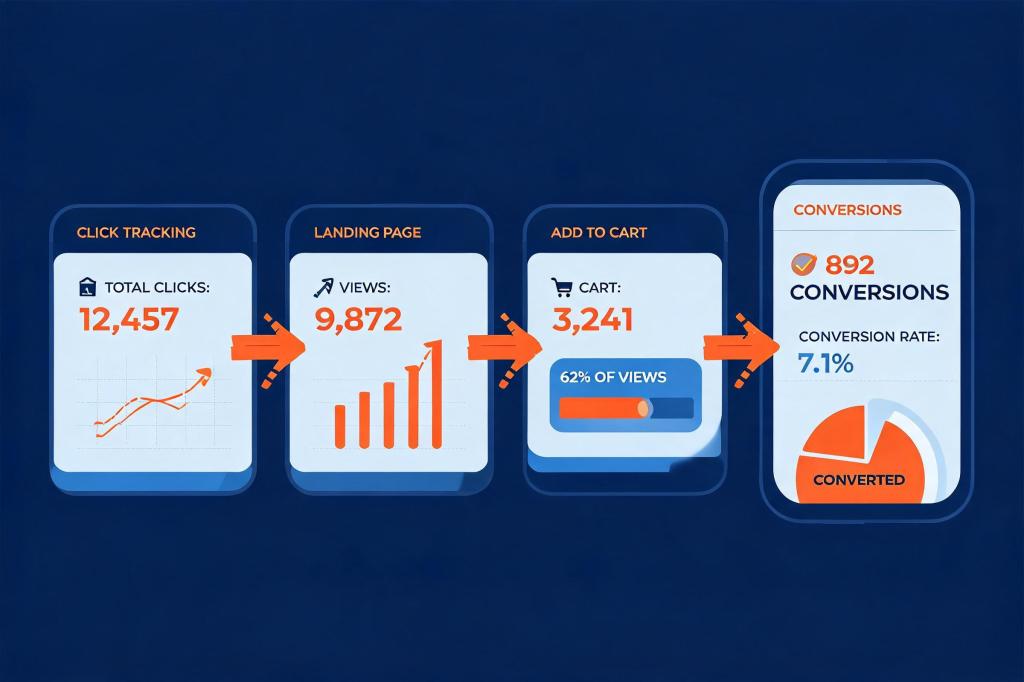
The 2026 Upfronts made one thing unmistakable: measurement is no longer a back-office concern — it is the top strategic priority for every advertiser spending at scale. From CTV buyers demanding cross-screen attribution to performance marketers pushing for real-time conversion signals, the industry consensus is clear: if you cannot measure it accurately, you cannot optimize it, and you cannot justify the spend.
For social ads performance teams running AI app installs or mobile game acquisition on Meta and TikTok, this measurement-first era has a specific implication: your post-click conversion tracking stack is now your primary competitive advantage. Not your creative. Not your targeting. Your ability to capture, attribute, and act on what happens after the ad click.
→ Curious how return links work? See DeepClick in 1 minute — no review required, more impressions per click.
Why the 2026 Upfronts Put Measurement Center Stage
The Upfronts have always been about dollars chasing eyeballs. But this year, every major platform pitch — from YouTube to Disney+ to Amazon — led with measurement capabilities rather than inventory promises. The shift reflects what buy-side leaders have been signaling for 18 months: reach without attribution is just noise.
Several converging forces pushed measurement to the top of the agenda:
- CTV fragmentation. With streaming viewership split across 15+ platforms, advertisers need unified conversion measurement that works across screens. Traditional GRP-based planning is dead; conversion lift studies and multi-touch attribution are replacing it.
- Privacy-driven signal loss. iOS ATT, Chrome’s evolving cookie policies, and Meta’s own Conversions API requirements have degraded browser-side tracking. Advertisers who haven’t migrated to server-side measurement are flying with 30-40% data gaps.
- AI-driven campaign optimization. Advantage+, Performance Max, and TikTok Smart Performance campaigns all rely on conversion signals to train their algorithms. Garbage measurement in means garbage optimization out. The quality of your conversion data directly determines your ad platform performance.
According to the IAB’s 2026 State of Data report, 78% of brand advertisers now rank measurement and attribution as their number one technology investment priority — up from 52% just two years ago. For performance advertisers, this number is effectively 100%: you cannot run profitable campaigns without accurate conversion tracking.
Post-Click Tracking Is Where Measurement Actually Breaks
Here is the uncomfortable truth most measurement conversations skip: the measurement gap is not in ad delivery reporting — it is in post-click conversion tracking. Ad platforms are excellent at telling you how many impressions you served, how many clicks you got, and what your CTR was. That data is essentially complete.
Where measurement breaks down is everything that happens after the click:
Landing page load failures. On mobile — where 85%+ of social ad traffic lands — pages that take more than 3 seconds to load lose 53% of visitors before any conversion event can fire. Those lost visitors never register in your funnel data. They are invisible measurement gaps that make your actual CPA higher than what you see in your dashboard.
Cross-domain tracking breaks. If your ad clicks through to a landing page on domain A, then redirects to an app store or registration flow on domain B, your tracking chain often breaks. First-party cookie restrictions prevent seamless handoff, and many teams lose 15-25% of their conversion signal at this junction.
App install attribution latency. For app install campaigns, the gap between ad click and attributed install can stretch from minutes to days depending on your MMP configuration. During that gap, users may reinstall, switch devices, or come through organic channels — all of which create attribution noise that degrades your measurement quality.
Teams that have addressed these post-click measurement gaps through comprehensive conversion rate optimization frameworks consistently report 20-35% improvements in measured conversion volume — not because they generated more conversions, but because they stopped losing the signal.
3 Steps to Build a Measurement Advantage in 2026
Step 1: Implement Server-Side Conversion Tracking Across All Funnel Events
Browser-side tracking (Meta Pixel, Google gtag) is no longer sufficient as your primary measurement layer. iOS ATT opt-in rates hover around 25-35%, meaning 65-75% of iOS users are invisible to your browser-side tracking. Chrome’s third-party cookie deprecation timeline continues to create uncertainty.
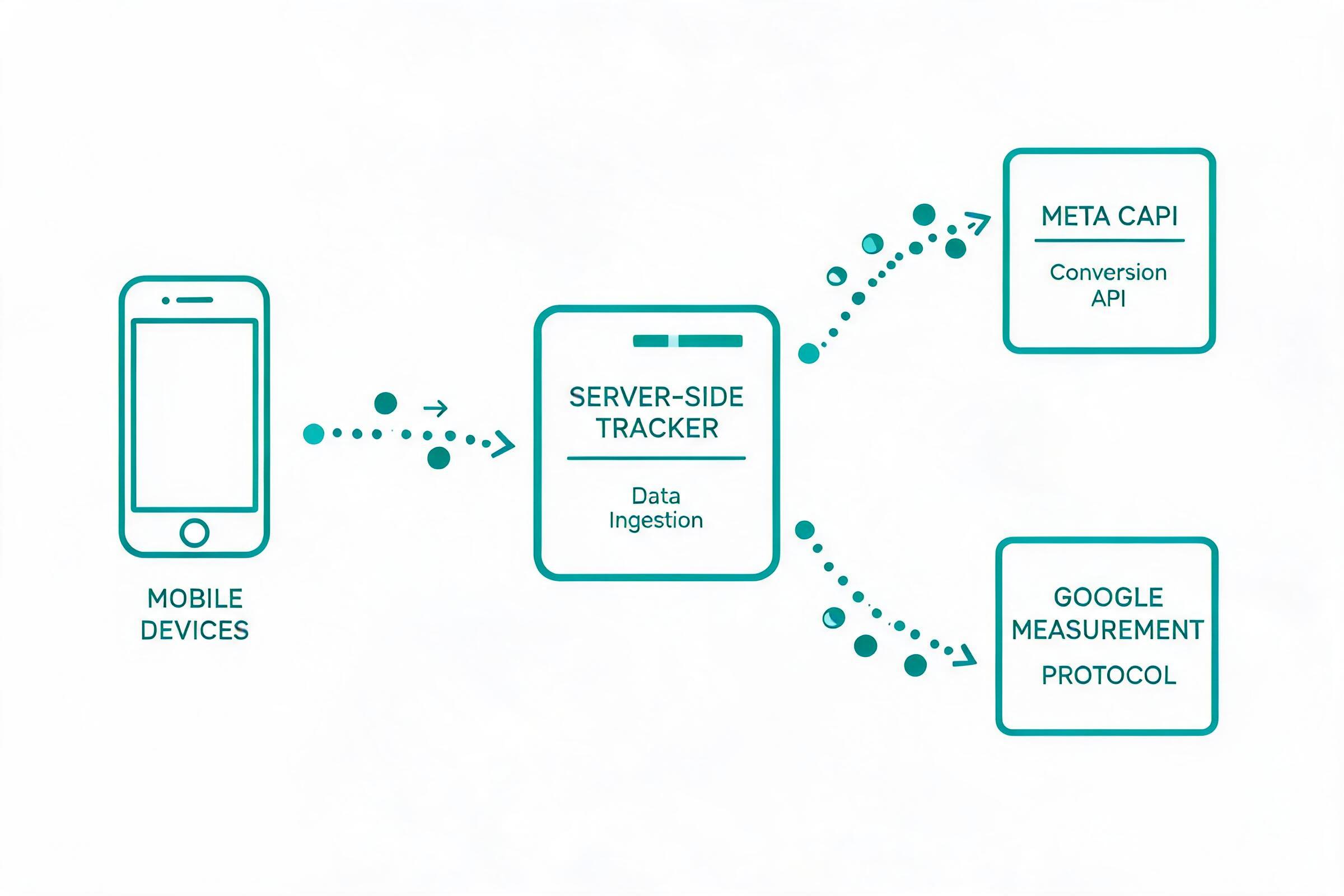
Server-side tracking — Meta Conversions API (CAPI), Google Measurement Protocol, TikTok Events API — sends conversion events directly from your server to the ad platform. This bypasses browser restrictions entirely and typically recovers 25-40% of lost conversion signal.
The implementation priority should be:
- Send all funnel events (page view, registration start, registration complete, first purchase) through both browser-side and server-side simultaneously. This creates redundancy and lets you measure the gap.
- Implement event deduplication using event IDs to prevent double-counting when both channels fire for the same conversion.
- Monitor your Event Match Quality (EMQ) score in Meta Events Manager — aim for 7.0 or above. Below 6.0 indicates significant matching failures that are costing you measurable CPA increases.
Step 2: Fix Post-Click Drop-Off Before Optimizing Anything Else
Before you invest in advanced measurement tools or attribution models, fix the basics: make sure users who click your ad actually reach your conversion point.
Audit these three critical drop-off points:
- Page load speed: Test your landing pages on real mobile devices (not just PageSpeed Insights simulations). Target under 2 seconds for first contentful paint. Every additional second costs you 10-15% of remaining traffic — and those lost users are unmeasured conversions.
- Redirect chains: Map every step between ad click URL and final conversion page. Each redirect adds latency and creates a tracking break risk. Eliminate unnecessary redirects and ensure UTM parameters survive all remaining ones.
- Browser compatibility: Meta and TikTok open links in their in-app browsers, which have different JavaScript execution and cookie behavior than Chrome or Safari. Test your conversion tracking fires correctly in these environments — many teams discover 20-30% of their in-app browser traffic fails to trigger conversion events properly.
The most advanced approach to solving post-click drop-off uses return link technology. When a user clicks but does not convert, a return link preserves the measurement chain while creating an additional conversion opportunity. Teams deploying this approach report 10-20% more tracked clicks and 5-15% more measured conversions — directly improving both measurement completeness and campaign performance. This also reduces ad review and complaint risks by 80%, since return pages provide a relevant user experience rather than a dead end.
Step 3: Align Measurement Definitions Across All Channels
The Upfronts measurement conversation highlighted a persistent industry problem: different platforms define “conversion” differently, and most advertisers are comparing apples to oranges in their cross-channel reporting.
Create a unified conversion taxonomy for your team:
- Define exactly what constitutes a “conversion” at each funnel stage (lead, registration, first purchase, subscription). Use identical event definitions across Meta, Google, TikTok, and your MMP.
- Standardize attribution windows across platforms. If you use 7-day click on Meta but 30-day click on Google, your cross-channel CPA comparison is meaningless.
- Implement a single source of truth for conversion reporting — typically your MMP or a server-side data warehouse — and reconcile platform-reported conversions against this ground truth weekly.
This alignment process is what separates teams that achieve consistent cross-platform CVR optimization from those that chase contradictory platform metrics in circles.
Action Checklist: Build Your Measurement Edge
- This week: Audit your server-side tracking implementation. Verify CAPI/Events API is live for all funnel events, not just the final conversion. Check your EMQ score.
- This month: Run a post-click drop-off audit. Measure the gap between ad clicks reported by the platform and page view events in your analytics. If the gap exceeds 15%, you have a landing page or redirect problem that is directly degrading your measurement and inflating your CPA.
- This quarter: Unify your conversion definitions and attribution windows across all platforms. Build a reconciliation dashboard that compares platform-reported conversions to your MMP or server-side truth weekly.
- Ongoing: Use your conversion optimization framework to systematically close measurement gaps at each funnel stage. Every 1% improvement in measurement completeness translates directly to better algorithm training and lower CPA.
The 2026 Upfronts confirmed what performance advertisers have known for years: the teams that measure best, win. In a world where every ad platform’s algorithm is only as good as the conversion signals it receives, your post-click tracking stack is not just a reporting tool — it is your most important competitive weapon.
One ad click, multiple no-review impressions — that’s the DeepClick return link.
DeepClick helps Meta advertisers recover lost clicks with Ad Fallback Pages (+10-20% clicks), reduce ad complaints by 80%, and unlock 5-15% more conversions — without going through ad review again.
 DeepAds
留下评论