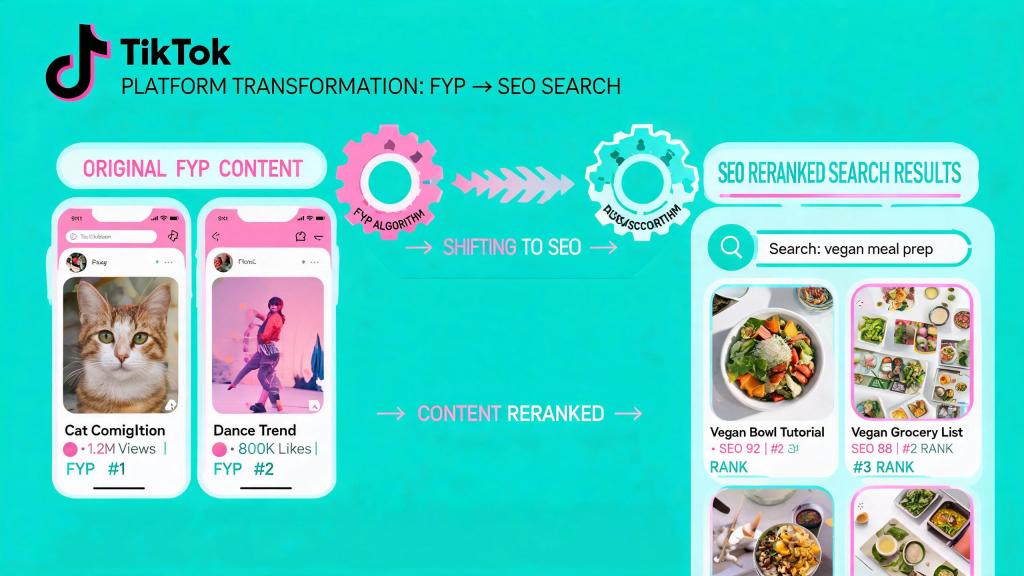
If your TikTok ad campaigns have felt off in early 2026, you are not imagining things. TikTok has rolled out a significant algorithm update that prioritizes SEO-driven content discovery over the purely engagement-based feed that advertisers have relied on for years. The result? Users are finding content differently, scrolling behavior is shifting, and the traditional ad funnel from impression to click to conversion is breaking down for brands that have not adapted.
This is not just a platform tweak. It is a fundamental change in how TikTok surfaces content, and it has direct consequences for every advertiser spending money on the platform. The good news: if you understand the shift and adjust your post-click strategy accordingly, you can turn this disruption into a competitive advantage.
→ Curious how return links work? See DeepClick in 1 minute — no review required, more impressions per click.
The Core Problem: TikTok’s Algorithm Shift to SEO-First Content
For most of its existence, TikTok’s algorithm was a black box driven by engagement signals: watch time, likes, shares, and completion rates. Advertisers built entire strategies around creating thumb-stopping creatives that could ride the For You Page (FYP) wave. The formula was straightforward — if your content hooked viewers in the first second, the algorithm rewarded you with distribution.
That model is changing. In Q1 2026, TikTok began rolling out what industry analysts are calling the “Search-First” update. The key changes include:
- Search results now appear directly in the FYP feed. TikTok is blending organic search results into the main content stream, meaning users encounter content tagged with specific keywords even when they are not actively searching.
- Keyword-optimized captions and hashtags carry significantly more weight. Internal testing reported by social media analytics firms suggests that keyword relevance now accounts for up to 30% of content ranking signals, up from an estimated 10-15% in 2024.
- The “Search” tab has been promoted to a primary navigation element across all markets, with TikTok reporting that search queries on the platform grew 67% year-over-year in 2025, according to TikTok’s own 2025 Trend Report.
- Long-form content (over 60 seconds) is receiving preferential distribution when it matches search intent, rewarding informational and educational content over pure entertainment.
For advertisers, this means the audience discovering your ads is fundamentally different. Instead of passive scrollers encountering your creative by chance, you are increasingly reaching users who are actively looking for solutions — users with higher intent but also higher expectations for what happens after they click.
Why This Algorithm Shift Directly Impacts Ad Conversion Rates
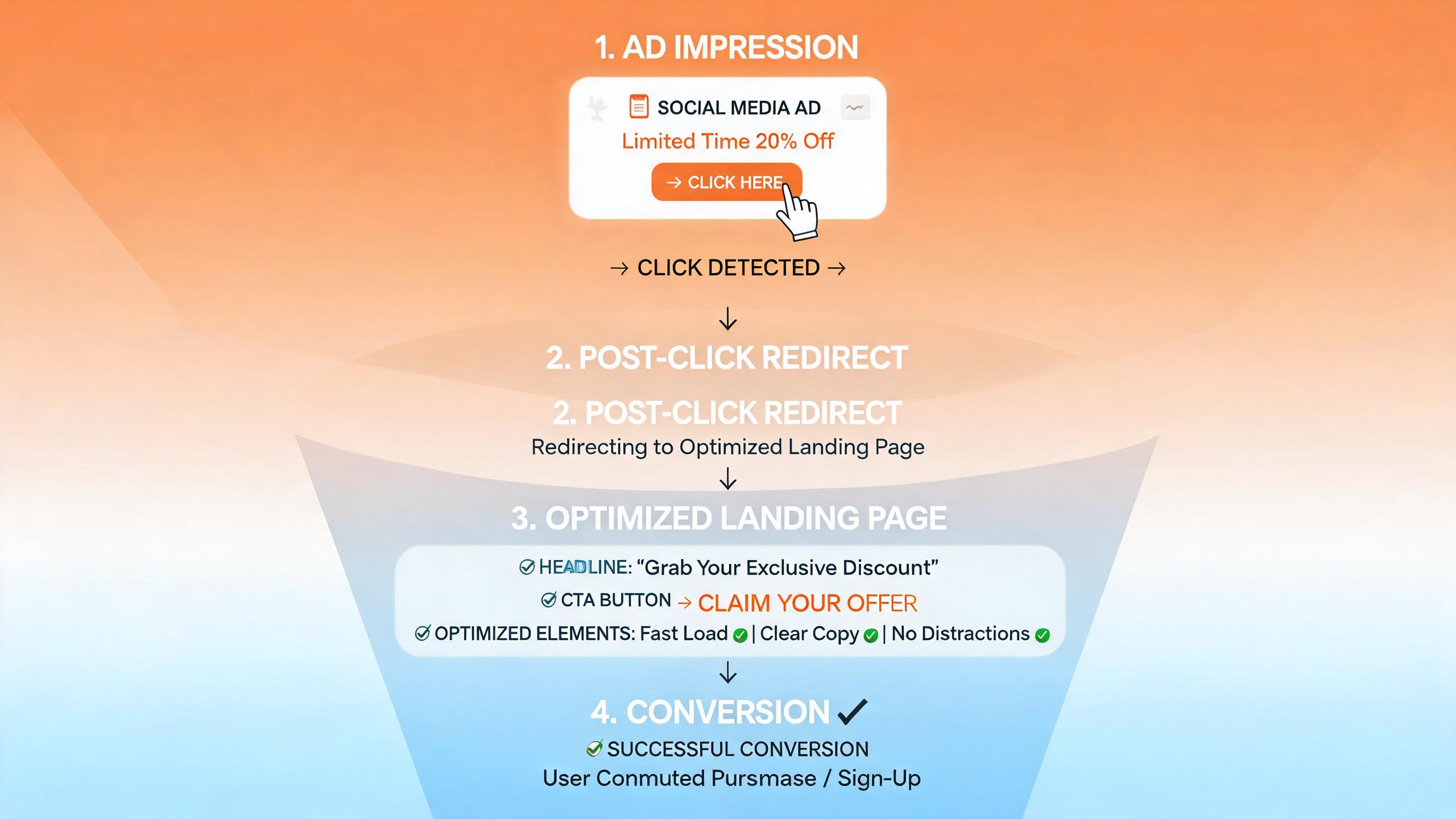
The connection between TikTok’s SEO-first algorithm and your conversion rates might not be immediately obvious, but the data tells a clear story. When the discovery mechanism changes, the entire funnel shifts.
Higher intent traffic demands better post-click experiences
Search-driven users behave differently than passive FYP scrollers. According to a 2025 study by Jungle Scout, consumers who discover products through social search are 2.4 times more likely to make a purchase than those who encounter products through algorithmic recommendations alone. But there is a catch: these high-intent users also have a 38% higher bounce rate when the landing page does not match their search expectations.
This means if your TikTok ad creative is optimized for SEO keywords but your post-click landing page is a generic product page, you are hemorrhaging the most valuable traffic the platform is sending you.
The attribution gap is widening
TikTok’s SEO update compounds an existing problem: the gap between ad clicks and actual conversions. Industry benchmarks from WordStream’s 2025 Social Advertising Report show that the average TikTok ad click-to-conversion rate sits at just 1.1% — significantly below Meta’s 2.3% average across industries. With the algorithm now sending more search-intent traffic, advertisers who fail to optimize the post-click experience are seeing that rate drop even further.
The reason is simple. A user who searched “best wireless earbuds under $50” and clicked your ad expects to land on a page that immediately addresses that query. If they hit a homepage or a broad category page, they are gone in seconds. As Meta’s recent Pixel and CAPI upgrades have shown, tracking these micro-moments accurately is becoming essential for understanding where conversions are actually lost.
Ad review and compliance pressure is increasing across platforms
TikTok’s shift is happening alongside broader industry trends. Meta has tightened its ad review process in 2026, and TikTok is following suit. Ads that rely on misleading hooks or clickbait to drive engagement are being flagged and rejected at higher rates. This means advertisers need their creative-to-landing-page experience to be genuinely consistent — not just to satisfy the algorithm, but to pass increasingly strict platform reviews.
The net effect: you cannot simply create attention-grabbing TikTok ads and hope for the best. The algorithm demands keyword relevance, users demand post-click consistency, and platform reviewers demand authenticity. Getting all three right simultaneously requires a new approach.
Solution 1: Align Your Ad Creative Keywords With Post-Click Landing Pages
The most immediate fix is ensuring keyword consistency between your TikTok ad creative and your landing page. This sounds basic, but the data shows most advertisers are failing at it.
A 2025 audit by Unbounce found that 72% of social ad campaigns had a “message match” score below 50%, meaning the language and promises in the ad creative were significantly different from what users found on the landing page. With TikTok’s SEO-first algorithm, this mismatch is now even more damaging because users arrive with specific keyword-driven expectations.
Concrete steps to implement
- Step 1: Map your TikTok ad keywords to dedicated landing page variants. For each major keyword cluster you are targeting in your TikTok ad captions and hashtags, create a corresponding landing page that mirrors that language. If your ad targets “affordable skincare routine for oily skin,” your landing page headline should echo that exact phrase, not redirect to a generic product catalog.
- Step 2: Use dynamic text replacement on your landing pages. Tools like Unbounce, Instapage, or custom-built solutions allow you to swap headline text based on the referring ad’s keyword parameters. This ensures every click from a different keyword variation lands on a contextually relevant page without building dozens of static pages.
- Step 3: Audit your current campaigns for keyword-to-page alignment. Pull your top 20 TikTok ad sets by spend, list the primary keywords in each creative, and score each landing page on how closely it matches. Any page scoring below 70% match should be an immediate optimization priority.
The payoff is substantial. According to Instapage’s 2025 Post-Click Optimization Report, campaigns with strong message match between ad and landing page see conversion rates 2.5 to 3 times higher than those with weak alignment.
Solution 2: Build SEO-Optimized Post-Click Funnels That Serve Search Intent
TikTok’s algorithm shift means that users arriving at your ads are increasingly in a “search mindset.” They are not just passively consuming content — they are looking for answers. Your post-click experience needs to reflect this by providing genuine value, not just a sales pitch.
Concrete steps to implement
- Step 1: Structure landing pages around user questions, not product features. Instead of leading with “Our Product Does X,” lead with “How to Solve [Problem User Searched For].” This matches the informational intent that TikTok’s SEO algorithm is now prioritizing. A landing page that immediately answers the user’s implicit question before transitioning to your product pitch will outperform a feature-dump page every time.
- Step 2: Add educational micro-content to your post-click flow. Consider adding a brief explainer video, a comparison chart, or a FAQ section above the fold on your landing page. HubSpot’s 2025 Marketing Report found that landing pages with educational elements saw 47% higher time-on-page and 23% higher conversion rates compared to direct-sell pages for traffic from social search.
- Step 3: Implement progressive disclosure in your landing page design. Rather than overwhelming search-intent users with a long-form sales page, use expandable sections, tabbed content, or scroll-triggered reveals that let users consume information at their own pace. This technique respects the “research mode” these users are in while still guiding them toward conversion.
This approach is especially relevant for advertisers managing campaigns across multiple platforms. As recent changes at Meta have pushed advertisers toward self-serve optimization, the ability to build high-converting post-click funnels independently — without relying on platform support teams — has become a survival skill.
Solution 3: Leverage Return-Link Technology to Maximize Every Click
Here is where the economics of TikTok’s algorithm change become critical. With search-intent traffic being more valuable but also more expensive to acquire (TikTok CPMs rose 18% in Q1 2026 according to Varos benchmarking data), every click needs to work harder. Losing a high-intent user to a poor post-click experience is not just a missed conversion — it is wasted budget that is increasingly difficult to replace.
Return-link technology addresses this by ensuring that a single ad click generates multiple touchpoints, recovering users who might otherwise bounce and never return.
Concrete steps to implement
- Step 1: Implement ad fallback pages that capture bouncing traffic. When a user clicks your TikTok ad and lands on your page but does not convert immediately, a fallback mechanism can present an alternative offer, a content piece, or a retargeting pixel fire that keeps the user in your ecosystem. This alone can recover 10-20% of clicks that would otherwise be completely lost.
- Step 2: Set up return-impression sequences that do not require additional ad review. One of the biggest time-sinks in social advertising is the review process for new ad creatives. Return-link technology allows you to serve additional impressions to users who have already clicked your approved ad, without submitting new creatives for review. This means you can iterate on your post-click messaging in real time based on what TikTok’s algorithm is surfacing.
- Step 3: Use post-click analytics to feed your TikTok keyword strategy. Track which search-intent keywords drive the highest post-click engagement (not just clicks), and use that data to refine both your TikTok ad captions and your landing page content. This creates a feedback loop where your SEO optimization and your post-click optimization reinforce each other.
The compounding effect is significant. Advertisers using return-link systems report 5-15% incremental conversions on top of their baseline, while simultaneously reducing ad complaints by up to 80% — a critical metric as both TikTok and Meta tighten their review processes.
Solution 4: Rebuild Your Measurement Framework for SEO-Driven Social Traffic
The final piece of the puzzle is measurement. TikTok’s SEO-first algorithm changes the user journey in ways that traditional last-click attribution models cannot capture. If you are still measuring success purely by immediate post-click conversions, you are almost certainly undervaluing your TikTok campaigns — and making poor optimization decisions as a result.
Concrete steps to implement
- Step 1: Implement multi-touch attribution that accounts for search-discovery paths. Users who find your content through TikTok’s search may interact with your brand multiple times before converting. Set up attribution models that credit the initial search-driven discovery, not just the final click. Google Analytics 4’s data-driven attribution model is a starting point, but consider supplementing it with platform-specific tools like TikTok’s own Attribution Manager.
- Step 2: Track micro-conversions in your post-click flow. Beyond the final sale or signup, measure intermediate actions: scroll depth, video views on landing pages, FAQ clicks, comparison chart interactions. These micro-conversions tell you whether your post-click experience is serving search-intent users effectively, even if they do not convert immediately.
- Step 3: Set up A/B testing specifically for search-intent landing page variants. Run controlled experiments comparing your current landing pages against SEO-optimized variants for search-driven TikTok traffic. Segment your TikTok traffic by discovery type (FYP versus search) and measure conversion rates independently for each segment. This data will tell you exactly how much the algorithm shift is impacting your funnel and where the biggest optimization opportunities lie.
Summary and Action Checklist
TikTok’s 2026 SEO-first algorithm update is not a minor tweak — it is a structural shift that changes how users discover and interact with ads on the platform. The advertisers who win in this new environment will be those who treat post-click optimization as a first-class priority, not an afterthought.
Here is your action checklist:
- Audit keyword alignment between your top TikTok ad creatives and their corresponding landing pages. Fix any mismatch scoring below 70%.
- Restructure landing pages around user questions and search intent rather than product feature dumps.
- Add educational micro-content (explainer videos, comparison charts, FAQs) to your post-click flow to serve search-intent users.
- Implement return-link technology to recover bouncing high-intent traffic and generate multiple impressions from each click.
- Set up ad fallback pages to capture the 10-20% of clicks that currently bounce without any conversion or retargeting.
- Rebuild your attribution model to account for multi-touch search-discovery journeys rather than relying on last-click metrics.
- Track micro-conversions in your post-click flow to identify exactly where search-intent users are dropping off.
- A/B test landing page variants specifically for search-driven versus FYP-driven TikTok traffic.
- Feed post-click engagement data back into your TikTok keyword strategy to create a self-reinforcing optimization loop.
The shift to SEO-first content discovery on TikTok is permanent. The platforms are all moving in this direction, and the advertisers who adapt their post-click strategies now will have a significant head start over those who wait. Every day you run TikTok ads without optimizing the post-click experience for search-intent users is a day you are paying premium CPMs for traffic your funnel is not built to convert.
One ad click, multiple no-review impressions — that’s the DeepClick return link.
DeepClick helps Meta advertisers recover lost clicks with Ad Fallback Pages (+10-20% clicks), reduce ad complaints by 80%, and unlock 5-15% more conversions — without going through ad review again.
 DeepAds
留下评论