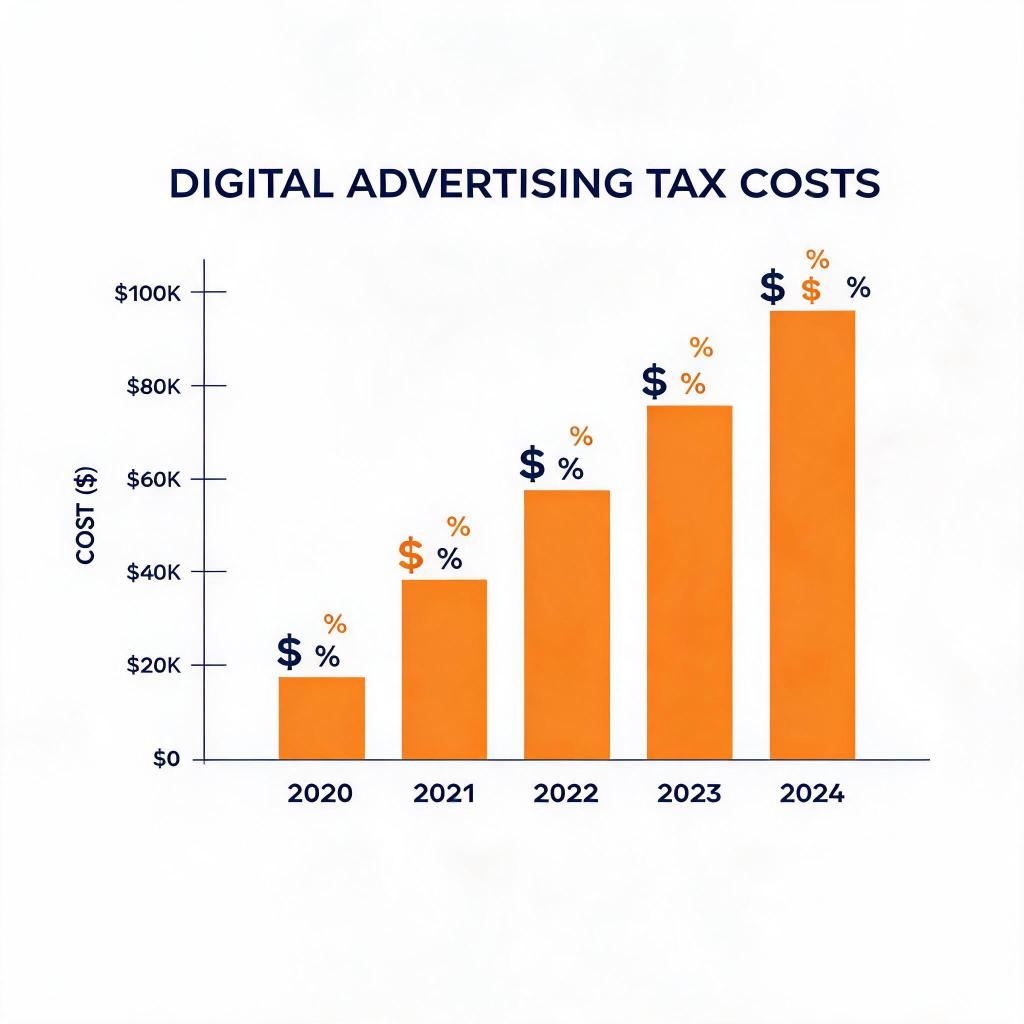
Meta just rolled out digital services tax (DST) surcharges across 12+ countries — and if you’re running Facebook or Instagram campaigns for AI apps or mobile games, your effective CPA just went up by 2–10%. The question isn’t whether to absorb the cost. It’s whether your post-click funnel can compensate.
→ Curious how return links work? See DeepClick in 1 minute — no review required, more impressions per click.
What Is Meta’s Digital Services Tax Surcharge — and Who Pays
Starting in early 2026, Meta began passing digital services tax costs directly to advertisers in countries including France, Spain, Italy, the UK, Turkey, India, and several others. These taxes range from 2% to 10% of ad spend, depending on local regulations.
For performance advertisers, this means the same campaign budget now buys fewer impressions and clicks. A team spending $50,000/month on Meta ads in affected regions could see $1,000–$5,000 in additional tax charges — with zero additional reach.
The impact compounds when you factor in existing inefficiencies. If your post-click conversion rate is already below 3%, that extra tax burden falls on an already leaky funnel. Every unconverted click costs more than it did last quarter.
This isn’t a temporary adjustment. As more governments implement DSTs — Brazil, Indonesia, and Nigeria are all in various stages of legislation — the taxable footprint will keep expanding. Advertisers who don’t adapt their funnel economics will watch margins erode quarter over quarter.
Why Post-Click CVR Optimization Is Your Best Response
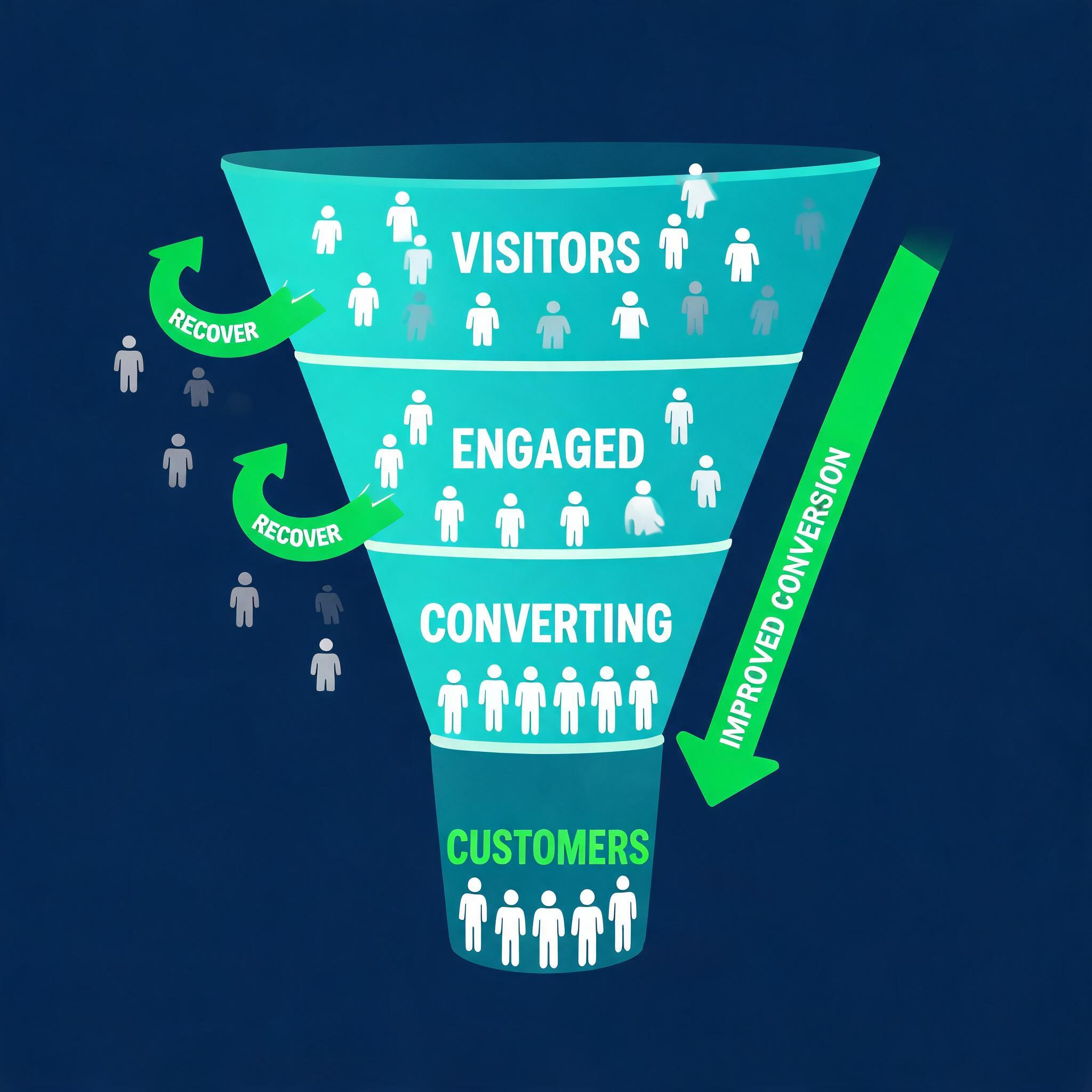
When ad costs rise from external factors like taxes, you have three options: cut spend, raise prices, or improve conversion efficiency. For most growth teams running AI social apps or BC games, the first two options are non-starters.
Post-click CVR optimization targets the part of the funnel you actually control. While you can’t negotiate tax rates with governments, you can ensure that every click Meta sends you has the highest possible chance of converting.
Here’s why this approach works mathematically: if your current CVR is 2.5% and you improve it to 3.5%, you’ve effectively offset a 28% increase in cost-per-click — far more than any DST surcharge. The leverage is enormous because small conversion improvements multiply across your entire ad spend.
Consider the difference in real numbers. A game studio spending $100,000/month on Meta ads with a 2.5% post-click CVR generates 2,500 conversions at $40 CPA. After a 5% DST surcharge, CPA rises to $42. But improving CVR to 3.2% drops CPA to $32.81 — a net improvement despite the tax increase. This is exactly the kind of conversion rate optimization strategy that separates profitable campaigns from break-even ones.
The compounding effect matters too. Unlike one-time cost cuts, CVR improvements persist. Every future dollar you spend benefits from the better funnel — making this the only response that actually improves your position rather than just defending it.
3 Steps to Offset Rising Meta Ad Costs Through CVR Optimization
Step 1: Audit Your Post-Click Drop-Off Points
Before optimizing anything, you need to know where users are dropping off after clicking your ad. Map the complete journey from ad click to conversion event, tracking drop-off rates at each stage.
Key metrics to benchmark: landing page bounce rate (target: under 40%), time-to-first-action (target: under 8 seconds), and form/signup completion rate. For AI dating or companion apps, pay special attention to the gap between landing page visit and app install prompt — this is where most post-click value leaks.
Use UTM parameters and platform-specific tracking to segment performance by country. DST-affected regions need separate analysis because user behavior may differ from your global averages, and the cost economics are now different.
Step 2: Implement Return Link Recovery for Failed Conversions
Not every click converts on the first visit — but that doesn’t mean the click’s value is exhausted. Return links create a secondary conversion path that lets you re-engage users without paying for another ad click and without going through ad review again.
This is particularly powerful in DST-affected markets where each click carries a tax premium. A return link that recovers even 10–15% of initially unconverted clicks effectively reduces your post-tax CPA by the same percentage. For advertisers in high-DST markets like Turkey (7.5%) or France (3%), this recovery can fully offset the tax increase.
The mechanics work like this: when a user clicks your Meta ad but doesn’t convert, the fallback page captures re-engagement consent. Subsequent touchpoints happen through direct channels — no additional ad spend, no additional tax. Understanding how Meta attributes click-through vs. engage-through conversions helps you measure the true incremental value of this recovery channel.
Step 3: Optimize Landing Page Load Speed and Relevance
In DST-affected markets, your landing page quality score directly impacts how much you pay — and how much of that spend converts. A landing page that loads in under 2 seconds converts 2–3x better than one that takes 5+ seconds, according to Google’s Core Web Vitals research.
For mobile game install campaigns, this means stripping your landing page to essentials: one hero image, a clear value proposition, and a single CTA. For AI social apps, focus on social proof and immediacy — show the app experience above the fold rather than explaining features below it.
A/B test your landing pages specifically for DST-affected regions. Cultural differences in these markets (Southern Europe, South Asia, Middle East) often mean that global creative doesn’t perform well locally. Localized landing pages with region-specific messaging can improve CVR by 15–30%, and that improvement is worth more now that each click carries a tax premium.
Reducing your platform dependency risk through diversified post-click strategies also means you’re less exposed when any single platform raises costs — whether through taxes, policy changes, or competitive auction dynamics.
Action Checklist: Protect Your ROAS Against Rising Ad Costs
Here’s your immediate action plan for the next 30 days:
- Week 1: Audit post-click funnels for DST-affected countries. Identify the top 3 drop-off points by volume and revenue impact.
- Week 2: Implement return link recovery on your highest-spend campaigns. Measure incremental conversions separately from primary attribution.
- Week 3: Launch landing page A/B tests for your top 5 DST-affected markets. Test load speed, localization, and CTA placement.
- Week 4: Review results and calculate your effective CPA including DST. Compare against pre-DST baselines to quantify optimization gains.
The advertisers who will thrive through this cost increase are those who treat it as a forcing function — a reason to build the post-click optimization infrastructure they should have built years ago. The tax makes the problem urgent; the solution makes your campaigns permanently better.
One ad click, multiple no-review impressions — that’s the DeepClick return link.
DeepClick helps Meta advertisers recover lost clicks with Ad Fallback Pages (+10-20% clicks), reduce ad complaints by 80%, and unlock 5-15% more conversions — without going through ad review again.
 DeepAds
留下评论